


This article first appeared as part of the Daily Sensemaker newsletter – one story a day to make sense of the world. To receive it in your inbox, featuring content exclusive to the newsletter, sign up for free here.
A week ago the Trump administration produced a new national security strategy that set out to save Europe from itself, avoid a war over Taiwan and “restore American preeminence in the Western Hemisphere”.
So what? It did not take long to see what this might mean. Last night the US Coast Guard seized a tanker off the coast of Venezuela in what it called a judicial enforcement action. There are shades of grey between the lines of the new strategy, but the text itself is America First in black and white. The 33-page document
•
more or less gives up on the American defence of democracy where it’s threatened;
•
attacks democracies where it isn’t;
•
revives the 19th century Monroe Doctrine as a rationale for US interference across Latin America; and
•
buries the 20th century idea of America as the world’s policeman as a rationale for non-interference across Eurasia.
So Putin and Xi can breathe easy? Broadly, yes. The last time a Trump cabinet wrote a national security strategy, in 2017, it called Russia a “revisionist” adversary. This time it wants “strategic stability” between Russia and Europe. The strategy lists the “survival” of Ukraine as a viable state and deterring conflict over Taiwan as core US interests, but that is not the same as guaranteeing their security.
As you were. Great power rivalry was a theme of the 2017 document. Not any more. In 2025 the “Trump corollary” to the Monroe Doctrine asserts sway over the Americas while signalling unambiguously that it wants minimal entanglement with the rest of the world apart from commerce. Two key phrases offer peace of mind for tyrants:
•
“We will be… respectful of other countries’ differing religions, cultures, and governing systems.”
•
“The outsized influence of larger, richer, and stronger nations is a timeless truth of international relations.”
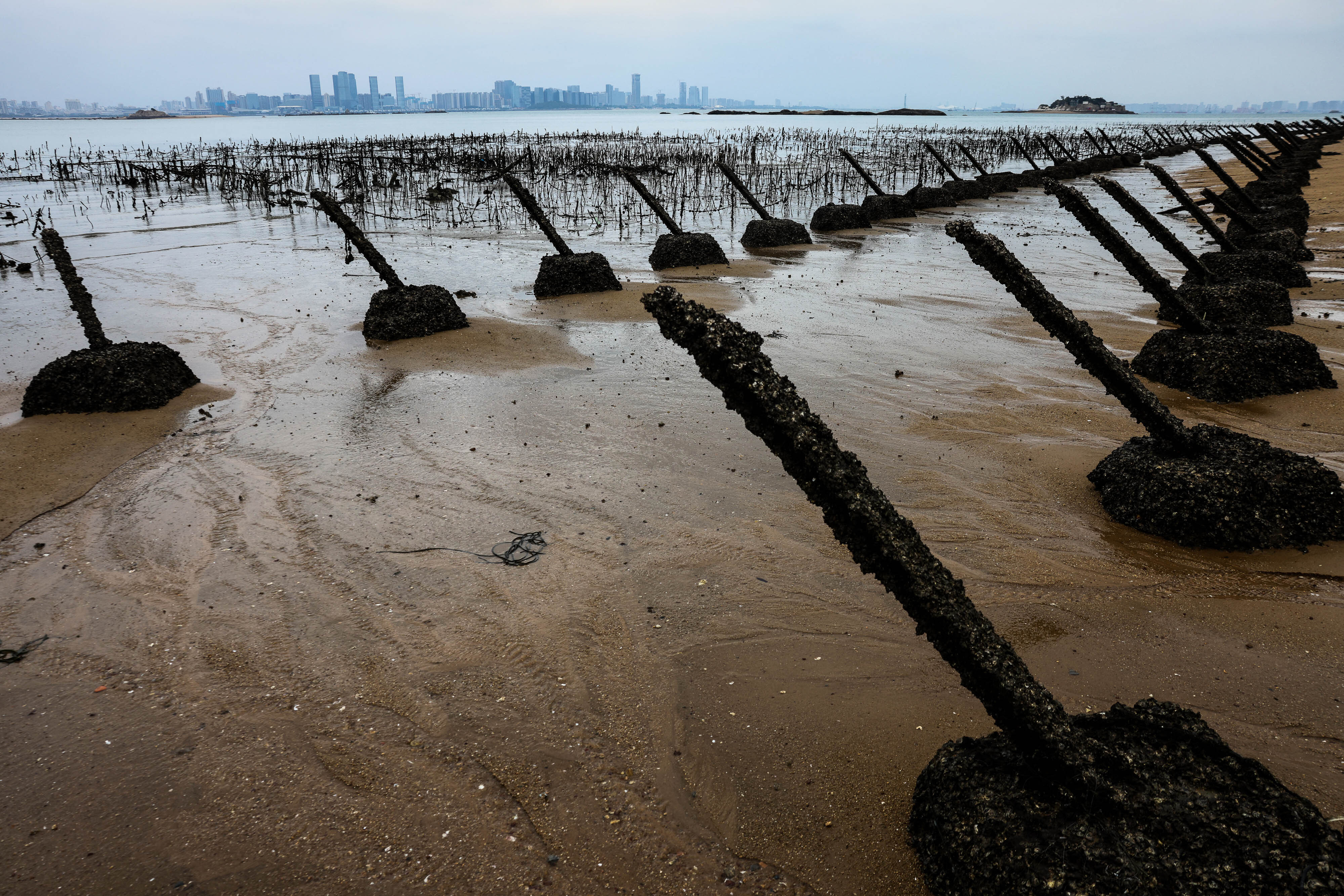
Strait and narrow. In a substantial section on Taiwan there is no mention of democracy or the dictatorship Beijing wants to impose on it, or even of China. The US wants peace in the region because of Taiwan’s chip production and the fact that a third of the world’s shipping passes through the Taiwan Strait.
Ideal world. When the strategy says conflict is to be deterred “ideally by military overmatch”, the word “ideally” works hard. Washington knows well that its state-of-the-art $13bn aircraft carriers could prove defenceless in a hot war against China’s latest hypersonic anti-ship weapons. “All the signs are that Taiwan would be unwise to count on Trump coming to its defence,” says Isabel Hilton, a visiting professor at King’s College London. “Every move Trump makes has the effect of empowering China and weakening the position of the US.”
Unsurprisingly, the new strategy calls on America’s allies in East Asia to “step up”.
Sounds like Europe? Certainly. But for a document that promises respect for other countries’ governing systems, this one is strikingly in the weeds of Europe’s. Echoing a speech by Vice President Vance in Munich in February, it ticks off a now familiar list of talking points on the EU, which supposedly tramples on free speech and opposition parties that aren’t “patriotic”, and has doomed its Europeanness to “erasure” within 20 years if it fails to halt inward migration.
Lost in translation. “Patriotic” can be read here as “Maga-populist”. Other phrases in need of decoding include
•
the US goal of “ending… Nato as a perpetually expanding alliance” (denying Ukraine and Georgia the right to apply to join it, in line with Moscow’s wishes); and
•
“enabling Europe to stand on its own feet and operate as a group of sovereign nations” (undermining the EU at every opportunity).
Newsletters
Choose the newsletters you want to receive
View more
For information about how The Observer protects your data, read our Privacy Policy
Speaking of which… Defense One, a US defence news site, reported on Tuesday that a longer, unpublished version of the security strategy stated that the US should “work more with” Austria, Hungary, Italy and Poland with the goal of pulling them away from the EU.
Caveat lector. These strategy documents aren’t strategies per se. They are more “barometers of countervailing pressures”, writes Daniel Hamilton from Brookings. The split this one lays bare isn’t between Europe and America. “It is between transatlantic liberals and transatlantic liberals.”
Next up: the US national defence strategy, from the Pentagon. In terms of putting America First, “Secretary of War” Pete Hegseth won’t want to be outdone.