
Becca Good, the wife of the woman killed by ICE agents in Minneapolis on Wednesday, said that when the couple spoke with the officers in their neighbourhood “we had whistles – they had guns”.
It’s a message many in the city have taken to heart: at a growing shrine to Renee Nicole Good on the snowy verge at the site of her death, a small box of whistles sits amid the candles, flowers and soft toys. “Whistles (take one)” it reads, and many people oblige.
Elsewhere in southwest Minneapolis, the potency of these small objects was on display on Friday afternoon as a convoy of 10 ICE vehicles rolled up outside the Karmel Mall, a shopping centre serving the African community in Minneapolis.
At first, there were a couple of shrill bursts from a volunteer observer in a yellow vest, raising the alarm that ICE agents were nearby. It’s a code that many in the city have become wearily familiar with: a long blow would indicate someone is being detained.
Within seconds, half a dozen heavily armed and masked ICE agents jumped out of the dark, unmarked vehicles and started interrogating a business owner on the street.
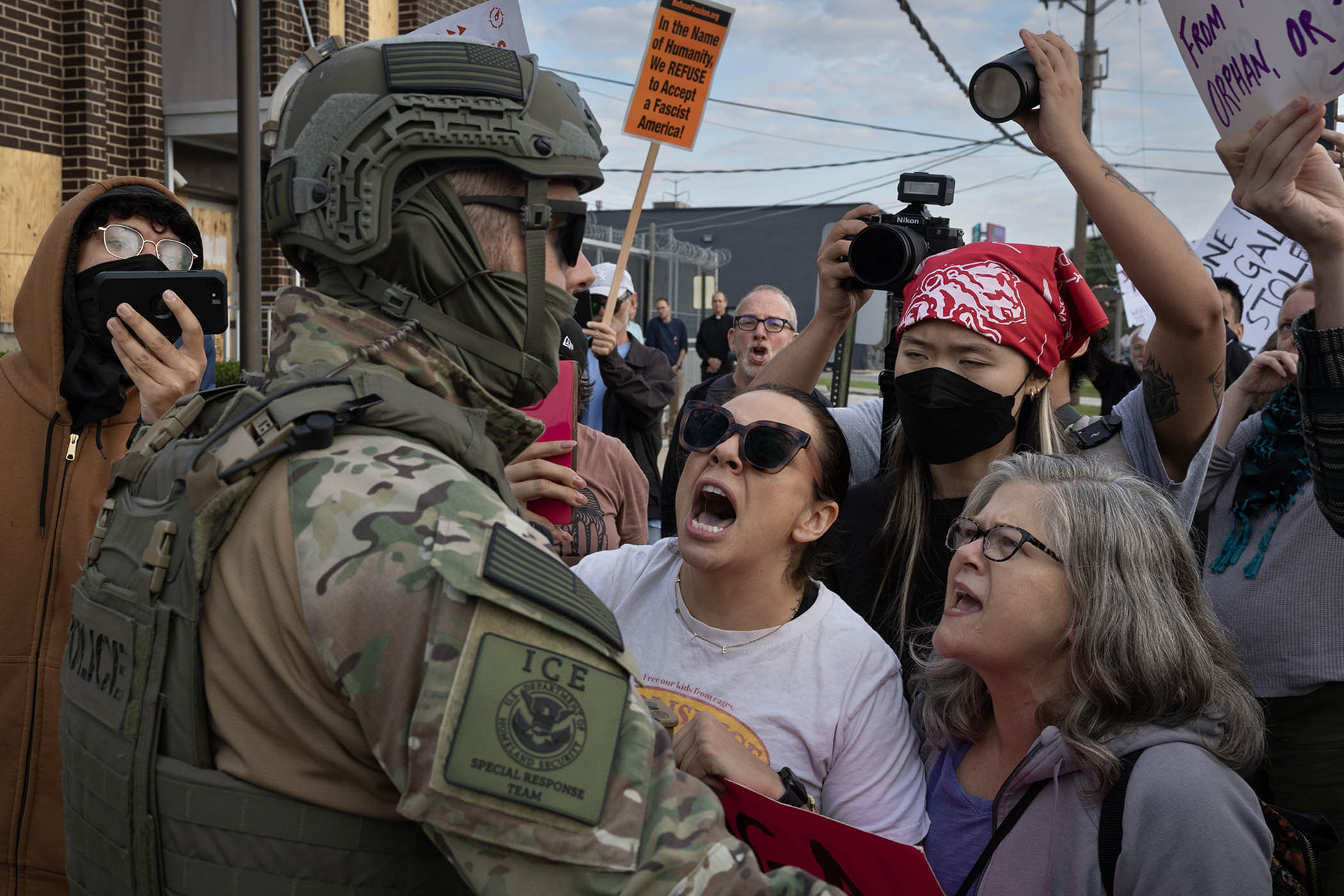
By then, the community call-and-response was in full swing. Dozens more people emerged from the shops; cameras and whistles appeared and the shrill noises filled the air as the crowd started following the agents.
Car horns honked, some people yelled expletives, and the air was thick with the fury of a community under siege. Eventually, after circling the mall, the convoy left.
“I just came out of the clinic for my lunch hour and I heard the whistling two blocks away, so that’s what was so effective, so I just grabbed my whistle and headed in that direction,” said Sacha Peterson, 57, who works in a health clinic nearby.
She had just been trained by volunteer monitoring group the Immigrant Defense Network the previous evening, desperate to do something to protect her community.
“Our federal government is targeting everyone in our community in a very scary way and we are trying to send a really big message back that it’s completely unacceptable and we will not stand for it,” she said, tapping the whistle hanging around her neck.
Newsletters
Choose the newsletters you want to receive
View more
For information about how The Observer protects your data, read our Privacy Policy
With city and state government and law enforcement hobbled by the Trump administration, it is a growing army of citizens who many in the community have come to rely on to keep them safe – even amid fears that they are now targets too.
“To have these federal outsiders come in and target us is awful,” said Rebecca Smith, 43, a communications consultant, as she stood outside a mosque to monitor any ICE activity directed at the city’s Somali community. “They will come for everyone. We have already seen that. They will murder us in cold blood to justify their own agenda.”
The sound of whistles can also be heard in the background of a video released on Friday showing the minute leading up to the death of 37-year-old Good. Horns honk and whistles blow as residents, including Good’s wife, film ICE agents and verbally spar with them. Moments later, the mother of three is dead, shot through her car windscreen by an ICE agent.
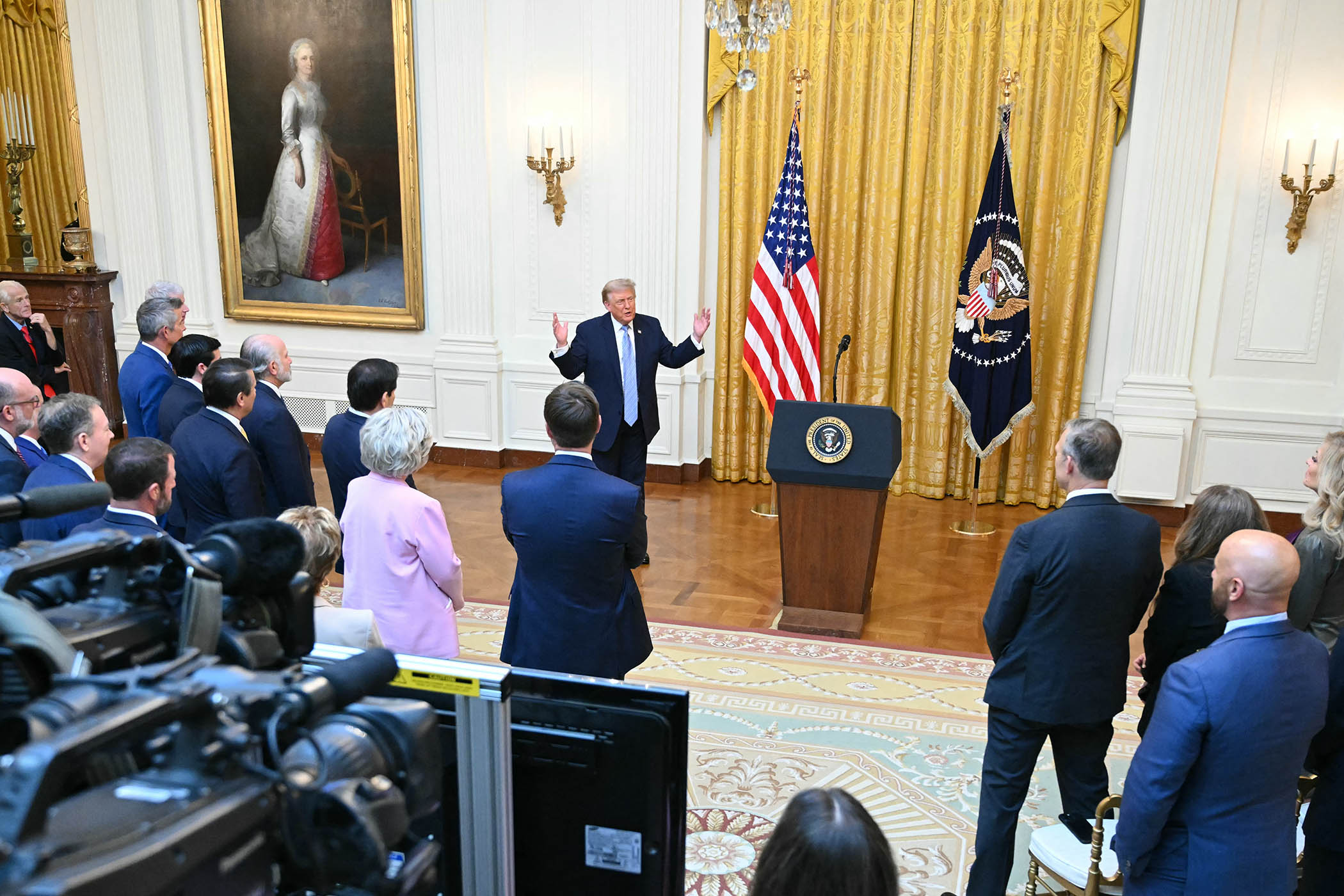
Donald Trump said the victim was a “professional agitator” driving her car at the officer, echoing his vice-president, JD Vance, who has blamed a “lunatic fringe” of leftwing networks for the shooting – though no evidence has been provided to back up their claims.
Democratic officials in Minneapolis and Minnesota have appeared relatively powerless to respond. Local law enforcement has been frozen out of the investigation into Good’s death. Demands by Minneapolis’s mayor, Jacob Frey, for ICE to “get the fuck out” of the city have had no effect, with more federal officers being sent there.
While Trump has also deployed federal agents to other cities , including Washington, Los Angeles, Chicago and New Orleans to enforce his immigration crackdown, people in Minnesota say the deployment here is the biggest yet, with on average 150 people detained every day.
“A lot of people in Minnesota are wondering what our state government is going to do to protect us from the federal government,” said Alex, a resident in his 20s who lives a few blocks from Good and gave his first name only. “Who do you call if there are cars of agents outside? There is no one to call but civilians.”
Minnesota’s governor, Tim Walz, said on Thursday he was prepared to mobilise the state’s national guard to help handle any protests, implying they could be deployed to keep residents safe from any “rogue federal agent”.
As of Saturday morning, there was little sign this would happen. Protests and vigils for Good in Minneapolis remained largely peaceful.
‘They will come for everyone. They will murder us in cold blood to justify their own agenda’
‘They will come for everyone. They will murder us in cold blood to justify their own agenda’
Rebecca Smith, protester
There were isolated outbreaks of unrest at the Whipple building, a federal facility near the airport that has been the target of anti-ICE protests. The appearance on Friday afternoon of far-right activist Jake Lang provoked angry exchanges with protesters.
The Observer witnessed a woman who was sitting on the ground being taken away by ICE agents, as a bang rang out and chemical irritants were dispersed into the crowd. At another entrance to the building, four new recruits with the monitoring organisation were being schooled on how to record the number plates of all vehicles coming and going.
The Whipple building has become the staging post for more than 2,000 federal law enforcement and ICE agents who have descended on the city since 1 December. By comparison, Minneapolis has less than 600 police officers.
“The vehicles are unmarked and grabbing people off the streets all over town,” said an organiser putting the new recruits through their paces. “This is how people can get advance notice.”
This newspaper spent Friday afternoon travelling with volunteers from the Immigrant Defense Network. Manager Edwin Torres DeSantiago said since Good’s death it had received 1,700 inquiries from people requesting training.
“We have no power to stop ICE activity – that’s not what we’re here to do,” said Torres. “What we’re here to do is document, see if there’s any abuses or violations of human rights and constitutional rights, and then we give it to our legal partners.”
Alex, the man who lives near Good, said he was approached by ICE agents on Friday afternoon when he stopped to film an arrest: “They come and say: ‘That’s your car right – are these your plates? We are going to have you on a terrorist list.’” Alex said he was not sure whether to believe them but felt intimidated: “There is a lot of bluff and bluster – and then they shot one of my neighbours in the head yesterday.”
People in Minneapolis are worried about what comes next. They have been here before. The killing of George Floyd in the city in 2020 sparked huge protests and started a nationwide movement that remains a flashpoint between the left and right.
Torres DeSantiago said he has been getting hate mail from the far right and worries that it is going to try to exploit Good’s death to incite violence. Then there is the threat from the administration itself. With the White House referring to vague “leftwing networks” and implying they are domestic terrorists, Torres DeSantiago fears that groups such as his could become the next target:“That is the big question– and a question that a lot of us are looking at.”
Photograph by Scott Olson/Getty Images