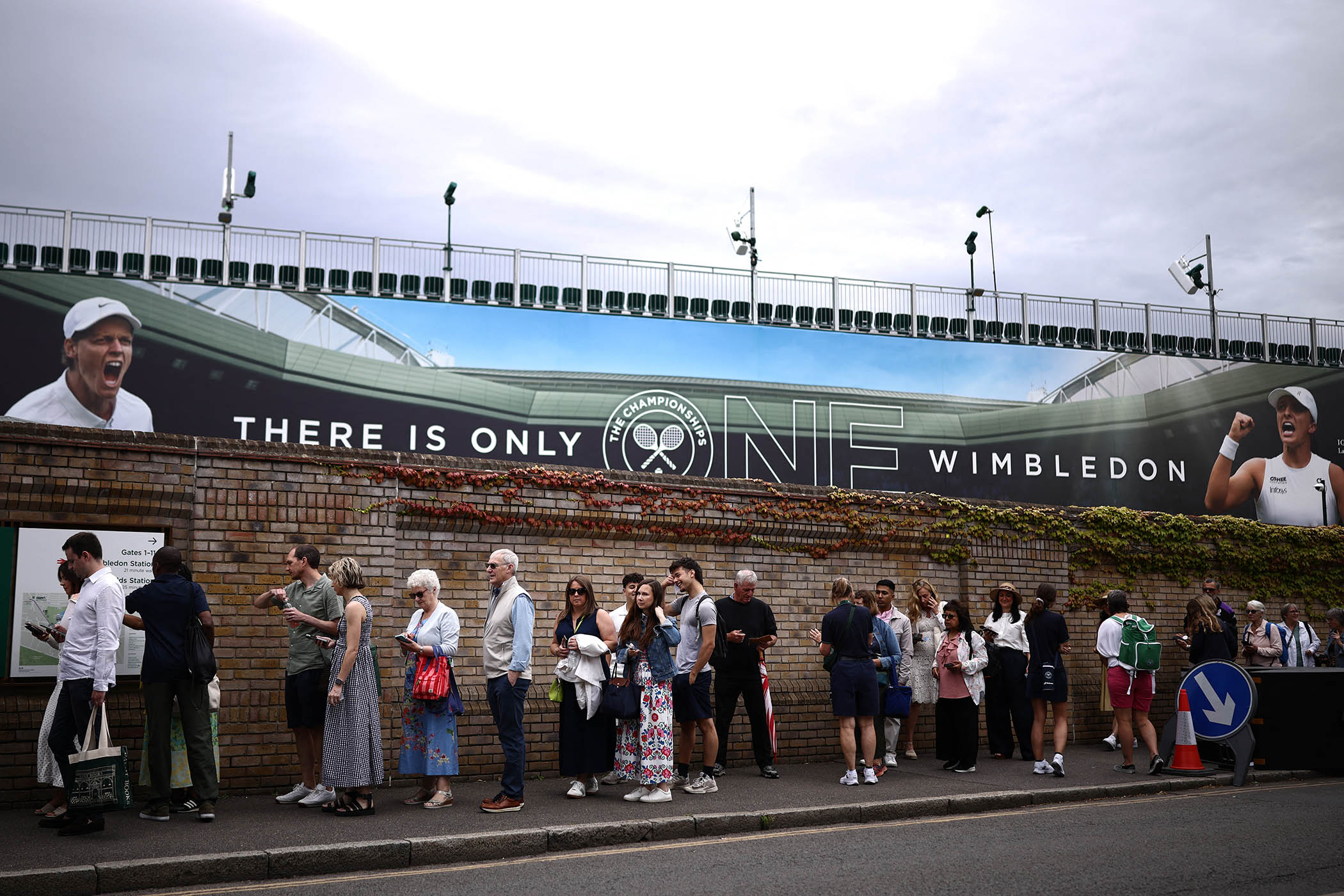


The adage used to be that you just needed to beat the first Tube. If you could grab your spot in the Wimbledon queue before the District line started ferrying people into Southfields, you stood a good chance of getting into the All England Club before play began. Getting a ticket for a show court was unlikely, but a grounds pass – which costs £33 in 2026 – would suffice.
This year, however, “queue fever” has exploded. For a shot at a Centre Court ticket (£80-£350, depending on the day and seat), you not only have to give up your evening to camp overnight but also give up the end of your afternoon too. By 5.15pm last Thursday, 1,482 people were already in the queue for Friday, more than 1,000 more than there were at the equivalent time in 2023. By 5.30am on Friday, before that all-important first Tube had even arrived, the queue had grown to more than 8,000 people. An hour later, new arrivals were being put in the reserve queue, meaning there was no guaranteed entry to the ground.
There will not be a busier week of sport this year than the one just gone. While pubs have been packed with England fans supporting their team at the World Cup, Wimbledon has been full to its 42,000 capacity, the Women’s T20 World Cup has attracted crowds of 20,000, and 500,000 people are expected at Silverstone over the weekend. In the north of England, it is rugby league’s Magic Weekend: record crowds of 75,000 are expected at the Hill Dickinson Stadium in Liverpool. Sports attendance in the UK is booming, and it is big business.
In a world where hype consists of short-form video clips on TikTok or Instagram and Fomo remains a devastating psychic blow, the ever-increasing popularity of live sport is a perfect vector for those who want to ensure that demand far outstrips supply, with the attendant financial benefits. Sport is being taken over by the same impetus that has fans camped out overnight to get a position by the barrier at their favourite pop star’s show – or that has people blocking the streets of Soho to buy a burger from the latest pop-up spot. When Gen Z turned their backs on drinking and sex, you wonder if they knew quite how much time they would instead be spending in queues.
The amount of time and/or money that needs to be dedicated to participate in these events – whether sporting, musical, culinary or theatrical – raises the stakes for the experience. You don’t need to scroll far through social media to find people complaining about how busy the Wimbledon grounds are, where a refreshing glass of Pimm’s to help you cool off from the sun will set you back £13.45.
Yet the seemingly indefatigable British desire to truly feel something, in the unique way that sports provide, is also pushing fans to more accessible events. This effect has already been seen during the football season. With Premier League season ticket prices rising year on year, and champions Arsenal’s now exceeding £1,000, fans have turned to lower-league and women’s football to get their weekend fix. Still, that pales in comparison to what fans have forked out at the World Cup, where a last-minute resale ticket for tonight’s England’s round-of-16 game against Mexico will cost you more than £2,000. Four tickets listed together on the official Fifa website, with a face value of $605 (£460), were on sale for $30,000 (£22,800) each – although whether they sell we will never know.
Equally, the record crowds at the Women’s T20 World Cup have stemmed from tickets in the £20-£50 range, far cheaper than the prices for the recent men’s Test series against New Zealand at Lords, where you had to pay at least £90 to watch England throw the equivalent of a child’s temper tantrum on the pitch. The women’s team meanwhile steamrolled opposition on their way to today’s final at Lord’s, which had sold out before they reached it. They are playing Australia in a fixture that resonates for cricket fans regardless of gender. Consequently, resale tickets are now going for hundreds of pounds themselves. In our sport-obsessed society, we are even now embracing the equal-opportunity possibility of a rip-off.
Photograph by Henry Nicholls/AFP/Getty Images
Newsletters
Choose the newsletters you want to receive
View more
For information about how The Observer protects your data, read our Privacy Policy