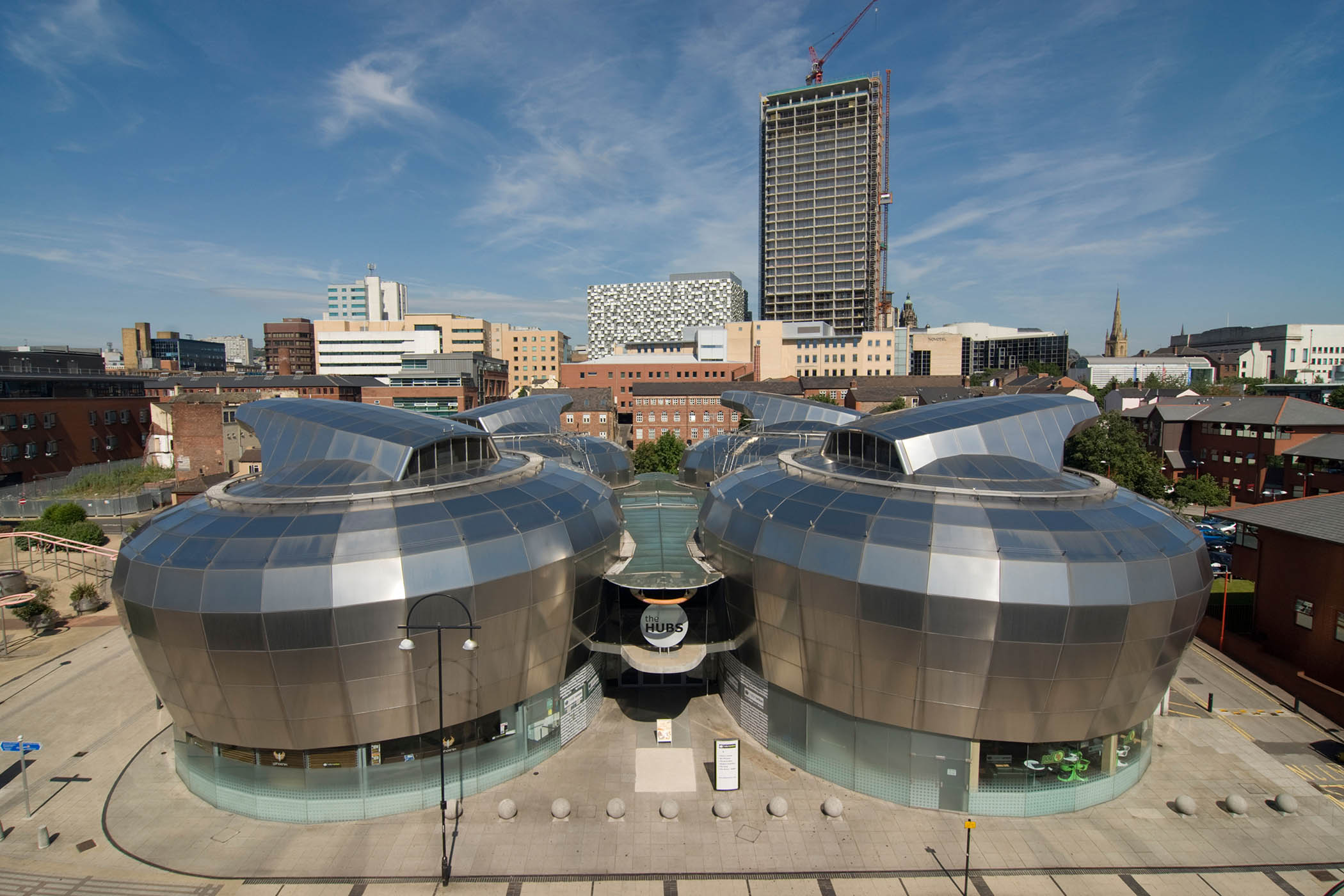

The millennium is officially history. Two buildings put up to mark the year 2000 have made it on to the latest annual update of the buildings at risk register, a list put together by the conservation charity Save Britain’s Heritage of historic buildings that are vacant and in danger of damage or destruction. One is the National Glass Centre in Sunderland, the other the National Centre for Popular Music in Sheffield.
Both were funded with National Lottery money to help regenerate cities hit by industrial decline. Both were imaginative and striking works of architecture. But the Centre for Popular Music – designed in the shape of a giant steel drum kit by the architects Branson Coates – closed after 15 months, becoming the students’ union for Sheffield Hallam University until last year. “It came out of a special moment when public realm and culture were seen to be important,” says its architect Nigel Coates, “and it has become part of Sheffield’s cultural landscape.”
The Glass Centre will close at the end of next month, with its owner the University of Sunderland claiming that prodigious repair and maintenance costs make it unviable. Carolyn Basing, chair of the Save the National Glass Centre campaign, disputes the university’s figures. The centre, which is both a museum and a place for making glass is, she says, “unique, amazing and will never be built again. It brings together different parts of our communities. It is a part of our intangible cultural heritage.”
Both embody the challenge presented by more conventional examples of heritage, such as churches and country houses. Many have outlived their original uses, or are expensive to keep up, or both, but inspire affection and give places identity. The new additions to the buildings at risk register – and more than 200 new entries bring the total to about 1,500 - have plenty of examples of these. They include the magnificent St Vincent Street Free Church in Glasgow by the singular local genius Alexander Thomson, completed in 1859. It has, says Niall Murphy, director of the Glasgow City Heritage Trust, both a “Hollywood” interior and “the most imaginative tower built since Nicholas Hawksmoor and Christopher Wren, “a mixture of Hindu, Greek, Egyptian – utterly idiosyncratic”.
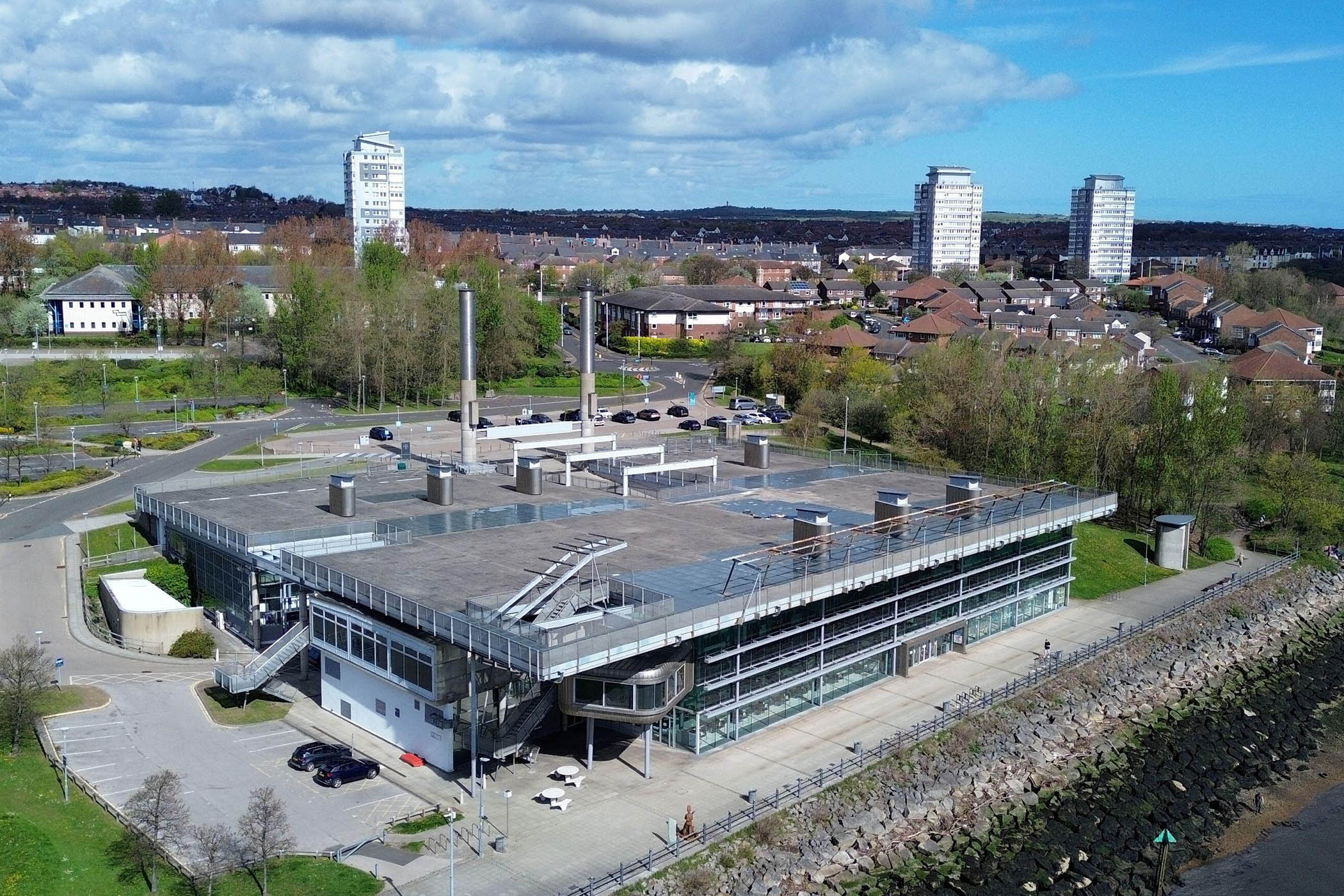
National Glass Centre stands along the banks of the River Wear in Sunderland
Save’s list is drawn up with the help of public nominations, including from community groups who are striving to save local landmarks. For them, a building being identified as being at risk can help raise support and funds. It therefore covers a broad range, from Scottish castles and Grade 1-listed houses to a 1950s bus shelter in Sheringham, Norfolk, which is not officially recognised as a building of architectural or historic interest but has been the subject of a passionate campaign by residents to rescue it from demolition.
The entries represent an array of past lives in the United Kingdom. There are art deco cinemas, collieries in Barnsley and Stoke-on-Trent, a former asylum in York, a workhouse in Fermanagh. There are victims of the decline of high streets, several pubs, and hotels terminated by the Covid pandemic. With some, although it’s rare for anyone to admit this, the owners are likely to be hoping that they can put something more profitable on the site if a historic building is deemed too derelict to save.
It’s not getting any easier to preserve historic buildings. Construction costs have gone up and local authorities’ budgets for conservation have gone down
It’s not getting any easier to preserve historic buildings. Construction costs have gone up and local authorities’ budgets for conservation have gone down
Some are considered “at risk” after falling vacant, or being threatened with closure, which makes them vulnerable to damage. Others are already in a parlous state, such as a windmill in Barton-upon-Humber in Lincolnshire, which a structural engineer has said is “about to collapse like a pack of cards”.
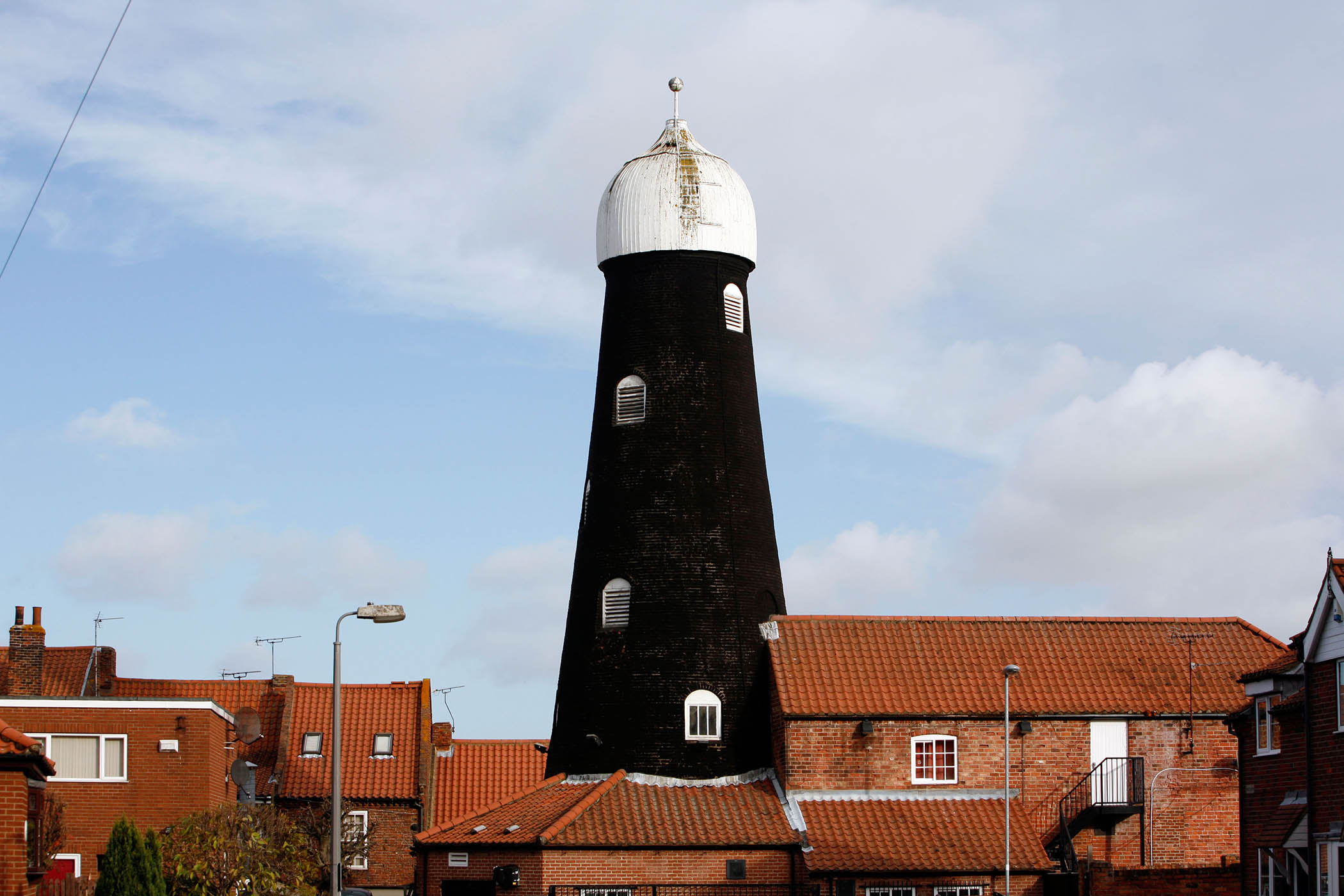
Barton upon Humber
The register offers both hope and concern for endangered buildings. In the past, inclusion on the list has helped to prompt action: the Buttermarket in Redruth in Cornwall, formerly at risk, has been rescued by a community-led and award-winning renewal.
On the other hand, Belmont House, a Georgian and Victorian estate in Herefordshire, has been on Save’s register since 1992, with little sign of effective action. The future of St Vincent’s Street Church, although new to Save’s list – and despite renovations of parts of its fabric – has been a problem for at least 30 years.
It’s not getting any easier to preserve historic buildings. Construction costs have gone up, and local authorities’ budgets for monitoring conservation, let alone funding it, have gone down. It’s not possible to make every fascinating wreck into a delightful food market, as at Redruth, or into a boutique hotel or artists’ studios or any of the other clever uses that preservation campaigns come up with.
Newsletters
Choose the newsletters you want to receive
View more
For information about how The Observer protects your data, read our Privacy Policy
Yet the localities in which these buildings are placed, and the country as whole, would be poorer without them. “If we lose buildings like this,” says Nigel Coates, “think of everything else we’ll lose. We’ll just have blocks of flats and the occasional Tesco.”
Thank you for reading. Tell us what you think by writing to letters@observer.co.uk
Photographs by Bill Stephenson/Alamy, North News and Pictures/Alamy, Gary Calton /Alamy