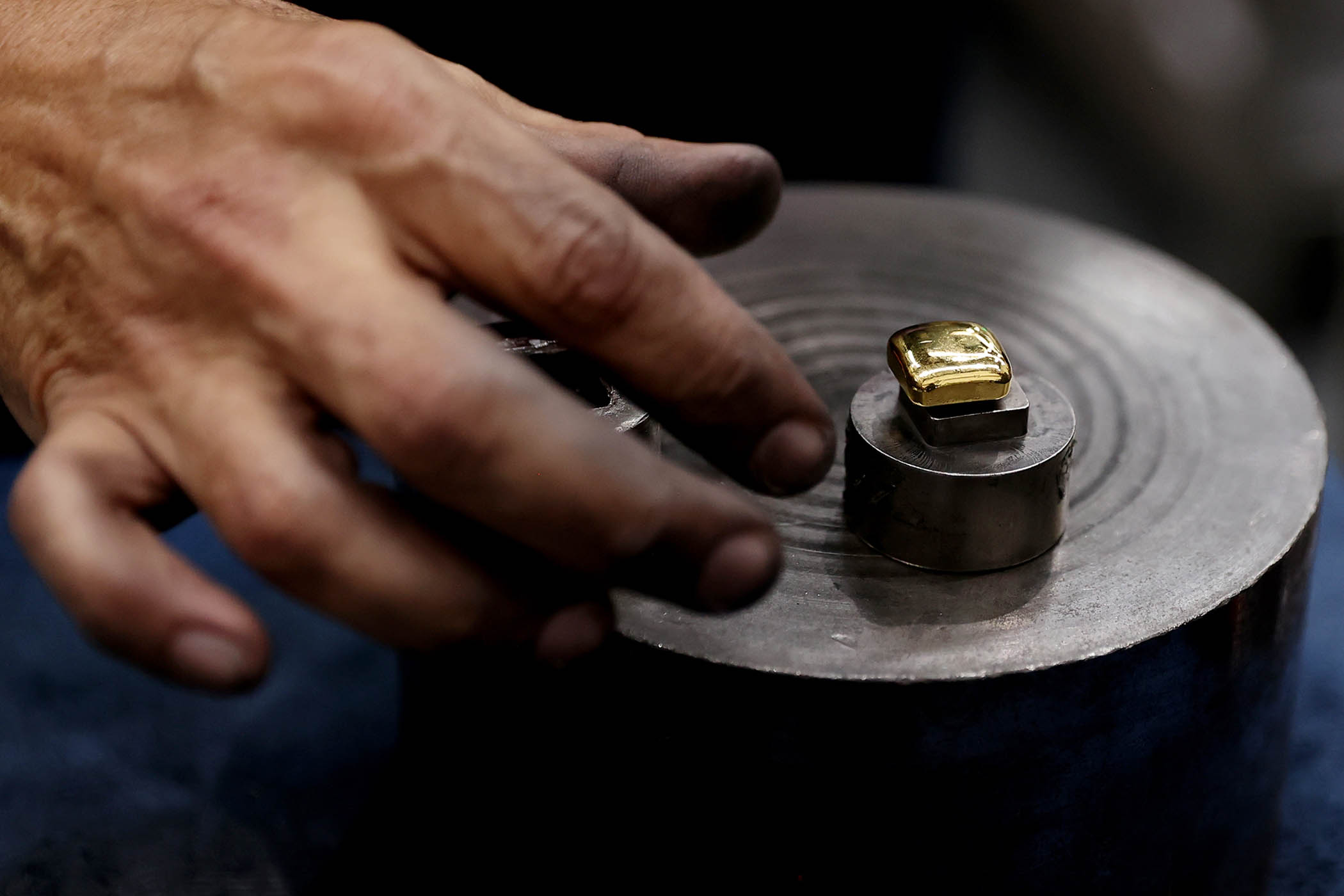


Between 1717 and 1914 it was utterly pointless to invest in gold, because the pound and gold were interchangeable at a constant price, fixed by government. Under the gold standard, as it was known, the owner of a bank note could walk into the Bank of England and swap that note for actual gold. There was enough to cover every note in circulation. That is why a pound note was “as good as gold” – which is where the expression comes from. In fact it was better than that, since it could earn interest, and gold could not.
Supply and demand have determined the price of gold since the collapse of the Bretton Woods economic system in 1967. Since then, the price has gone up, down and up again. It rose spectacularly from 1970 to 1980 – from $35 an ounce to $640. A fraction of that rise was down to inflation, but $570 of it was pure unadulterated profit. The world had caught the gold bug, and those who got in early made an absolute fortune. Then the world changed its mind about gold. By 2000 it had fallen in value to $260, an 80% real-terms loss.
In 1980, the UK Treasury owned 586 tonnes of gold, worth about £55bn in today’s money. Chancellors decided to keep it, rather than selling it and buying other investments. Given what happened to gold prices, that decision cost UK taxpayers about £40bn, plus whatever return we would have gained on other investments. Nobody criticises those chancellors, Geoffrey Howe and Nigel Lawson, for what was, with hindsight, a terrible mistake. That is fair – they had no way to predict gold prices.
In 2000, after 20 years of falling values, their successor in No 11, Gordon Brown, sold off some of the underperforming gold. Unfortunately for him, however, the price of gold then rocketed and we again lost out. It is an iron law of politics that you get criticised for action rather than inaction, so he is ridiculed, but in truth his decision was no worse than those of Howe and Lawson before him.
Between 2000 and 2020, the price of gold rose from $260 to almost $2,000, which is back to 1980 values in real terms. Since then it has continued to shoot up, hitting $3,000 last March, $4,000 in October and $5,000 last month. Anyone who bought gold five years ago, or even a year ago, has made a fortune. Whether they will keep that fortune is anyone’s guess. Serious, sensible people such as Howe, Lawson and Brown – and those who advised them – got it wrong, and many others will get it wrong in future.
In many senses, gold is like crypto: both have value if – and only if – other people want to buy, and if they don’t, the value will fall. That is different from shares in companies such as Tesco, or Barclays, or Rolls-Royce, which have a clear external value. Their shareholders own assets that make products that people want to buy and that will typically lead to a profit.
Traditionally, the price of gold rises when investors fear inflation. In the 1970s it rose with the oil shocks; more recently on fears Donald Trump would appoint a heterodox economist as Federal Reserve chair. That did not happen, though the price is still high, despite recent wobbles. History predicts a fall, but history has been a poor guide in the past, and frankly no one knows. In the last week alone, the gold price has fallen by about 20%, then risen by 15%, making it clear the precious metal is now a risky, speculative asset, rather than a safe haven.
Your columnist is not qualified to give investment advice, but in the spirit of openness, I should say that I have bought gold only once, almost 30 years ago. I have never regretted doing so. Wedding rings are marvellous investments…
Tim Leunig is chief economist at Nesta, the innovation agency
Photograph by Brendon Thorne/Bloomberg via Getty Images
Newsletters
Choose the newsletters you want to receive
View more
For information about how The Observer protects your data, read our Privacy Policy