It’s not often that I find myself laughing out loud at a story from the business pages. But that is what happened when I saw a recent report about the takeover of a European drug research company called AtaiBeckley by the American pharmaceutical giant Eli Lilly for a cool $2.8bn (£2.1bn). The story conjured a vivid memory of one of the more surreal days in my journalistic life.
AtaiBeckley is a pioneer in the use of hallucinogenics to treat a range of mental illnesses including PTSD and depression. Outlawed since the 1960s – because of scare stories and government anxieties about LSD – such research into the use of low-dose psychedelic compounds has lately broken through that legislative taboo. A bill passed by executive order in April by the Trump administration – backed by his health secretary Robert F Kennedy Jr and the podcaster Joe Rogan – made such research not only legal, but a mandated priority.
It wasn’t the idea of Donald Trump and his goon squad suddenly tuning in and turning on and dropping out that made me smile, however. It wasn’t even the fact that the lead compound that AtaiBerkely is testing is derived from the poison of the Sonoran desert toad. What made me laugh was the realisation that I had a bit of history with the Beckley part of AtaiBeckley. Back in 2019 I spent a day at the headquarters of the Beckley Foundation. Except I knew it as “Brainblood Hall”.
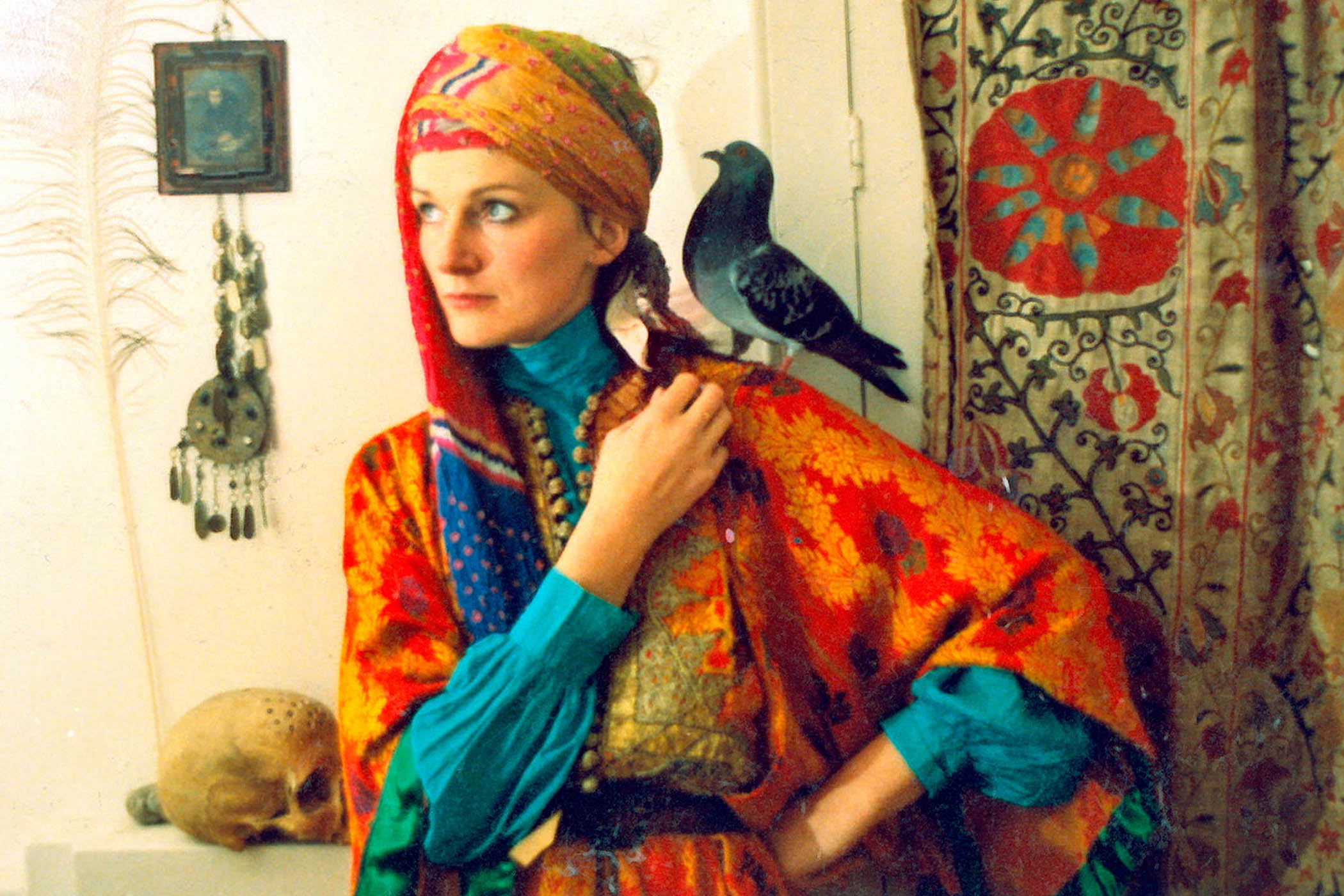
A Tudor mansion in rural Oxfordshire, Brainblood Hall was the home of the tireless campaigner for the benefits of hallucinogenic drugs Amanda Feilding, the Countess of Wemyss and March. Feilding’s advocacy for psychoactive substances was based on her own extensive experiences of them in her wild youth in the 1960s and throughout her life. Like some character in a Thomas Pynchon novel she had created the Foundation to Further Consciousness back in the 1990s, in association with the original discoverer of LSD, the Swiss chemist Albert Hofmann (he stumbled on it by accident in November 1938, the week after Kristallnacht, when looking for a cure for migraine).
When I met Feilding in 2019, she was 76, and sensing that her four decades-long campaign was getting some traction with policymakers. New Scientist magazine had recently dubbed her “the Queen of Consciousness”. The influential New York Times writer Michael Pollan had based his book-length study of the positive effect of microdosing hallucinogens on a Beckley-funded study at Johns Hopkins University into the use of magic mushrooms to combat depression in terminally ill patients.
It wasn’t just those tireless policy arguments that had drawn me to contact Feilding to see if she would speak to me about her life, however. Feilding was perhaps most famous for her belief in the powers of trepanning, the practice observed in several ancient cultures that involved drilling a hole in the skull, apparently to enable a freer flow of shamanic spiritual insight. Feilding had been so convinced of its efficacy that she had taken a dentist’s drill to her own skull in 1970. A film she made of that gory procedure could be found in the further reaches of YouTube. As well as the operation, the film featured a tame pigeon that Feilding had adopted as an orphaned squab, which subsequently lived with her for 15 years.
‘We used to call it a psychovitamin. It makes you more lively, you enjoy your thoughts more. You can find your flow’
‘We used to call it a psychovitamin. It makes you more lively, you enjoy your thoughts more. You can find your flow’
With some of this in mind, I persuaded Feilding to let me visit the home she had rechristened Brainblood Hall. And when I read the report about Eli Lilly, all the vivid details of that day came back to me.
Feilding had grown up at Beckley Park. As soon as I arrived she bombarded me, genteely, with her team’s latest research which, she said, all supported her lifelong faith that in controlled dosages LSD-like chemicals had the capacity to “get deep down in the brain and reset it – like shaking up a snow globe”. She herself had begun microdosing in her 20s, except “we used to call it a psychovitamin”, she said. “It makes you more lively, you enjoy your thoughts more. You can find your flow.”
After a couple of hours that involved a blizzard of scientific reports and close study of fMRI scans of depressed and tripping brains, Feilding took me out to show me the spot where she first found her own flow in the gothic landscaped gardens of Brainblood Hall. She took me to an old tree stump that she believed housed a personal deity; her girlhood game, aged five or six, had been to find ways to make that green god laugh, “that kind of first orgasm experience that I think a lot of young children have and then forget”.
Feilding, it became clear, had never forgotten. Her subsequent aim in life, she told me, had been to recreate those formative awakenings. At 16 she left her convent school and went in search of her godfather, a man called Bertie Moore, who had worked in intelligence during the war and who she believed was living as a Buddhist monk in Sri Lanka. She got as far as the Syrian border, where visa issues meant she was forced to spend some time living with nomadic Bedouins before returning to study comparative religion at Oxford.
Newsletters
Choose the newsletters you want to receive
View more
For information about how The Observer protects your data, read our Privacy Policy
At a party in 1965 a friend spiked some coffee she was drinking with a large dose of a hallucinogenic substance and she almost died. She then spent three months back at Brainblood Hall recovering from the “psychic wound”. Soon after that she came into the orbit of a cultish Dutch proponent of trepanning, Bart Huges, who had not long returned from Ibiza, where he had been manufacturing his own LSD. (Huges, Feilding told me, had once been the top medical student in the Netherlands. “Then,” she said, “he called his daughter Marijuana, and trepanned himself, and inevitably they failed him in his finals.”)
She fell in love with Huges and with his ideas. His “brainblood” philosophy was rooted in the belief that LSD allowed users to experience the world something like a newborn baby did. The way to maintain this connection fully, Huges had at some point controversially decided, with zero scientific foundation, was to drill a hole in the skull, recreating the fontanelle that allows infant consciousness to swell. He performed this operation on himself and encouraged friends and followers to do the same.
“When I did it myself,” she said, “I was very careful; I had practised [with the drill] for a long time.” She made a small hole, using a pedal-operated dentist’s drill. The film she made was subsequently shown in art galleries; a reviewer who saw it in 1978, at the Suydam Gallery in New York, reported that several members of the audience fainted, “dropping off their seats one by one like ripe plums”. What did she think, I wondered, when she looked back at that footage of her youthful self blithely performing the bloody operation without anaesthetic. “Actually, I think it is rather beautiful,” she said.
In 1979, when Margaret Thatcher came to power, Feilding ran for parliament in Chelsea on the platform “Trepanation for the National Health”. She received 40 votes.
For most of the rest of the afternoon at Brainblood Hall, the countess and I drank tea together while she talked me through all the trials that the Beckley foundation - whose partners included Professor Colin Blakemore, director of the Oxford University Centre for Cognitive Neuroscience, and his counterpart at Cambridge, Professor Trevor Robbins - were sponsoring or collaborating in: studies investigating the role psychedelics might play in treating everything from drug addiction to Parkinson’s disease.
In the years since then I have often thought about that strange afternoon. The Eli Lilly news prompted me to fill in the parts of the story I had missed. The Beckley Foundation, I now discover, created a commercial company, Beckley Psytech, at the end of the year I visited Feilding, 2019, with the countess and her son Cosmo Feilding Mellen as directors. In 2022, Feilding was given the Women’s Entrepreneurship Day Organization’s Science Pioneer Award at the UN. Three years after that, not long after reporting that her immunotherapy treatment for liver cancer had not been a success, Feilding sadly died at home aged 82.
The month after his mother’s funeral Feilding Mellen announced that the company had merged with Atai, a Berlin-based pharmaceutical research company. Atai was founded by Christian Angermayer, another long-term evangelist of the potency of psychedelic drugs in treating mental health problems, and originally backed with seed funding by PayPal billionaire, Trump whisperer and self-taught antichrist aficionado Peter Thiel.
AtaiBeckley has a particular secret sauce. Its lead research candidate is a compound that claims to mimic the structure and effect of the poison of the Sonoran toad; 5-MeO-DMT, a compound that had been classed as a Schedule I (Category A) narcotic only in 2011, and is known informally in some counter-culture circles as “the God molecule”.
The New York Times reported in July 2025 that due to the widespread publicity about the hallucinogenic properties of the venom, the toads were being hunted into extinction in their natural habitat in Mexico. One of the larger toads on the continent, the creatures have smooth olive-green skin with large glands behind each eye. When disturbed, those parotoid glands secrete toxins as a defence mechanism. AtaiBeckley’s creation of a synthetic equivalent it calls BPL-003 or mebufotenin benzoate, will, it believes, create a nasal-spray solution for treatment-resistant depression (and a more sedate existence for Sonoran toads).
‘When I did it myself,’ she said, ‘I was very careful; I had practised for a long time.’ She made a small hole, using a pedal-operated dentist’s drill
‘When I did it myself,’ she said, ‘I was very careful; I had practised for a long time.’ She made a small hole, using a pedal-operated dentist’s drill
Serious scientists are offering caveated optimism about the potential efficacy of the drug. Search the looking glass of the internet, though, and you discover that perhaps its leading proponent and populariser is the disgraced former heavyweight champion and convicted rapist Mike Tyson. The boxer credits the substance with curing his ruinous addiction to cocaine and getting in shape to fight the absurd YouTuber Jake Paul for $20m. In a 2024 interview Tyson explained how he’d “had the experience of smoking some of the toad venom. You bust [the toad’s] little pimple and the pus comes out. We put it on a window, it hardens up, we make fine ash out of it, like sawdust or whatever, and we smoke it.” He described the experience as “the closest I ever been to God… I saw the ancient shit, like the Aztec, shit from Africa. I saw my ancestors during prehistoric times. It’s really creepy. And then next thing you know, you wake up and you’re crying or something.”
Trepanning, Trump, toads, Tyson. Sometimes contemporary life makes it a challenge to join the dots in the news. I did suspect, however, reading that Eli Lilly story, that Amanda Feilding would have had a good go trying.
When I left Brainblood Hall, the Countess of Wemyss and March came down to the gravel drive to see me off in traditional fashion, still proselytising about narcotics in the gathering gloom, promising to send me reams of papers and studies, to hook me up with distinguished professors across the world.
Did she, I wondered before I left, retain the faith in a meaningful universe that she’d felt as a child all those years ago, in front of her tree stump god, when she had her spiritual awakening?
She looked up at the stars which were just starting to make themselves visible in the inky sky above the roofline of her mansion. “Well, it is utterly amazing, whatever you call it,” she said, gesturing at the heavens. “And on every scale: billions of stars, billions of neurons in your brain.” She laughed. “I think it’s reasonable to believe there is some kind of connection between all of it.”
Photograph Courtesy of Amanda Feilding