

On 17 October last year Dr Sultan Al Jaber, the UAE’s minister for industry and trusted advisor of the sheikh, conducted an official trade visit to Germany.
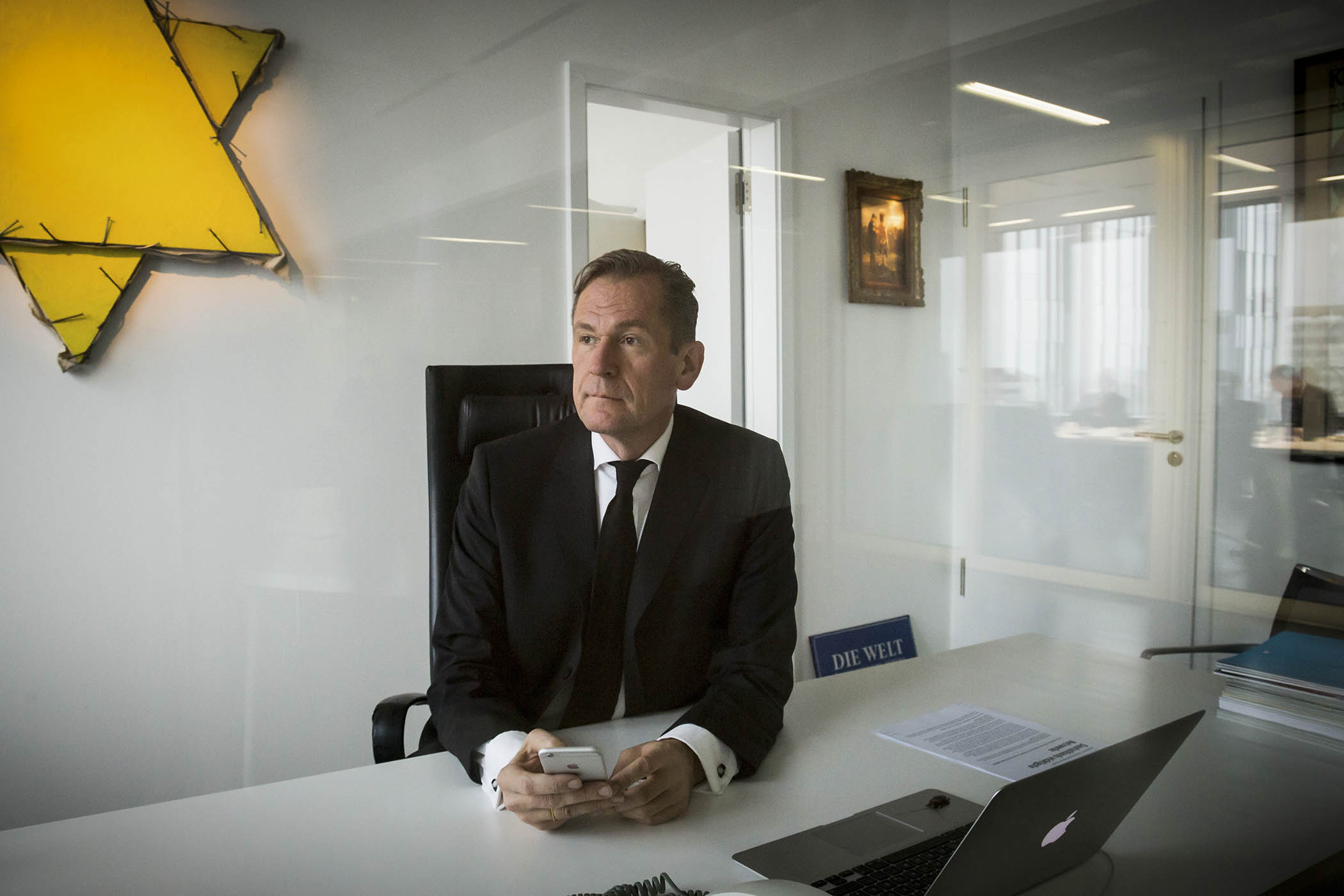
Bilateral meetings included one with the chancellor, Friedrich Merz, and – more surprisingly – with Mathias Döpfner, CEO and chair of Axel Springer SE, one of Europe’s largest publishing groups housing Politico, Business Insider and Bild.
Months on, that meeting appears to have borne fruit, although Axel Springer told The Observer it would not comment on the discussions. Among the many hats he wears, Al Jaber also holds the role of chairman of RedBird IMI, a privately owned media group that this week made the surprise decision to sell its option to buy the UK’s Telegraph newspaper to Axel Springer for £575m.
For Döpfner, the deal marks the end of a long hunt. In 2004, the 6ft 7in German made a bid for the Telegraph, but lost out to a debt-loaded bid from the Barclay brothers to buy it for £665m. In 2015, Axel Springer looked at acquiring the Financial Times but was outmanoeuvered by Nikkei. In 2023, when the Telegraph once again went up for sale following Lloyds Banking Group’s seizure of the title from the Barclays, Döpfner made his interest plain. Now, in his own words, his 20-year “dream has come true”.
It’s a stinging irony for a newspaper which has run headlines including: “What’s Hitler got to do with the euro?”; an exhortation for Britons to “take back their country” during Brexit; and “The Fourth Reich is here – without a shot being fired”, a piece by Simon Heffer railing against “the German domination of the EU”.
Döpfner, who was born in Bonn, then West Germany, has scuppered a merger of the two most powerful conservative titles in Britain – the Daily Mail Group Trust (DMGT) and the Telegraph. It leaves the owner of DMGT, Lord Rothermere, scratching his head about what to do about the Mail’s presence in America, where it is losing traffic to Google search. It leaves the Telegraph working out what to do with its Europhobia.
“[Döpfner’s] put this deal together in a few days, and it’s 100% cash so he’s gone full out,” says former FT editor Lionel Barber. “That does two things: one, it salves a sore going back 22 years, when he first tried to buy it and was snubbed. Two: he really does want to join the elite club of global media owners… He wants to make [the Telegraph] a global proposition.”
At the same time as Döpfner was shaking hands with the UAE minister, editors at the Telegraph were waging a campaign on the newspapers pages against previous buyer RedBird, alleging its chairman was influenced by China – a claim which RedBird denied. This had followed a previous push, made alongside conservative politicians, to bar an offer by the joint company RedBird IMI, on account of its funding from the Middle East. It worked. A law was passed blocking foreign states from owning more than 15% of UK newspapers.
The conditions for an all-British owner looked favourable. So, in late autumn last year, Lord Rothermere launched a £500m bid for the title, backed by a loan from NatWest.
But the many hurdles to acquisition – not having as much ready cash, a regulatory process initiated by a naturally suspicious Labour government and sticking points with the seller – favoured the fortunes of a new bidder.
Newsletters
Choose the newsletters you want to receive
View more
For information about how The Observer protects your data, read our Privacy Policy
Lord Rothermere is in the process of a divorce from his wife of 32 years, Claudia. It is understood the couple have separated and are talking to lawyers. The Observer approached a spokesperson for Lord Rothermere who declined to comment.
The family owns a London property in Holland Park and the Ferne Park Estate in Wiltshire. It’s unclear whether Claudia holds any stake in DMGT, or whether she would be bought out in the event of the couple’s legal separation. Their eldest son, Vere, is chief commercial officer at the group. “She’s not technically involved in it at all, but things never work out like that in family-run businesses,” said a media source.
Last year there came a signal that the couple’s interests might be diverging. Electoral Commission figures revealed that Claudia donated £50,000 to Reform UK on 30 September 2025. It was the first time anyone in the family had donated to a political party since the 1st Viscount gave £40,000 to the United Empire Party in 1930.
Döpfner’s audacious deal – which saw Axel Springer jettison its former partner, the British born US publisher Dovid Efune – won the affections of Gerry Cardinale, managing partner of RedBird Capital Partners, who had clashed with the Telegraph’s editors. They in turn used the disagreements to sound the alarm about fears of editorial interference.
RedBird is involved in Paramount Skydance’s bid for Warner Bros. which comes with its own regulatory hurdles - including $24bn from the sovereign wealth funds of Saudi Arabia, Qatar and Abu Dhabi.Ironically, the US Communications Act of 1934 prohibits foreign individuals, governments, or corporations from directly owning more than 20% of a US broadcast station licensee and whilst no individual wealth fund will have 20% of the final bid, the Committee on Foreign Investment in the United States is likely to subject this deal to some onerous scrutiny. Cardinale’s attention was focused on the US and a deal in the billions, not the millions.
After Axel Springer’s gazumping, questions will be raised about the future editorial leadership of the Telegraph. But victory will be sweet for Döpfner, given how close he came to claiming the FT in 2015.
Media mergers historically tend to move gradually – and then suddenly. But Döpfner’s deal is not immune to regulatory processes. RedBird will need a derogation from culture secretary Lisa Nandy to sell the Telegraph call option to Axel Springer and the company can expect a public interest intervention notice in due course.
Döpfner himself is reputable but controversial. In 2016, he said Brexit would be harder on Europe than the UK. He is friendly with Elon Musk and was consulted on Musk’s support for the AfD. He also texted executives in 2020 that they should “pray” for a Donald Trump victory – something he later laughed off as a joke. His German newspapers include Bild, a tabloid that offers the same editorial mix as the Sun; Die Welt, a more liberal, cosmopolitan title that still leans to the right; and the centrist Polish paper Fakt.
Döpfner took cues on publishing from his surrogate father, the late George Weidenfeld, whom he described as “the opposite of cancel culture”. On the pages of his new venture, it seems likely that he will embrace a range of voices. Abi Watson, an analyst at Enders, noted the “trophy asset multiple” paid by Axel Springer: 14.7x the Telegraph’s EBITDA in 2024 – almost exactly the same as the Nikkei multiple. “The price reflects the fact that RedBird IMI overpaid in the first place, setting a floor that subsequent bidders have had to match.”
Axel Springer says it intends the Telegraph to become "the leading centre-right media outlet in the English-speaking world”, with plans to expand into the US.
The avowedly Atlanticist, pro-EU and pro-Israel company – which has flown an Israeli flag at its headquarters since 7 October 2023 – may take some getting used to as owners.
“The staff here are, as far as I can tell, generally optimistic about Döpfner, not that they had anything against Rothermere,” says a Telegraph source. “But there’s no ‘little Englander, we don’t want the Germans stuff’.”
What does the deal mean for the Telegraph’s editorial stance?
Axel Springer journalists work under the “five essentials” enshrined in the company’s articles of association. All staff working in Germany have to agree to promote them – staff in other countries have had some latitude. They are to:
Stand up “for freedom, free speech, the rule of law, and democracy”;
“Support the right of existence of the State of Israel and oppose all forms of antisemitism”;
Advocate for “the alliance between the United States of America and Europe”;
“Uphold the principles of a free market economy, including the social market economy to support the workforce”;
“Reject political and religious extremism and all forms of discrimination, including racism and sexual discrimination”.
For a newspaper that spent years campaigning for Brexit, there’s a certain irony to the acquisition.
Photograph by New York Times/Redux/eyevine