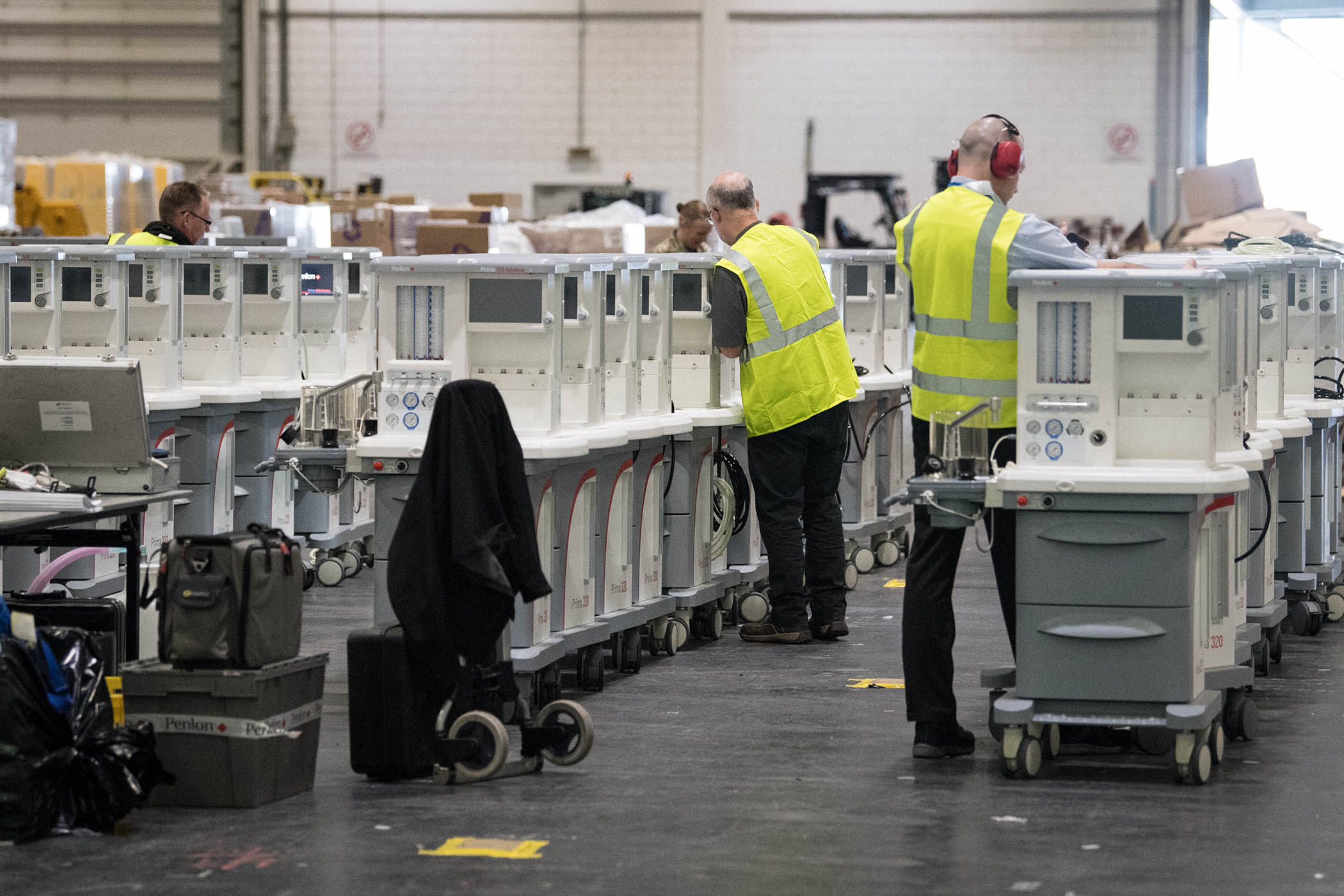


Thousands of ventilators bought for £50,000 each during the Covid pandemic were sold for just 1% of their purchase price after never having been used, according to a Freedom of Information request submitted by The Observer. Some were auctioned for as little as £100.
More than 3,000 ventilators bought for £135m in April 2020, when it was feared the existing NHS capacity would be overwhelmed by the spreading coronavirus, were auctioned off four years later for less than £1.5m.
The UK Covid-19 Inquiry will this week publish its report covering procurement decisions that led to billions of pounds of taxpayers’ money being wasted on unused or unusable personal protective gear and other equipment. The independent inquiry into the UK’s response to the pandemic and its impact, chaired by Heather Hallett, heard evidence on procurement last March.
Documents released by the inquiry and examined by The Observer reveal the fraught atmosphere within government procurement teams that found themselves competing on the global market for ventilators that were going up “exponentially” in price.
An internal report by the Department for International Trade described it as a “wild west” in which machines were changing hands “over five times” in a fortnight before selling at “many times over” their market price.
Pop-up auctions were taking place at secret locations in China with a few hours’ notice and UK government representatives inside the country joined queues of cars full of middlemen, sometimes in the dead of night, and were asked to pay deposits just to view the ventilators.
NHS “reasonable worst-case” modelling at the start of March 2020 suggested it could need up to 90,000 beds with ventilators but found it had fewer than 8,000 available, though the estimated demand was later revised sharply downwards.
The government decided to buy as many ventilators as it could as quickly as possible while asking UK manufacturers to scale up production through the “Ventilator Challenge”.
One email chain within the Department for International Trade in China discussed an offer of “3000+ for immediate shipment … But at a very high price” which “represents a doubling of yesterday’s price per unit offered by these types of credible intermediary”.
The Department for Health’s biggest single ventilator order came not direct from China but through Excalibur Healthcare, a new supplier that won contracts worth £135m to supply 2,700 Aeonmed VG-70 intensive care unit ventilators. Excaliber Healthcare was founded in 2020 by the biotech entrepreneur Professor Christopher Evans but was sold in 2022 to new owners and subsequently put into liquidation.
Newsletters
Choose the newsletters you want to receive
View more
For information about how The Observer protects your data, read our Privacy Policy
The National Audit Office later found the price – an average of around £50,000 each – was “much higher than the earlier prices for the same machine”, but in 2024 a former representative of the now liquidated company said it made less than a 10% profit margin.
The machines were never used and three years later the DHSC paid logistics firm Kuenhe and Nagel £300,000 for “storage, handling and auctioning services”.
More than 3,000 ventilators, most from Excalibur but including other VG-70s purchased in smaller quantities and more cheaply from other suppliers, were listed by a specialist medical auctioneer in 2024. Following a Freedom of Information Act request, the DHSC confirmed that it “received a total of £1,497,075.98 from the auction of the ventilators”.
More than 50 were bought using a £5,000 fundraiser by the Medi Tech Trust charity, backed by TV star Carol Vorderman and donated to hospitals throughout Africa. The identity of those who bought the majority of the ventilators is not known.
A Whitehall source said that it was “not possible” to know how many of the machines auctioned came from the Excaliber order without going through every serial number. They said that 3,000 of the same model had been deployed for use in the NHS or given as international aid.
Photograph by Stefan Rousseau/AFP/Getty Images