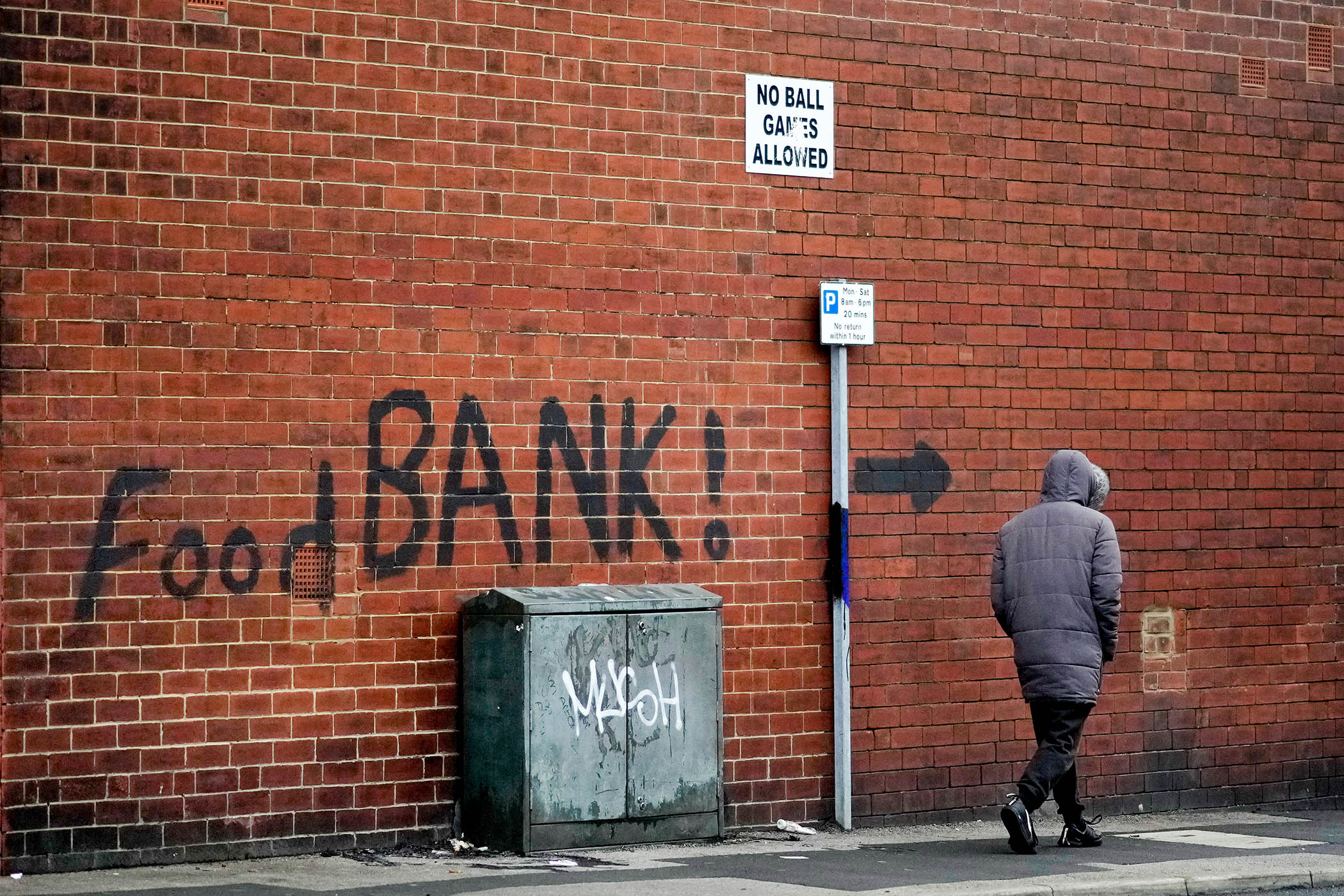


Record numbers of Britons now live in “very deep poverty”, according to the Joseph Rowntree Foundation, which means they are unable to cover the cost of food, energy bills and clothing. The country’s most-deprived neighbourhoods will have higher crime rates and worse unemployment by the end of this parliament, the Independent Commission on Neighbourhoods predicts. People’s perceptions of their local area, as mapped by a University of Southampton study, is one of decline on almost every measure. A “Review of Working Class Participation in the Arts” in Manchester exposed yet again how barriers against working-class involvement in the arts are becoming more embedded.
Every week, it would seem, there is a new report, sometimes several new reports, about the challenges confronting working class people and about the entrenchment of deprivation and inequality. And, yet, while challenges facing working-class communities excite much debate, from the cost of living crisis to the closure of pubs, the working class itself is often strangely absent from such conversations. In discussions of poverty or deprivation, these issues are too often detached from questions of class, becoming instead proxies for class. Equally, too often, politicians take working-class concerns seriously only when they impinge upon wider political apprehensions, such as political realignment or the upsurge in the Reform vote.
Consider the discussion of the work of Southampton University’s Will Jennings on “what the English think about their local area”. In a series of surveys over the past four years, residents were questioned about how their area compared with other districts nearby, and about how things have changed over the past decade.
Most people are proud of the area in which they live but many also feel that it has been left behind and neglected by government. Unsurprisingly, the more deprived an area, the less proud its inhabitants are of it, and the more they feel left behind.
When asked about how things have changed over the past 10 years, on no measure do people believe things have improved. They worry most about the decline in the condition of the local high street, levels of crime, access to good-quality healthcare, and opportunities for young people. Perceptions of decline were particularly noticeable during the final years of the last Tory government (in surveys taken in 2022 and 2024), and, despite the current narrative, people appear to feel slightly more optimistic under Labour, especially when it comes to healthcare, public transport and, most surprisingly perhaps, housing.
Reform voters, working-class people, older people and the white British are most likely to perceive their area as having got worse. (The sample size was too small for specific data for minority groups, so it is not possible to compare the views of white British people with those of other ethnic groups.)
By far the biggest predictor of whether people see their area as having deteriorated is not, though, demography or voting preference but, as might be expected, the material conditions of where they live. The more deprived the area, the more likely it is that people perceive decline.
Reform voters are among those likely to perceive their area as having got worse
Reform voters are among those likely to perceive their area as having got worse
The study presents a complex picture of perceptions of local deterioration. At its heart, though, is the message that people’s assessments are shaped mainly by the concrete reality of their lives and experiences. As Jennings put it in an email this week: “Reform supporters tend to be more negative about their local area because they are more likely to live in deprived areas”.
Yet, the reporting of this study, and more generally of “levelling up”, has tended to be narrowly political. “Labour risks election wipeout unless it improves Britain’s high streets, study finds”, was one headline to an article about Jennings’s study. “Labour to be 'washed away in a tide of discontent' unless it tackles decline of the high street”, was another. “The high street: Britain's next political battleground?”, yet another. “The report didn’t get picked up much at all”, Jennings observes, “until it became apparent there was a hook about electoral peril”.
These kinds of headlines are not new. “Closed shopfronts open the door for Reform”, reported the parliamentary magazine The House six months ago in response to another study on decaying high streets. “To fend off Reform, mainstream parties must address the tangible decline of British towns”, declared the academic website The Conversation.
Newsletters
Choose the newsletters you want to receive
View more
For information about how The Observer protects your data, read our Privacy Policy
Concern about the rise of Reform is understandable, and it is certainly necessary to challenge its politics. Yet much of the commentary reads as if improving high streets is not a good in itself, a measure important in enhancing people’s lives, but is primarily a means of undermining the Reform vote or staunching Labour’s decline. It reads, too, as if politicians and commentators take issues of deprivation and decay seriously only when faced with a political challenge.
Many local MPs are sensitive to constituents’ needs and take up many of their battles. But nationally, such needs tend to be noticed only when they fit into the political grid. It is the kind of cynicism that has driven many towards Reform in the first place.
Of course, Reform is equally cynical in exploiting working-class concerns. The answer, though, is not to turn every issue into a vehicle to stop Reform, but to take seriously people’s concerns about the deterioration of their lives and to ensure that addressing those concerns is regarded as important in itself.
Photograph by Christopher Furlong/Getty Images