

Back in 2015, when the world was a bit steadier, I was invited over to Google’s headquarters in Mountain View in California. The advertised reason for the invitation was that I, along with a journalist from Germany and another from France, could get a preview of the blue sky thinking that was going on at the Googleplex: the frontier research that they were doing that would shape the way we live now. Therefore I got to drive in a driverless car; see a prototype device that allowed promised simultaneous translation from any language; hear about the tech that promised to let you know what you wanted before you wanted it.
Over the course of a couple of days, however, talking to Google execs including briefly to co-founder Sergey Brin, it became clear that there was perhaps another motive in mind for letting us see the Wonka-like innards of the smoothly efficient campus. At one point, along with the other two journalists, I sat down with the soon to be appointed CEO of the corporation, Sundar Pichai. The thrust of his concerns became clearer; why, given that Google had given such generous gifts to the world – the whole of human knowledge in your pocket and searchable for free! – was the company portrayed so negatively by European politicians, and increasingly by its citizens? What could Google do, Pichai wondered aloud, how could they make their image match more closely with all the wonderful science they were pioneering – how could they change the story?
At the time, before Brexit derailed European consensus, antitrust laws were threatening Google’s business model and practice. There was talk of breaking up the company’s virtual monopoly in various markets, particularly search and the Android platform. Pichai was and is a remarkably insightful and quite self-effacing figure, who exemplified Google’s democratising vision of itself: he had been raised in a village in Tamil Nadu In India and, through education and application, by 43 had risen to lead one of the most powerful corporations in the world. He seemed genuinely baffled that the European commission should be doubting that corporation’s commitment to “organising the world’s information and making it universally accessible” – what’s not to like? We talked through all this for half an hour, and at the end he asked each of us journalists in turn if we could do one thing to improve Google’s image what would it be?
Well, I said, “have you ever thought of paying more tax?” Wouldn’t it change the narrative overnight, I wondered, if Google paid corporation tax in the countries in which people used its services, rather than through its sweetheart low tax deal in Ireland? (In France that year Google paid just €6.7m in tax; its European revenues were $22.8bn).
Pichai looked at me for a moment, as if amused by my naivety, or not quite getting the joke – that’s not how it works – and the meeting ended on an awkward note.
I was reminded of that exchange at the end of last week when a ballot on a proposed “Billionaire’s Tax” was certified by California state officials, and will be voted on by the state’s population in November. The initiative, called the California Billionaire Tax Act, was brought by the Service Employees International Union-United Healthcare Workers West (SEIU-UHW) and would levy a one-time 5 per cent tax on residents worth more than $1bn (last week, in the face of opposition, the proposers offered to lower that figure to 2% – the number favoured for example by Senators Elizabeth Warren and Bernie Sanders). The money raised would be used to fund the state’s healthcare, education and food assistance programmes – in an attempt to plug the yawning gaps in federal funding that have been a result of Donald Trump’s policies.
The bill was first proposed in November, and has received more that 1.6m signatures of support. It has also faced a great deal of outraged opposition, some of it from surprising quarters. California’s Democrat governor Gavin Newsom used a Substack post on Thursday to argue that the measure would be ineffective: “I understand the anxiety driving the wealth tax proposal in California. But I’m voting no because this measure dedicates almost all of the revenue it raises to a single category of state spending, [health]” Newsom wrote. He suggested that billionaires would simply vote with their feet: “You may not be able to pick up and move to Texas or Florida to shelter your income from taxation, but I promise you that billionaires can, and do,” Newsom wrote. “Wealth is movable, and it shops for the state with the lowest taxes. The fight belongs at the federal level, where this broken system was created in the first place.” (Ro Khanna, another leading Democrat in the state dismissed them as “hogwash” pointing to the record levels of inward investment to Silicon Valley in the months since the tax was first proposed.)
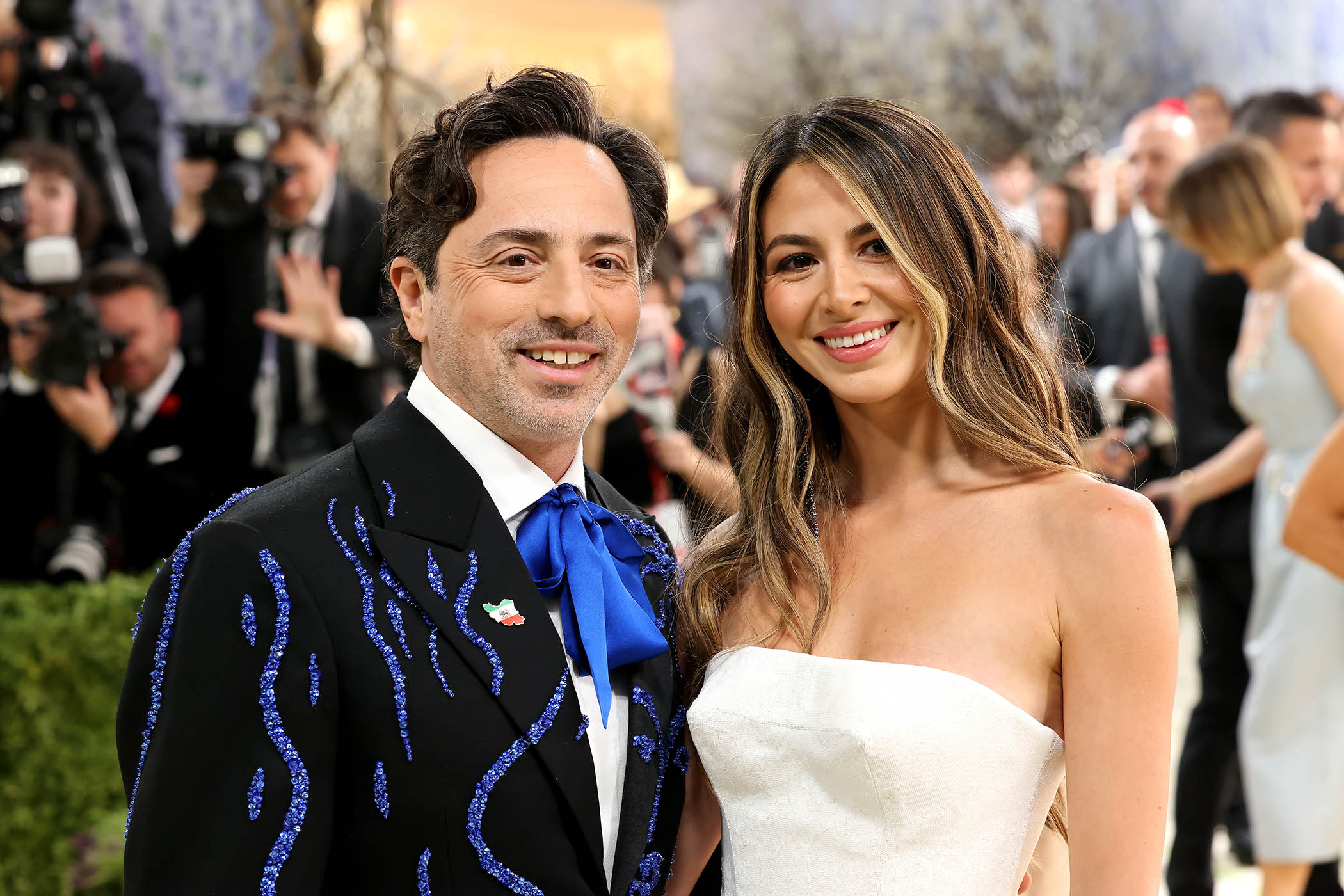
However valid Newsom’s arguments were, it was hard not to hear behind them some of the frantic lobbying that has gone on in the last few months from those tech bros who might be affected by this tax. Chief among those voices has been Google’s Sergey Brin, the T-shirt and Croc wearing oligarch, who is worth about $300bn.(To remind yourself what all those noughts mean, Brin could, for example, buy himself a $1m house every day for the next 822 years). The Google founder has so far spent a reported $70m of his fortune to find some legal means to quash the proposal. He has, with his Maga supporting girlfriend, the holistic health coach Gerelyn “GG” Gilbert-Soto, also bought a $52m lakefront property on the Nevada shore of Lake Tahoe, in advance of any ballot, just in case. Speaking to the New York Times he said: “I fled socialism with my family in 1979 and know the devastating, oppressive society it created in the Soviet Union. I don’t want California to end up in the same place.”
That unhinged take on the rebalancing proposal is – obviously – revealing of the presiding philosophy of the extremely wealthy everywhere – and a pretty good argument for the tax in the first place. As we all know, they may talk about their philanthropy, and even be extremely generous in their charitable giving, but there is a deep-seated assumption that not seeking to use all legal means to avoid paying tax in a democracy is a form of weakness or naivety. As Sundar Pichai’s expression conveyed back in that meeting: more tax, are you kidding?
One of the more interesting political arguments of the last few years has come from the Dutch economist Ingrid Robeyns, whose book Limitarianism asked us to focus not on levels of minimum wages, but of maximum wages. Robeyns posed the apparently unsayable question in our democracies: how much is too much? (She put a figure on it – in a country with good healthcare and pension provision, no one should need wealth of more than £10m, and governments should shape policies with that in mind – because that would make all of society, including the decamillionaires, not only more prosperous, but happier.) If that proposal sounds like hopeless idealism, how about the version I saw in a social media post a while back, which argued no one should be a multi-billionaire; “when you reach $999,999,999, you should receive a telegram from the world saying, congratulations, you have won capitalism, but that’s your lot. Now find ways to enjoy it.”
Newsletters
Choose the newsletters you want to receive
View more
For information about how The Observer protects your data, read our Privacy Policy
In the instructive war of words between 88-year-old Joyce Carol Oates and Elon Musk, it was clear that the miserable trillionaire knew the truth of what the novelist said only too well. “So curious,” Oates wrote, “that such a wealthy man never posts anything that indicates that he enjoys or is even aware of what virtually everyone appreciates – scenes from nature, pet dog or cat, praise for a movie, music, a book (but doubt that he reads); pride in a friend’s or relative’s accomplishment; condolences for someone who has died; pleasure in sports, acclaim for a favorite team… The poorest persons on Twitter may have access to more beauty & meaning in life than the ‘most wealthy person in the world.’” Or: at what point do billionaires realise that happiness is a wealth tax?
Photograph by Julian Hamilton/Getty Images