
Little more than a quarter of a penny – 0.29p. That’s how much our band receives each time a fan listens to a song of ours on Spotify, the world’s most used music streaming platform. Fans broadly know that in the current culture there’s a disconnect between the personal value they place in the music they love and the monetary value passed on to the artists who created it.
To present this reality in starker terms, our band Los Campesinos! published a breakdown of the streaming income earned by our most recent album All Hell. In its first year of release, the record received just shy of 9.5m streams across all platforms, amounting to a total payment of £31,940.29. Not a small sum, of course, but it hardly felt like fair remuneration, especially when considering that in 2024, Spotify’s co-founders Daniel Ek and Martin Lorentzon cashed out more than £932m in shares.
Spotify on average pays artists the lowest rate per stream among services such as Amazon or Tidal – when it pays at all. In an egregious move, in 2024 the app demonetised all tracks that receive fewer than 1,000 annual streams. Data analysis from the Union of Musicians and Allied Workers (UMAW) reports that as a result 88% of all available tracks on Spotify have been rendered worthless in the eyes of the platform.
But this is not just about fair remuneration for artists; the picture is more complex, as Liz Pelly’s excellent 2025 book on Spotify, Mood Machine, demonstrates. Spotify’s defenders point out that it (like all other platforms) doesn’t pay out a fixed rate per stream, but pools all platform revenue and distributes it based on total stream share. This in itself clearly benefits major labels, as those artists with the highest volumes of music and most popular back catalogues take home the biggest share.
The platform also privileges what Spotify internally refers to as “lean-back” music – songs that can play unobtrusively, and almost anonymously, in the background without challenging the listener or giving them a reason to click “skip”. This is 21st-century muzak. Spotify invests in creating “perfect fit content”: music commissioned to be created at conveyor-belt speed to sit alongside songs by the artists you love in mood-specific playlists. This is copycat music created without thought, contracted at a lower royalty rate, stripped of context, and flooded into algorithmic playlists to further reduce Spotify’s royalty outgoings. Meanwhile, the Big Three major labels – Universal, Sony and Warner – which are all shareholders in Spotify, enjoy a cosy relationship with the platform and preferential royalty rates, the details of which are protected by NDAs.
Daniel Ek is often heralded as the man who democratised music listening and saved the industry from piracy. But it appears to me he was also a tech bro seeking a new way to sell advertising space.
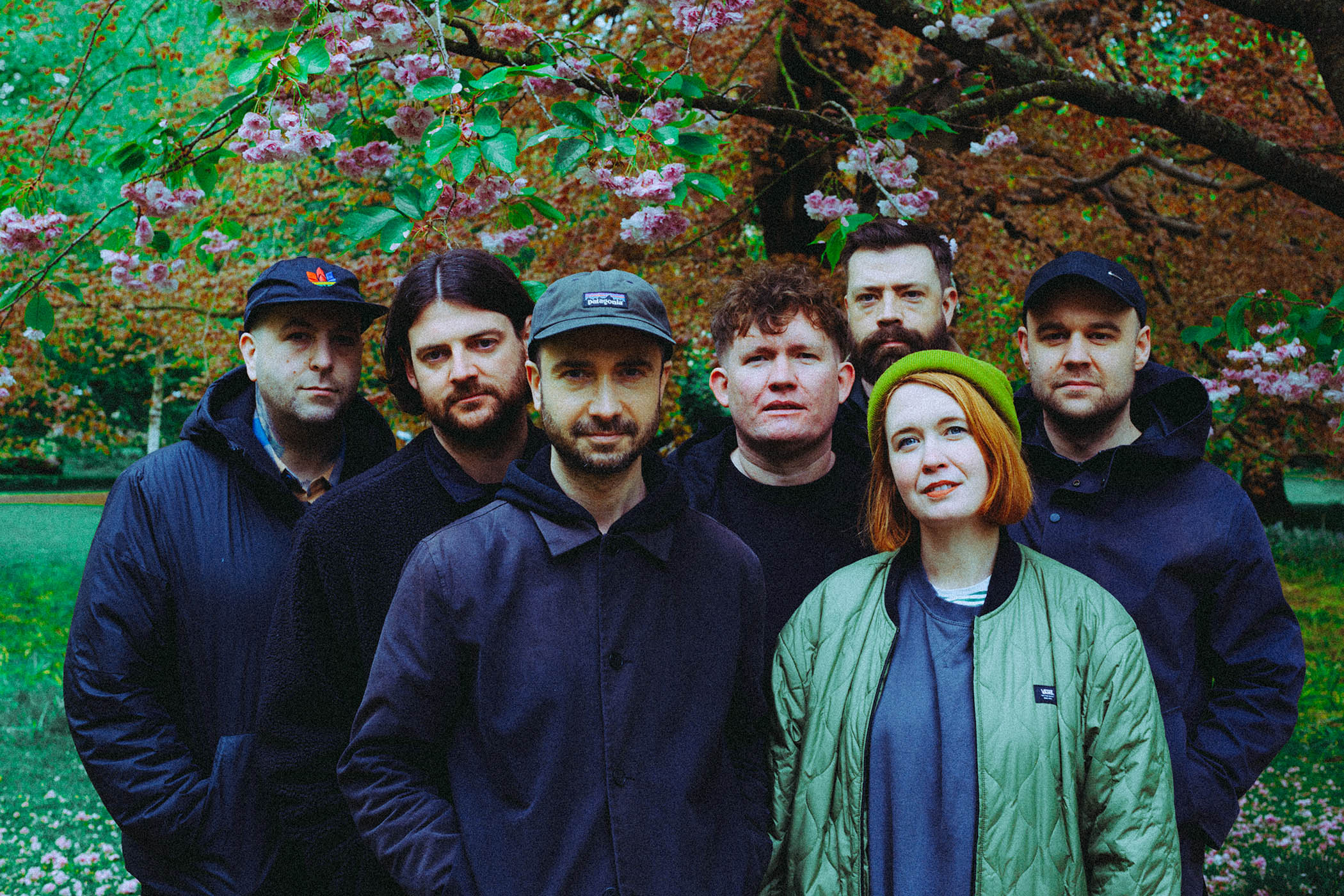
In response to the industry challenges, since 2016 Los Campesinos! have been self-managed and run their own record label. Main image: James Klug
Spotify is the source of much ire from creatives in the modern music landscape. But the platform is an accelerator rather than a primary cause of wider industry decline. Artists continue to be exploited by decades-old practices invented for a very different music industry to the one that exists today.
Spotify doesn’t pay out directly to artists, it pays out to the rightsholder (likely a distributor or record label), with every stakeholder taking its slice of the pie before the artist gets whatever crumbs are left. Based on a traditional recording deal, around 20% is taken by the music’s digital distributor; the record label then takes 100% of the remaining related income up until the artist recoups any advanced monies, and around 80% thereafter. Then the artist manager invoices for their 20% commission from what’s left. Suddenly the £32,000 income I mentioned at the start of this article has become less than £5,000.
The intricacies around all these dealings are convoluted and obfuscated and deliberately discourage artists from asking questions and make them feel they’re better off just making TikTok content. For the first decade of our band’s life, we operated within this structure. Since 2016 we’ve been self-managed, and run our own record label, Heart Swells, thus making more money than we ever did previously.
But how is this sustainable for most artists? Increasingly we’re seeing a situation where working-class performers and punters are excluded from music. It’s indisputable that those who come from money have an advantage in entering the arts; they can access equipment, training, opportunity, and they can work for free. Meanwhile, those from less privileged backgrounds may never find themselves with the foothold to embark on their dream, or the safety net to commit to it. This doesn’t just apply to those on stage, but engineers, technicians and any number of vital roles behind the scenes. This is contributing to the UK’s struggle to produce new stars, as the familiar line-ups of our festivals and award ceremonies suggest, not to mention our obsession with reunion tours. I don’t just mean Oasis – nearly every regional city festival this summer looks like a Barfly What’s On listing from 2006.
Newsletters
Choose the newsletters you want to receive
View more
For information about how The Observer protects your data, read our Privacy Policy
The top 1% of our pop and rock stars will continue to accrue huge wealth for themselves, their major labels, the streaming platforms and Ticketmaster, while pricing out their fans with uncurbed ticket pricing and manipulative VIP experiences. Bedroom hobbyists will toil away – fertilely but futilely – unable to join music’s treacherous middle classes. And those of us in that large middle, selling out venues and topping year end lists, will do so while working day jobs to make ends meet. So the insipid monoculture persists, with its impact felt through the whole music ecosystem, from the closure of grassroots venues, nightclubs and record shops, to the wilting of the music press.
What’s the alternative? Spotify is not the problem so much as the entire concept of streaming. When we all have access to virtually every piece of music ever recorded for around £10 a month, how could fair remuneration for artists be viable? And with cultural riches so easily accessible to us on our phones, how can we ever walk away?
Music fans, however, have much more power than they realise. They can purchase music or merchandise, attend a show or invest in their local independent scene – all steps towards a more equitable landscape.
At the same time, artists need to give more consideration to their relationship with Spotify, and to their fellow artists. Why do musicians act as publicists for the platform, broadcasting end-of-year #Wrapped data on social media, obsequiously thanking them for a playlist inclusion or for displaying their image on a digital billboard – all the while knowing that the platform is ripping them off? Spotify has a stranglehold on streaming and on our listening habits, so that it’s not viable for most bands to remove their music from the platform. But we can all do more to avoid Stockholm syndrome levels of compliance.
There is often a feeling that artists are in competition with each other: vying for the same festival slots, radio playlist placements and column inches. This is a mindset perpetuated by labels, managers and publicists who gauge success on metrics of finance, cultural capital and backstage backslaps.
But artists needn’t and shouldn’t judge their worth or their achievements in this way. I would love to see transparency from my fellow musicians about their income and the workings of the industry, to raise awareness among fans and to forge solidarity with their peers. A united front and a sharing of knowledge will be the first step in remodelling a broken music industry to favour those who give it value – rather than those who extract value from it.
Gareth David is lyricist and singer in the band Los Campesinos!
Photographs by Martyna Bannister, James Klug/Getty Images