



Fen Lane runs through a quiet slice of Lincolnshire countryside, fields of potato and sugar beet stretching into the distance on either side.
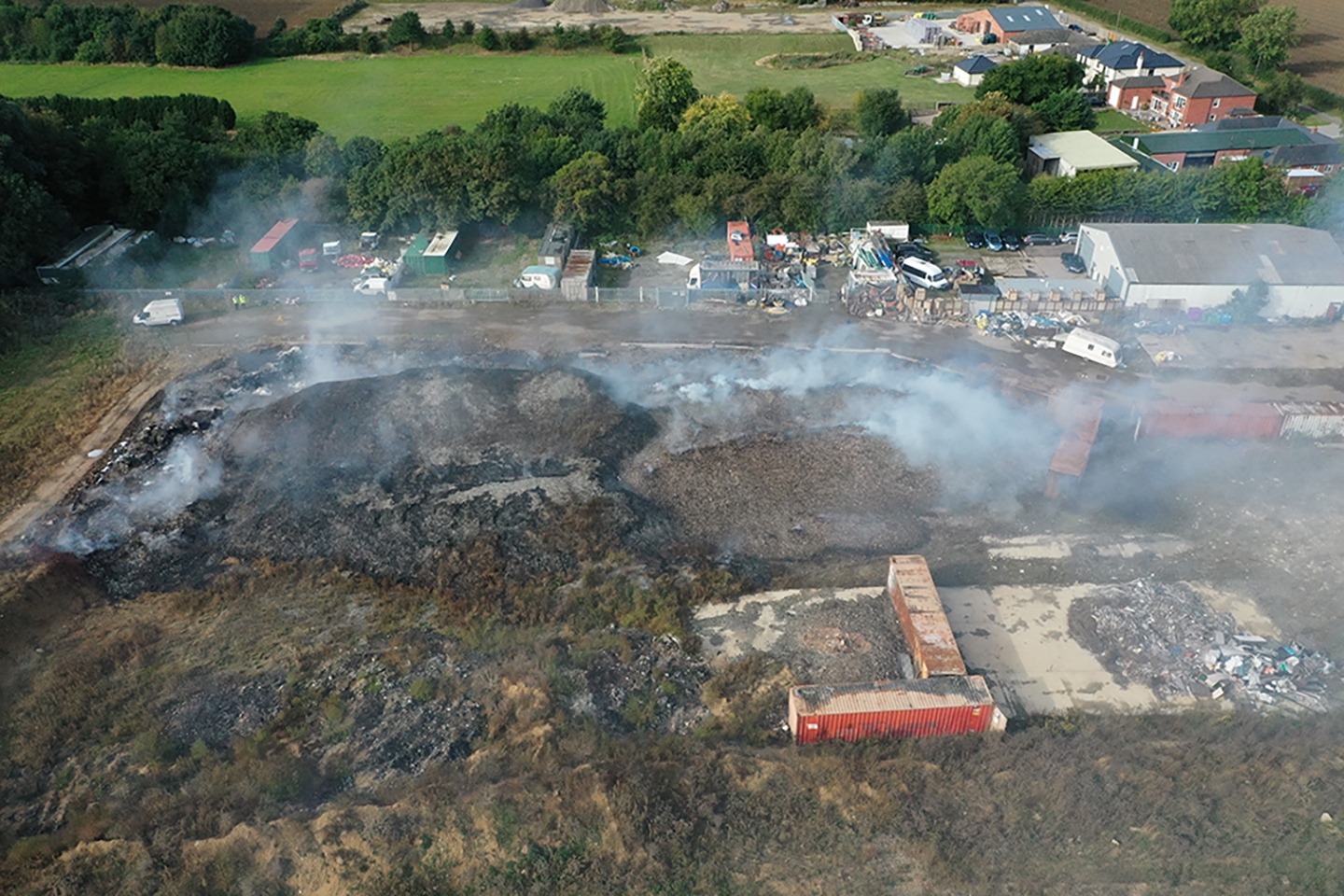
But in late 2019 HGVs began disturbing the silence in the village of Long Bennington. For seven months, behind a purpose-built earth embankment and a hedgerow, as many as four lorries a day delivered tonnes of illegal waste – turning a grass-covered field into a mound of rubbish eight metres high that was regularly set on fire.
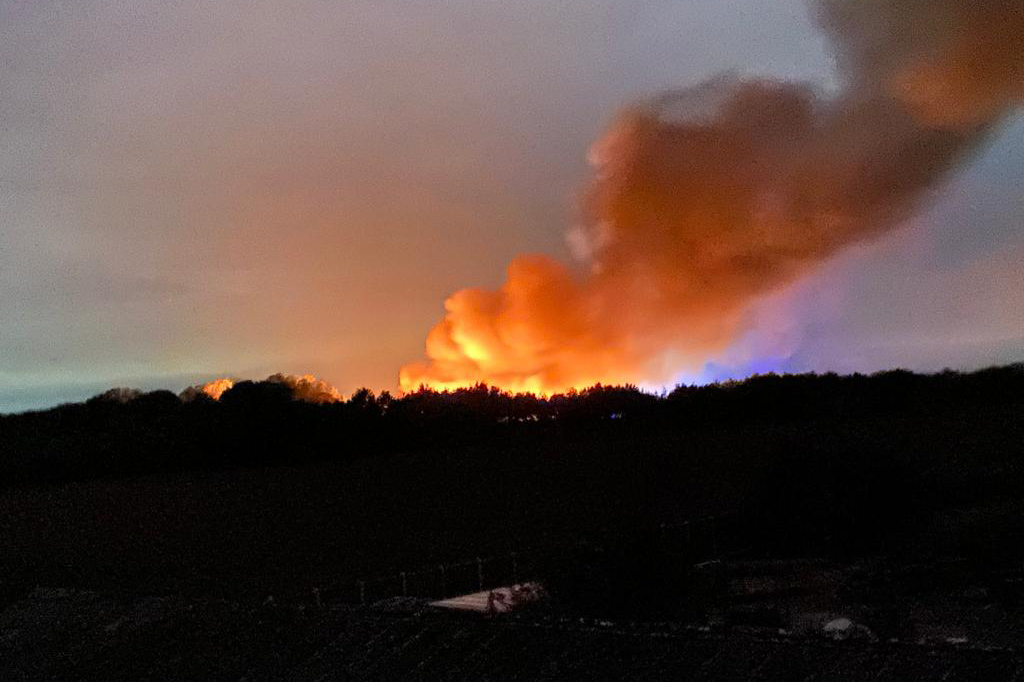
“There was heavy smoke, the sort of smoke you get from a smouldering, wet fire,” said Peter Knight, an arable farmer whose land borders the illegal dump. “In the winter that sort of smoke hangs fairly low, like a fog. And you could tell it wasn’t just wood, it was all sorts of things.”
Organised crime gangs are drawn to illegal waste dumping because there are relatively lenient penalties – the maximum sentence for unauthorised dumping is five years – compared with the large sums of money that can be made. There are now at least 700 such sites around the country, according to the Environment Agency. The largest of these holds nearly 300,000 tonnes of contaminated soil.
Over the past two years, the agency has obtained confiscation orders totalling more than £5m in cases involving waste crime gangs across the country. But that sum, based on the amount those convicted have available to pay, is a fraction of what they are thought to have made from their crimes – reckoned to be about £36m. While the incentives to commit the crime remain powerful, the deterrents are comparatively weak.
So are the powers to enforce clean-up. In a handful of cases, including giant dumps at Hoad’s Wood in Kent and Kidlington in Oxfordshire, the Environment Agency has stepped in to clear a site, either because of political pressure or to mitigate economic harm. But this is the exception. More often, the government body must spend time and money going to court to force criminals to clear the waste sites they have created.
At its peak, the Fen Lane site was the size of five football pitches, or 60 semi-detached houses. To the people who lived nearby, such as Knight, the dump wasn’t just an eyesore visible from miles away but a growing threat on the horizon. The grey-brown smoke billowing from the land was toxic. One fire burned for 40 days.
The grey-brown smoke billowing from the land was toxic. One fire burned for 40 days
The grey-brown smoke billowing from the land was toxic. One fire burned for 40 days
The site was raided by the Environment Agency and police in April 2020, after the agency’s investigators, prompted by residents’ complaints, used a hidden surveillance camera to record lorries tipping and fires burning.
As a result, Paul Canner – described during court proceedings as the scheme’s “prime mover” – and eight others, including Canner’s son and wife, were charged at Nottingham crown court in 2024 with crimes relating to dumping waste.
The group is estimated to have siphoned more than 11,000 tonnes of waste out of the legal system, avoiding £1.2m in disposal costs, while making more than £500,000. All were found guilty and sentenced to a combined total of 11 years in prison.
Newsletters
Choose the newsletters you want to receive
View more
For information about how The Observer protects your data, read our Privacy Policy
One former waste industry employee who spoke to The Observer on condition of anonymity explained how, unknowingly, she supplied waste to Fen Lane. She said the gang used false paperwork to hide the fact they were dropping off waste at an illegal site and avoiding the charges associated with properly disposing of it.
“I was given a legitimate facility, a legitimate permit, a legitimate waste carrier’s licence – everything. This is why it ticked all the boxes,” she said. “It was an utter shock. I had the wool pulled over my eyes massively.”
Canner did not respond to a request for comment. His wife and son declined to comment.
Emma Viner, deputy director with responsibility for enforcement and investigations at the agency, said that criminals had become increasingly skilled at covering their tracks, adding: “It’s not opportunists. It’s people that have a business model behind their criminality.”
As well as falsified paperwork, gangs use complex business hierarchies to disguise who is in charge of an illicit operation, and they have ways to distract public attention as the waste is being dumped.
“We’ve seen examples where the criminals will contact people in the local area to say, ‘You can expect more lorry movements in this area. Don’t worry about it. It’s a construction project,’” said Viner.
The land at Fen Lane is still owned by Marc Greenfield and James Baggaley, who were convicted at Nottingham crown court for their involvement in the scam. Acquaintances say the men enjoyed flashy lifestyles, including holidays overseas to watch the boxer Tyson Fury. Baggaley drove a white Land Rover Discovery with personalised numberplates.
In 2024, Baggaley was found guilty of knowingly permitting the deposit of waste at the site and permitting the operation of the illegal waste site. Greenfield, identified in court documents as the more hands-on of the two, pleaded guilty to knowingly permitting the operation of an unauthorised waste site.
The judge said they had lied to the Environment Agency and to local residents, and “feigned ignorance” about the illegal waste dump.
They were sentenced to 20 months in prison, both suspended, and were required to clean up the waste by September 2025.
But while the investigation and prosecution of the Fen Lane dump succeeded in putting members of the gang behind bars, dealing with the mess itself has proved much more difficult. Investigators estimate that, six months past the deadline, there are still around 10,000 tonnes of illegally dumped waste at the site.
A source familiar with the Fen Lane investigation said: “That’s probably the biggest problem. Even when you get the conviction and you seek to potentially confiscate the assets of the offender, you’ve got to force them to expend the money to clear up the land.”
According to the Environment Agency, 87 loads of waste have been removed from the site, the equivalent of 2,000 tonnes.
Last month Greenfield and Baggaley were brought back to court for a hearing to deal with the aftermath of the crime, an attempt to force them to clean up the mess and stripping away any profits they made. A barrister for the Environment Agency argued the two men had failed to comply with the order that had kept them out of prison. Greenfield and Baggaley did not respond to requests for comment and are expected to return to court in late July. They could face prison time if they haven’t cleared up the site.
Neighbours told The Observer that lorries continued to arrive at the site at night and they suspect more waste is being dumped.
When two Observer journalists visited Fen Lane in early June, there were still signs of activity as well as lorries making deliveries. A man who arrived at the scene in an SUV told the journalists “you’re not fucking allowed around here”, before throwing rocks at their car.
Earlier this year Philip Duffy, the head of the Environment Agency, admitted the system is stacked in the favour of the criminals – from the likelihood of being caught to the time it takes to go through the criminal justice system and the severity of the penalties. One source familiar with the Fen Lane investigation said that if a criminal made half a million pounds and had to serve nine to 12 months in prison, they might regard that as a reasonable cost of doing business.
Viner is clear that the agency is closing down illegal sites all the time. But the problem is not just that new ones keep popping up, it is also forcing the criminals behind existing ones to clean up their mess.
Thank you for reading. Tell us what you think by writing to letters@observer.co.uk
Photographs by the Environment Agency and Mick Potts