
A year ago, Keir Starmer announced a national inquiry into grooming gangs. Six months later, the Labour peer Anne Longfield was appointed as its chair. Last week, Oldham, Bradford and London were chosen as the first places that would be investigated. When the inquiry might begin that investigation remains unknown.
Of all the scandals that have bedevilled Britain over the past three decades, none has been grimmer than that of the grooming gangs. The horror of the crimes themselves – mass rape, torture and trafficking – has been magnified by the gross negligence of the state.
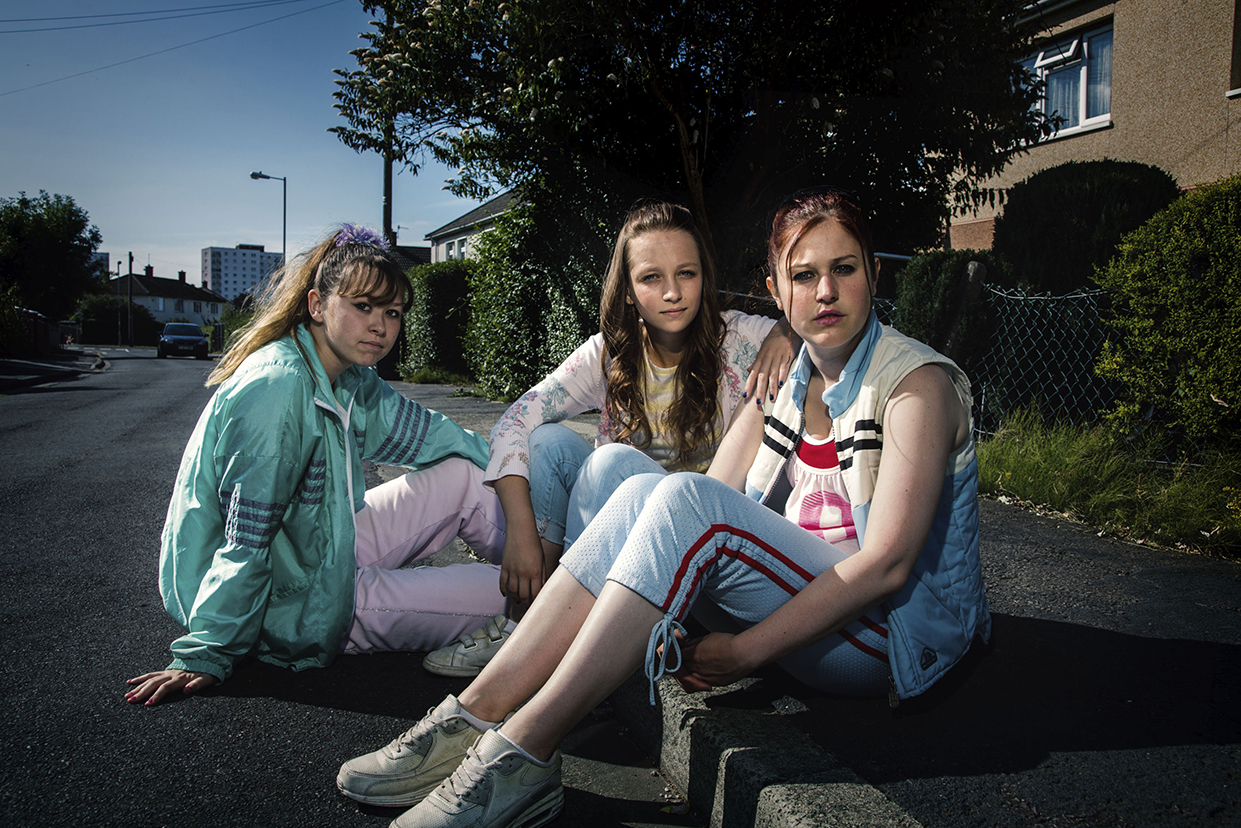
In part, that negligence derives from ingrained official contempt for working-class people, especially working-class women. As “Amber”, one victim from Rochdale, put it: “Police weren’t arsed with us. They weren’t bothered… when you’re from a shit home.”
Those who should have been providing protection often dismissed victims as “prostitutes”, so warped was their perception of the behaviour of working-class girls. Alongside such scorn was a fear of appearing racist. Far-right groups seized on the fact that many of the rapists were of Pakistani heritage to portray it as a “Muslim” phenomenon. This made many liberals fearful of even acknowledging the issue. In a 2012 article about Rochdale, the writer Daniel Trilling observed how, “in seeking to prevent the growth of racism”, council officials had “tried to police debate”. Youth worker Mohammed Shafiq, who was trying to raise awareness within Muslim communities, was told he was “doing the work of the BNP”.
There is nothing anti-racist in burying facts or in failing to act against rapists because of “racial sensitivities”. The fear of the far right exploiting the issue has only made it easier for the far right to do exactly that, and to shape the narrative.
The latest illustration of this is Restore leader Rupert Lowe’s “Rape Gang Inquiry”, which trades on the reluctance of the government to properly investigate the facts. The inquiry report is a model of how to begin with a premise and justify it as the conclusion. “The root cause” of grooming gangs “was immigration”, Lowe insists in his foreword, because “oil and water do not mix”. To little surprise, “this report establishes beyond any doubt” that Lowe’s premise is true.
What the report doesn’t do is tell us anything about grooming gangs. There is no discussion of methodology, statistics or what data is missing. The report claims grooming gangs to be almost exclusively “Pakistani Muslim”, their propensity to commit monstrous crimes “reinforced by eight theological and legal aspects of Islam”. Not a word is said about white grooming gangs.
‘Rupert Lowe’s report is a betrayal of the victims, using their pain to promote racial propaganda’
‘Rupert Lowe’s report is a betrayal of the victims, using their pain to promote racial propaganda’
Few would dispute that men of Pakistani heritage are disproportionately involved. How disproportionate remains unknown, and one reason a proper national inquiry is necessary. Few, though, would accept that the reason for the disproportion is adherence to Islam. Those who have spent years investigating the issue argue that kinship and clan network are more significant than faith.
The figure from the report that has been most touted, including, inevitably, by Elon Musk, is the claim that there were 250,000 rape victims. The source for that figure, according to the report itself, is a back-of-the-envelope calculation made by Lord Pearson in a House of Lords debate, extrapolating from three local reports.
It is not meaningful in any sense but has nevertheless become lodged as the “truth”. The report is a betrayal of the victims, using their pain to promote racial propaganda.
Newsletters
Choose the newsletters you want to receive
View more
For information about how The Observer protects your data, read our Privacy Policy
Victims whose experience did not match the narrative – such as those abused by white gangs – claim to have been excluded from the inquiry. It is so shoddy that even many on the reactionary right have objected to it.
The grooming gangs debate reveals the degree to which discussions about Muslims and Islam are trapped between the promotion of hostility, on the one hand, and, on the other, the fear of unleashing such hostility or of causing offence.
For many on the right, Islam poses an existential threat to Britain’s values and way of life. When the Tory shadow justice secretary Nick Timothy describes Muslim collective worship during an open charity event in Trafalgar Square as “an act of domination… straight from the Islamist playbook”, or when Reform’s Zia Yusuf promises to “restore Britain’s Christian heritage by preventing churches being converted into mosques”, they are playing to that sense of a threat not just from Islam as a faith but from Muslims as a people. From attacks on mosques to mass stabbing in the street, the perception of Muslims and Islam as a menace can also lead to violence.
Liberals, too, often blur the distinction between bigotry against Muslims and criticism of Islam, though for opposite reasons, being fearful of inciting hatred or causing offence. Such blurring gives licence to people to condemn criticisms of Islam or the questioning of certain attitudes in Muslim communities as “Islamophobic”. It opens the way for blasphemy restrictions to return in the guise of hate speech prevention. And it leads to controversies such as that at Batley Grammar School in West Yorkshire. In 2021, a teacher from the school was forced into hiding after protests and death threats about a religious studies class he gave. Five years on, he remains in hiding, while those who organised the protests, mostly from outside Batley, and many with links to extremist Islamist groups, continue to be feted as “community leaders”.
From grooming gangs to blasphemy laws, we lack an adequate language that allows us to debate incendiary issues while also challenging bigotry and distortion.
Photograph by Ewen Spencer/BBC/PA