This article first appeared as part of Rachel Sylvester on politics, a new weekly newsletter sharing insight on what’s happening in Westminster, Whitehall and beyond. To sign up, click here.
As the country tries to understand what motivates Andy Burnham, there has been plenty of analysis of “Manchesterism”, the Demon Eyes football team, his T-shirts, voluminous eyelashes and less voluminous running shorts.
But there is another key influence on the man who is set to become prime minister in just over a fortnight’s time. The late Tessa Jowell, who launched Burnham’s political career by taking him on as her Parliamentary researcher in 1994, helped shape the future Labour leader as much as anyone else at Westminster.
I first met Burnham when he was working for Jowell, who went on to become Culture Secretary under Tony Blair and Cabinet Office minister under Gordon Brown before dying of a brain tumour in 2018 at the age of 70. She became his mentor, encouraging him to move from the backroom to the frontline and stand as an MP.
Last week, I was fascinated to hear the deputy prime minister David Lammy describe Jowell as the connection between him, Burnham and James Purnell, who will be the new Downing Street chief of staff. They were all, he told me, “proteges” of Jowell. She also inspired Wes Streeting, the former health secretary who pulled out of the leadership contest but is likely to have a role in Burnham’s cabinet. Two years after she died, Streeting said he still kept a photograph of her on his desk “as a motivator to follow her example of changing people’s lives.”
Jess Asato, the Labour MP who is bravely taking legal action against Elon Musk over deepfake images allegedly created by Grok, is another mover and shaker who worked for Jowell. She has a WhatsApp group called “Tessa” with Liam Conlon and Tom Rutland, two other MPs who were her researchers.
Jowell is much missed at Westminster, including by Burnham. His time as Greater Manchester mayor may have given him an economic policy based around public control and devolution. His footballing prowess can be held up as proof of his “man of the people” credentials. But it was Jowell who taught the MP for Makerfield the importance of empathy and humanity in politics. She embodied the optimism and collaborative approach that Burnham says he now wants to emulate.
Perhaps the best way to understand what Jowell represents is by reading the tributes which came from all sides of the House of Commons after her death. John Bercow, who was then Speaker, set the tone when he told MPs that Jowell had been the “best of us”, the “embodiment of empathy” and “a well of practical compassion”.
Theresa May, the prime minister at the time, may have been a Conservative but she was glowing about her Labour colleague. “Tessa was a person first and a politician second,” she said. Jowell would “always reach out to an MP of any party who was going through a tough time; whether it was personal or professional, she would be there for them.” Harriet Harman, Labour’s former deputy leader said of her friend: “For Tessa, the personal and the political were completely entwined.”
When I was a junior political reporter, heavily outnumbered by male colleagues in the lobby in the late 1990s and early 2000s, Jowell made a point of talking to me even though there were many more important contacts she could cultivate. I think she had a practical version of feminism that meant helping other women.
Newsletters
Choose the newsletters you want to receive
View more
For information about how The Observer protects your data, read our Privacy Policy
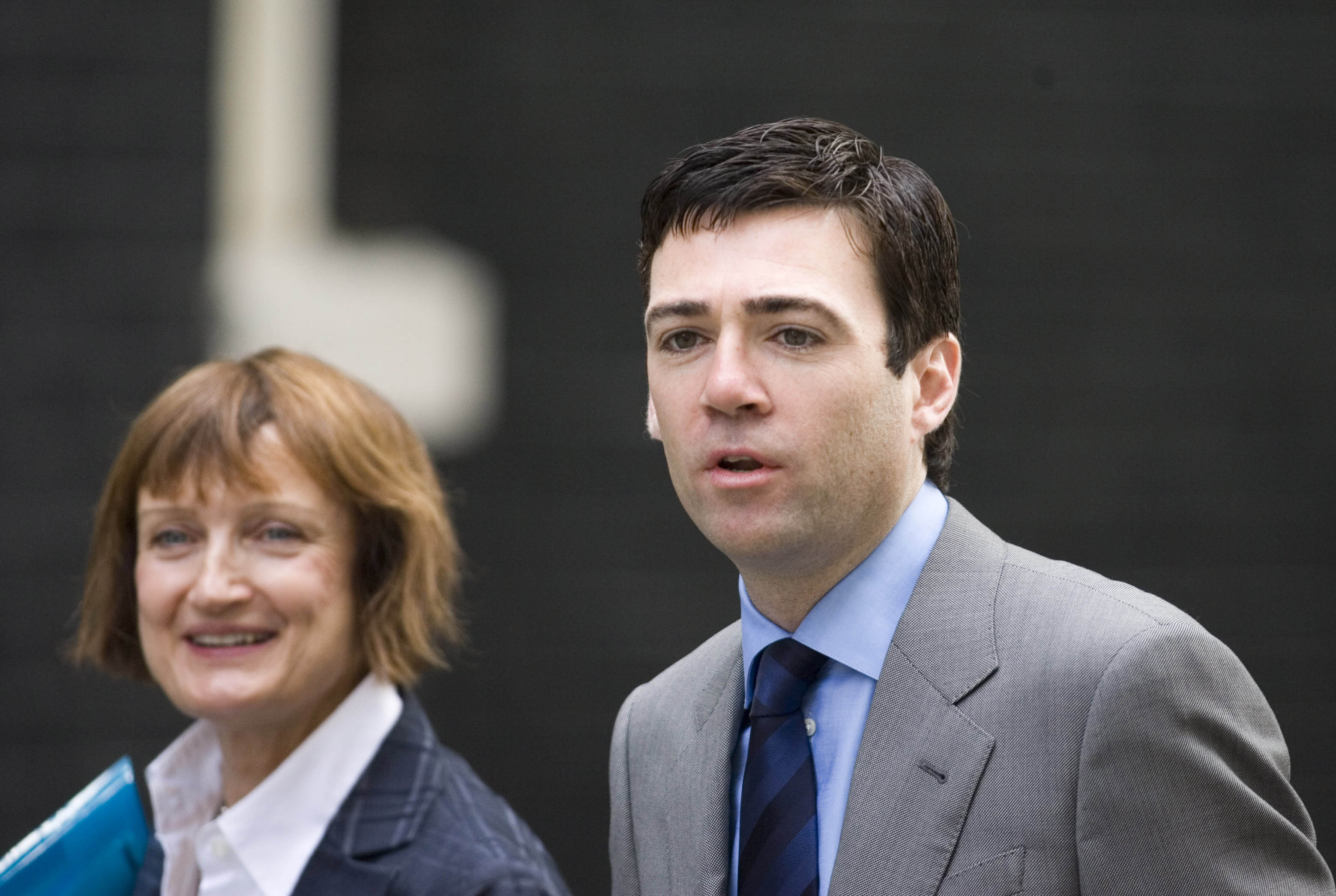
Tessa Jowell and Andy Burnham, then health secretary, outside 10 Downing Street in 2009
Jowell drove through the creation of Surestart children’s centres and put childcare on the political agenda for the first time because, as a working mother, she understood that voters’ priorities had changed. It became the stand out policy success of the New Labour years.
She championed the ban on smoking in public places and civil partnerships for same-sex couples, the two great social reforms of the Blair era, because she recognised that society had moved on and the law must catch up.
She persuaded Blair to bid for the 2012 Olympics to be held in London. It was a triumph and the economic legacy is still felt in the development around Stratford. The Opening Ceremony choreographed by Danny Boyle was the epitome of the optimism Jowell represented. The children jumping on hospital beds and the Queen jumping out of a helicopter with Daniel Craig as James Bond put a smile on people’s faces for weeks.
When Burnham promised this week to usher in a “new era of possibility for Britain” he was channeling Jowell. As he pledged to “build the broadest possible coalition of people to lift Britain back to where we all want it to be” he was returning to the non-tribal politics of his first Commons boss.
It may be no coincidence that Burnham has drafted in Hayden Munro, previously campaign director for Jacinda Ardern, to help him prepare for government. Like Jowell, the former New Zealand prime minister embraced empathy and compassion as core political principles. “Kindness has a power and strength that almost nothing else on this planet has,” she wrote in her memoir. “I’d seen kindness do extraordinary things. I’d seen it give people hope. I’d seen it change minds and transform lives.”
Jowell could have said the same. She would definitely have approved of the high-powered team of female MPs – Louise Haigh, Lucy Powell, Anneliese Midgley, Sally Jameson and Miatta Fahnbulleh – who are overseeing Burnham’s transition to power.
At Westminster, intellectual ability is valued above emotional intelligence, and political strategy is prioritised over personal empathy. There have been more PPE than English graduates in Number 10. But voters are increasingly driven by their hearts as well as their heads. As one ally of Burnham puts it: “We live in an age where feeling comes first. Good policy has to be designed not for efficiency but experience.”
On paper, Keir Starmer had all the qualifications needed to be prime minister. He was an experienced public servant, with a good brain, an ability to analyse problems and an eye for policy detail. It wasn’t enough. In the end, Andy Burnham’s most important qualities as a leader may be those he learned from Tessa Jowell – humanity, empathy, collaboration, optimism and an ability to form a connection with others.
Photograph by Christopher Furlong/Getty Images, Bloomberg