
This article first appeared as part of Rachel Sylvester on politics, a new weekly newsletter sharing my insight on what’s happening in Westminster, Whitehall and beyond. To sign up, click here.
When Nigel Farage announced an 8am “emergency address” to the nation this week in response to the murder of Henry Nowak it was supposed to be a sign of strength but in fact it showed the Reform leader’s weakness.
Far from setting the political agenda with a statesmanlike intervention, Farage’s call for the country to respond with “pure cold rage” to the death of the 19-year-old student revealed his panic about being outflanked to the right by Rupert Lowe and his party, Restore. There was more than a hint of desperation in the hastily arranged live-stream in the middle of a field.
Farage suggested that there was “anti-white prejudice at work” when Nowak was handcuffed by police after being fatally stabbed by a Sikh man who then claimed he had been racially abused. He called for the “promotion of the idea that white lives matter just as much as black lives”.
Not to be outdone, Lowe insisted the death penalty should be brought back for Nowak’s killer Vickrum Digwa. “Keeping this savage alive serves nobody,” he posted on X. Egged on by Elon Musk, who according to the FT has written more than 110 posts, retweets and replies about British politics over the last week, the Restore leader added: “Children have been sacrificed to death in order to appease foreign cultures that have no place in our country.”
As the populist rabble-rousing escalated, by the time protestors gathered in Southampton on Tuesday night, the charge was being led by the far-right activist Tommy Robinson. Mark Nowak’s appeal to politicians not to use his son’s death to “create further division, hatred or tension” was ignored.
There is a wider point here about the interplay between insurgents and incumbents. For years, Farage has revelled in his status as a disruptor, tweaking the tail of the political establishment. Now there is a new “bad boy of Brexit” who is even more willing to shake things up and break taboos.
The Makerfield byelection has shown that Restore is a genuine electoral threat to Reform. The Survation poll which put Lowe’s party on 7% – more than enough to hand victory to Labour – is backed up by the experience of canvassers on the doorstep. “The Restore thing is real,” one of those involved in Andy Burnham’s campaign told me last week.
The defining mood in politics right now is the anti-politics sentiment and Farage is starting to look increasingly like just another Westminster insider. Instead of being a man of the people in the pub with a pint, he now finds himself surrounded by Tory retreads and a mysterious crypto billionaire donor who lives in Thailand.
When I sat in on some More in Common focus groups recently, it was fascinating to see how disillusioned many of the Reform-leaning swing voters had become. In one group held in Braintree in Essex, Nicola said: “I think Farage is going to be another person who’s got all these big ideas, but actually implementing them is a completely different story. So many Conservatives have defected to him now. I’m not so sure that he now stands for what his party originally stood for.” She suggested Lowe’s party had become “what Reform were when they started”.
Newsletters
Choose the newsletters you want to receive
View more
For information about how The Observer protects your data, read our Privacy Policy
Farage has deliberately put up a firewall to his right, refusing to allow Tommy Robinson into his party and shunning Elon Musk, but this has created space for Restore. In an attempt to look more like a candidate for No 10 – a potential incumbent – he has sacrificed his identity as an insurgent.
The insurgency paradox crosses all political tribes. Boris Johnson was the political rule-breaker who smashed down Labour’s red wall then was ousted for breaking his own rules during the pandemic. Liz Truss was so keen to reject the establishment consensus that she crashed the economy. There’s a fine line between maverick and mad. Disruption can quickly drift into destruction.
Keir Starmer’s problem is that he was elected less than two years ago as an insurgent promising radical change and has become an incumbent delivering incremental reform. Downing Street keeps a tally of announcements – a few months ago one source told me more than 3,100 policies had been unveiled by the government since the election but hardly any had been implemented. The scandal over Peter Mandelson’s appointment, and the cosy emails and WhatsApps between ministers and the dark lord only reinforce the sense that politicians are “all the same”.
On a recent substack Ben Ansell, Oxford University’s professor of Comparative Democratic Institutions argued that the “switch in radicalism from left to right” is a key phenomenon driving politics. He quoted Tomasi di Lampedusa’s famous line from The Leopard: “If we want everything to remain the same everything must change”. Left-leaning parties have, he suggested, traditionally existed to create a different, better world but over the past decade they have morphed into technocratic defenders of the status quo. In response to the populist right, progressives have become the protectors of political institutions, the global order, fiscal rules, tax pledges, experts. The “Ming vase” caution has meant that the mantra of parties of the left is now the inverse of the Leopard’s – “If we want everything to change, everything must remain the same.”
Ansell thinks the shift – which is clear in the US as well as UK – has been caused partly by the fact that progressive parties have become increasingly dominated by the professional managerial class – those who work in education, the law, medicine, the arts and charities. They are quite happy with experts like them being in charge but this creates a “blind spot”. Kemi Badenoch was onto something with her claim that the country was “run by HR”. People are fed up with the lanyard classes and the managerialism they represent. Tony Blair was making a similar point with his call for a “radical centre”.
This poses a challenge for Burnham. He is campaigning in Makerfield as a political outsider who wants to take on the “rotten culture” at Westminster if he returns to the House of Commons. He is promising to change Labour then transform the country if he gets to No 10. He presents himself as an anti-establishment figure who is more comfortable wearing a T-shirt and jeans than a suit and tie. Labour, he says, has “been run by the London set for too long”. The message is carefully calibrated. Burnham’s route to victory in the byelection depends on wrapping himself in the mantle of insurgency but he has already boxed himself in on tax and spending.
If he does reach Downing Street he will be the incumbent making unpopular decisions every day and trying to stick to his self-imposed rules.
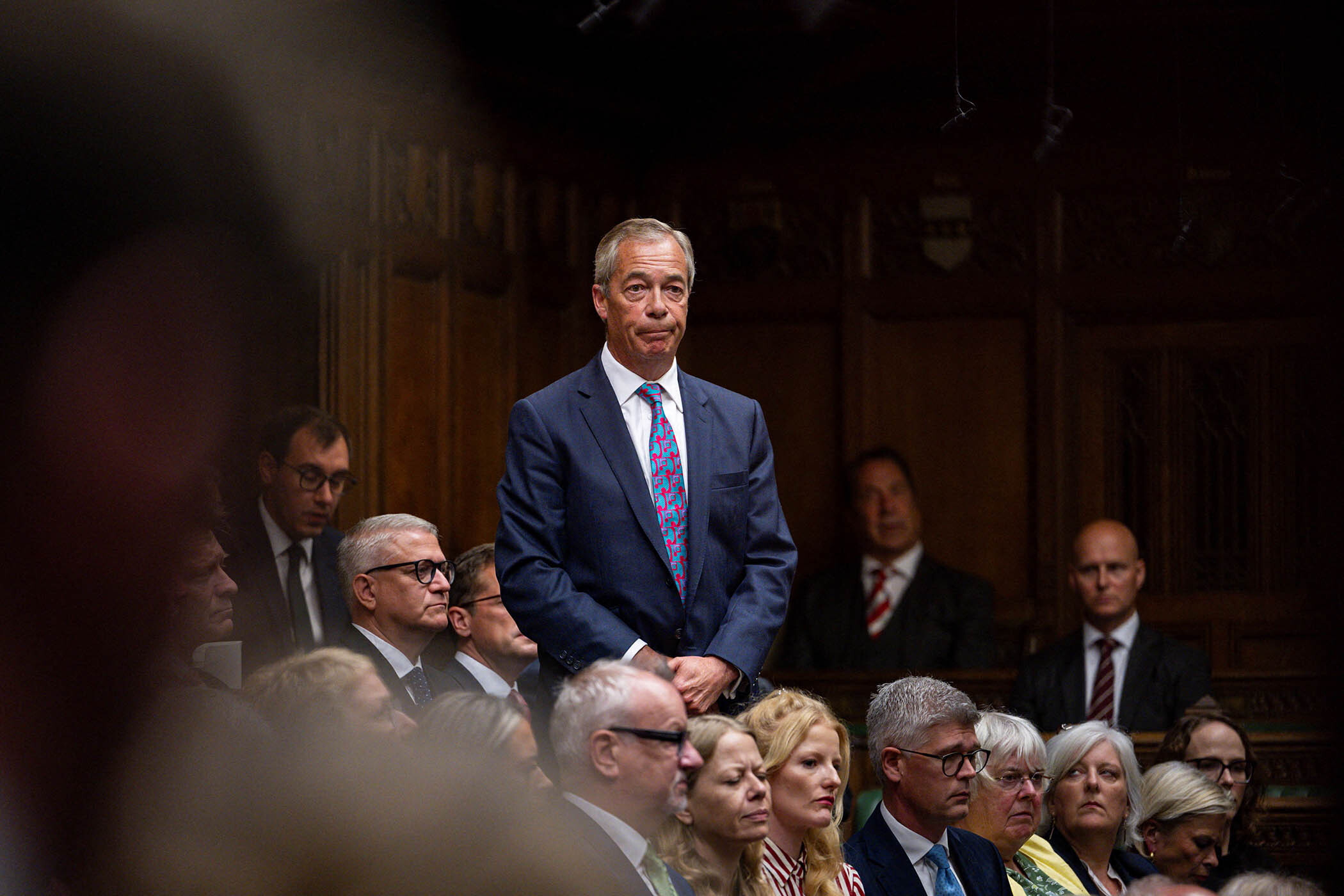
Photograph by House of Commons/Getty Images