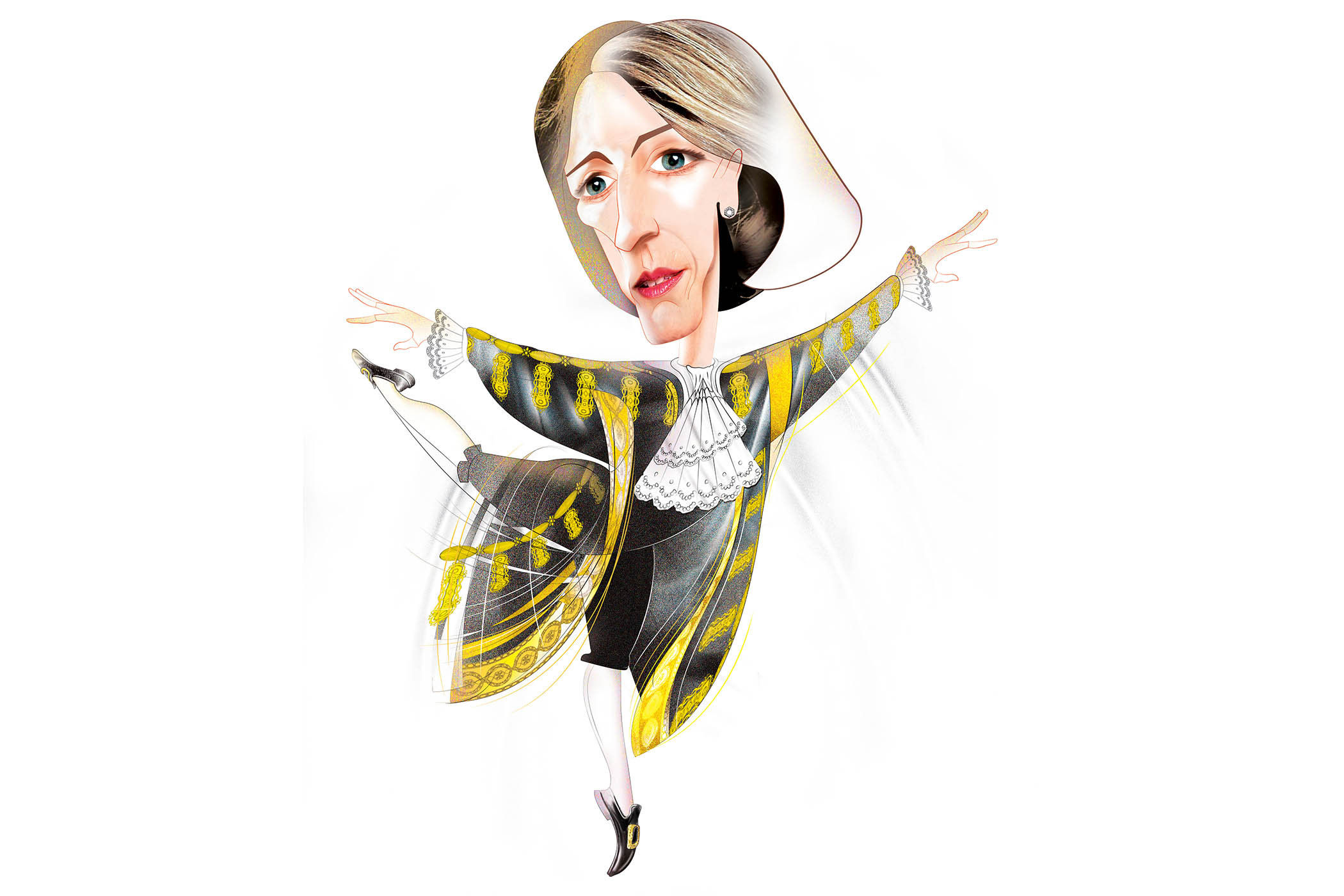
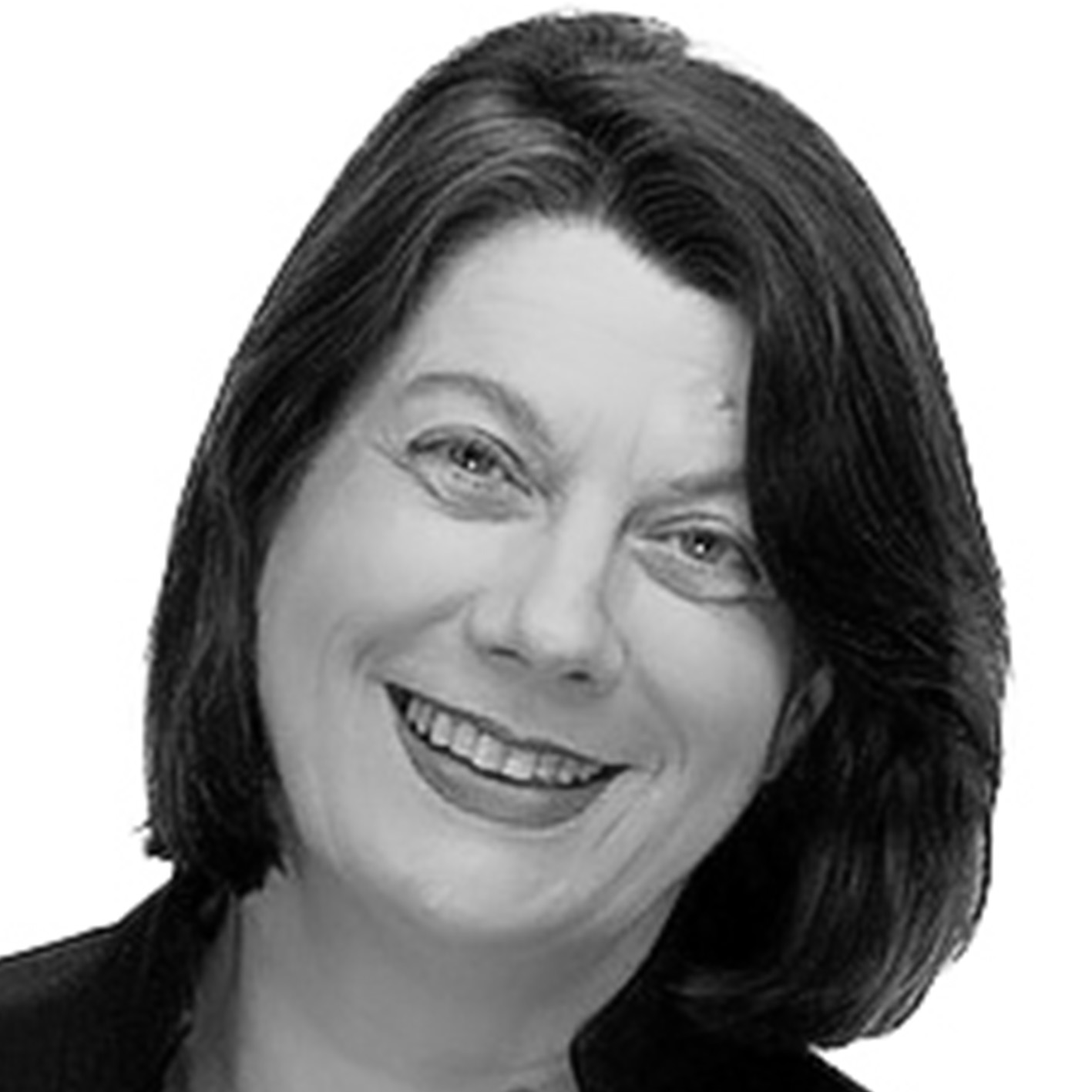
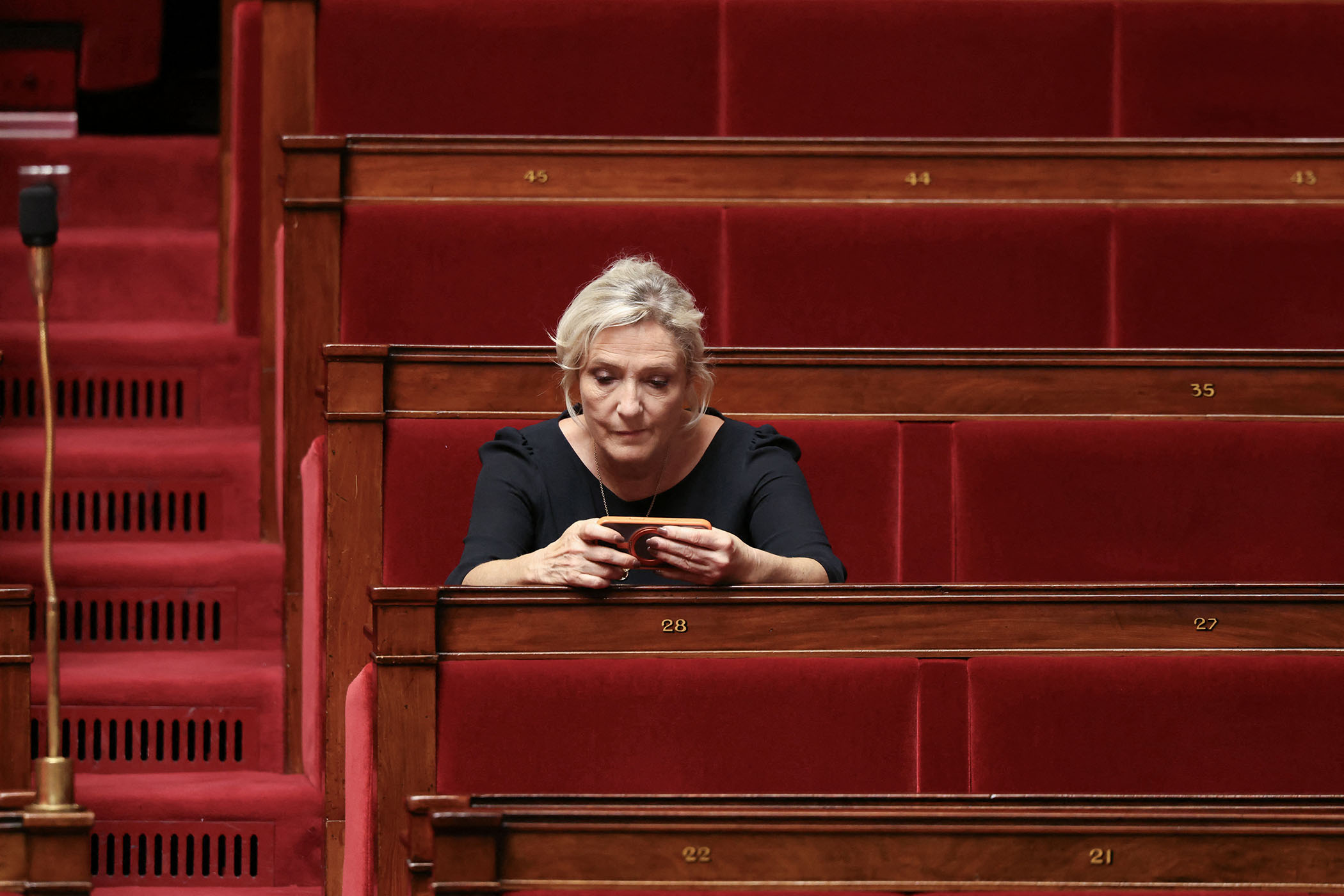
When Deborah Bull was principal with the Royal Ballet in 1993, a group of dancers were invited to work with William Forsythe, the most daring and experimental of all the neo-classical choreographers. She not only jumped at the chance but made the most of every second.
“Deborah was quite confident with Forsythe,” her fellow principal Leanne Benjamin remembers. “She realised what an opportunity it was to be working with him.”
That curiosity and willingness to learn characterised Bull’s time at the Royal Ballet. It has also been one of the most notable qualities of her subsequent career, which has led to her, as Baroness Bull of Aldwych, seeking election as speaker of the House of Lords.
She was born in Derby, but brought up in Kent and Lincolnshire, and had three sisters. After her mother’s death, her father, a vicar, remarried and had two more daughters. Bull started dancing at the age of seven in a local school above a fish and chip shop in Skegness. All her sisters attended the school – their mother had longed to be a dancer herself – but Deborah was the one who, t the age of 11, she won a place at the Royal Ballet School. At that point her knowledge of ballet was restricted to one professional production and the photographs in the Princess Tina ballet album she got every Christmas. “I was just a kid. I thought, that’s nice, I’ll do that.”
‘Once she gets something into her head, she’ll push it to the limit. Some find it frustrating. I think it’s energising’
‘Once she gets something into her head, she’ll push it to the limit. Some find it frustrating. I think it’s energising’
Tony Hall, former ROH CEO
She joined the Royal Ballet in 1981, and worked her way through the ranks, becoming a principal in 1992, at a time when Benjamin, Darcey Bussell and Sylvie Guillem were also in its top ranks. In that company, she was a strong, interesting dancer but never quite a star. Yet she stood out for her intelligence and a determination to have a life beyond dance. She had a quality of looking outwards.
While still dancing, she campaigned on healthy eating and better physiotherapy for dancers, crediting a former physiotherapist boyfriend for transforming her thinking about the need to build a strong body for dancing – using strategies that are now widespread but were virtually ignored in her time as a performer.
In 1998 she founded the Artists Development Initiative (ADI) at the Royal Opera House. Its remit seemed simple but was radical for its time: to open up the ROH’s resources and expertise to small companies and independent artists.
In the same year, she joined the board of the Arts Council. She’d given a council lecture on the importance of public support for the arts two years earlier, which had caught everyone’s attention. Graham Devlin, then the acting chief executive, met her around that time and was impressed: “She’s got a really good brain. But dancers are also very good at enabling people to work together, to create creative things. She’s great at inspiring people.”
The ADI was an extraordinarily fruitful initiative. It introduced artists such as Wayne McGregor, who went on to become its resident choreographer, and encouraged choreographers such as Cathy Marston and Will Tuckett. Equally valuably, it began altering the perception of the Royal Ballet as elitist and resistant to change. It let in new voices and fresh air.
Tony Hall was appointed chief executive of the ROH in 2001 and immediately recognised the potential of what Bull was doing. He wanted to extend the process of opening up the ROH to different audiences and to use the Linbury Theatre as a stage for different work. In 2002, the year after Bull left her dancing life behind, he appointed her as creative director of ROH2.
Newsletters
Choose the newsletters you want to receive
View more
For information about how The Observer protects your data, read our Privacy Policy
“The thing about Deborah,” he says, “is that she can articulate things extremely well and very clearly. And she has a fixedness of purpose. Once she gets something into her head, she’ll push it to the limit. Some people find that frustrating. I think that’s energising.
“She is also very tough because it is difficult to force your way into two large companies – the Royal Ballet and Opera – then say, hang on, there’s a third space here that we want to build. She took on the hard yards, talking to people and negotiating, to the point where it was such a success five years on that people absolutely saw the point of it.” Bull took brilliantly to a life beyond performing. “A life spent dancing is a surprisingly effective preparation for a second career,” she wrote in The Everyday Dancer, published after retirement. “Above and beyond the discipline – that much must be obvious – many of the skills acquired in the studio and on stage translate effectively into a more conventional workplace: dancers stick rigorously to deadlines and learn early about performing on demand; they are adept at trying out new ideas (in the studio) and testing them in the marketplace (the stage), gathering feedback (in the form of applause, good and bad reviews and the teacher’s corrections) and applying it all to their next efforts; they learn about leadership, good and bad, on a daily basis.”
She is a great believer in the lessons of failure. “There is no success without failure,” she told me earlier this year. “It is a step on the road to success in that you learn how to do things.” That tough-mindedness, that willingness to take a risk on novelty has been her guide. Devlin, who lives near to Bull in Suffolk, notes Bull’s warmth and grace, and adds: “She has courage; she never ducks a challenge.”
She does not discuss her life: she was married to the architect Charles Bliss, and has a partner today, but that is as far as revelation extends.
By the time she left the ROH in 2012, her role had expanded to creative director and her remit stretched to big-screen relays of work and expanding daytime events. She also extended her writing, producing four books and a raft of journalism, judged the Booker prize, and became a TV and radio presenter. She was a governor of the BBC from 2003 to 2006 (and is still on the board of the Royal Ballet and Opera and chair of the Rudolf Nureyev Foundation).
Her next step, in 2012, was into academia as director of cultural partnerships at King’s College London. Again, her drive meant that when she left a decade later she was vice-president and vice-principal of communities and national engagement.
Evelyn Welch, now vice-chancellor of Bristol University, was vice-principal at King’s and later a provost for most of that time, admires all Bull achieved. “Deborah was brought in before I arrived to set up the newly launched Cultural Institute, which came from the idea that the university needed to be much more outward facing and imaginative in how it defined its role as a civic institution.
“It was a big leap of faith on both sides to say that somebody who had never worked in a university and didn’t have an undergraduate degree could really make a positive difference to King’s and to its relationship with the broader cultural centre and the wider London community,” she says. “Deborah was fantastic about taking all the traditions, all the heritage, all the excellence, all the things that mattered to academics, and representing them in a way that made even the academics think ‘wow’.
“She was flexible where she needed to be flexible and determined where she needed to be determined. She brought elegance and insight that was just unimaginable in a very traditional university setting. One of her key achievements was to imagine how a university could create its story”
It’s characteristic of Bull that one of her King’s roles was executive sponsor of the world’s largest study of the impact of arts intervention on physical and mental health, researching therapies with stroke patients, women suffering from postnatal depression and people with Parkinson’s disease, funded by a £2.5m Wellcome Trust grant.
She has spent her career asserting the importance of the arts to the nation’s health. “We have the potential to take these three interventions and roll them out to bigger populations and test whether they are clinically effective, economically effective and implementable,” she said in 2019. The Shaper project is ongoing, but the research on the use of singing for postpartum mothers has already proved it is an effective way to treat postnatal depression.
It’s noticeable Bull has always been good at bringing new thinking into revered and long-established institutions. She said she had learnt as early as her time at the Royal Ballet School “how to strike a balance between heritage and its value with the need to kick up the past if you are going to break new ground and do new things in future”.
It’s a quality she has continued to exhibit since becoming a crossbench member of the House of Lords in 2018, and then its deputy speaker in 2024. “I’d describe her as a determined reformer,” says Hall. “She is someone who is very focused, she can clear out the clutter and say this is what I want to do. She has decided to make the Lords her focus. She loves it.“She has made a point of taking part in debates on things she knows about, whether it is health and wellbeing or the importance of the arts more generally.” In throwing her hat into the ring to be elected lord speaker, up against the Tory peer Michael Forsyth, she is once again attempting to bring her analytical brain, her discipline and her ability to unite people to an institution that is not famous for liking the new. Her candidate statement recognised this: “In complex institutions with long histories, this way of working has defined my career: balancing tradition and innovation, finding consensus, taking difficult decisions and holding fast when required.”It may be that the vested interests of the House, its instinct for tradition and the known rather than the unexpected, will work against her. There has only been one other crossbencher elected speaker. But Deborah Bull has always piloted a unique course. The Lords would be lucky to have her.
Deborah Bull
Born Derby, 1963
Alma mater Royal Ballet School
Work Deputy speaker, Royal Ballet and Opera trustee, Rudolf Nureyev Foundation chair
Family Divorced, has a partner
Illustration by Andy Bunday