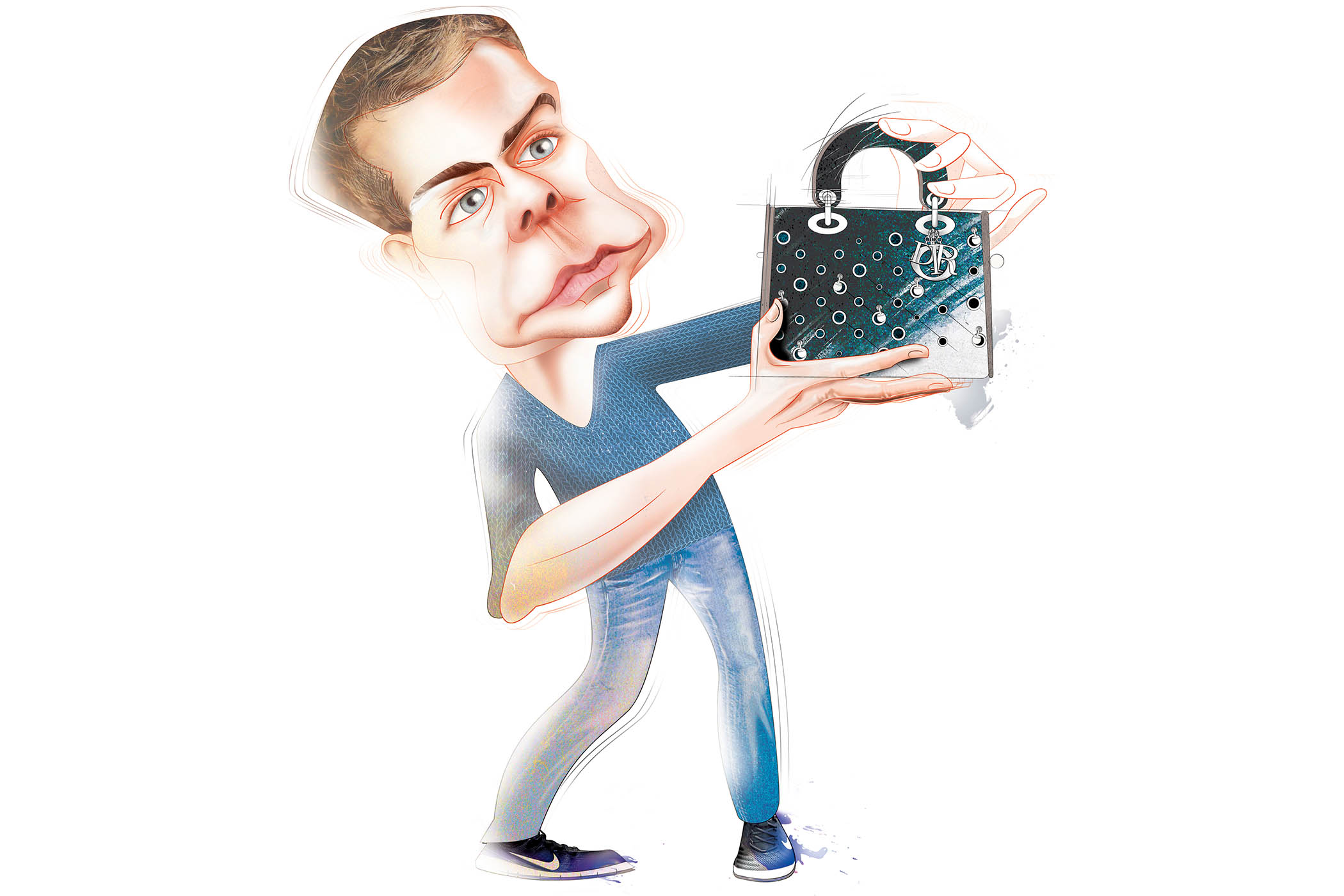

Illustration by Andy Bunday
At the Fashion Awards on Monday night in the Royal Albert Hall, London, Dame Anna Wintour held court on the prime table in front of the stage where Colman Domingo was performing hosting duties. She was flanked by two of fashion’s biggest players. To her left, Delphine Arnault, the 50-year-old daughter of LVMH-owner Bernard Arnault and chief executive of Christian Dior Couture. On her right, Jonathan Anderson, the 41-year-old Northern Irish creative director of Dior and founder of the JW Anderson label. Wintour, notably, was wearing a Dior dress designed by him. Anderson collected the designer of the year award – for the third year in a row. After more than 10 years as creative director of Loewe, from 2013 to 2024, he is the first designer to take on both Dior’s men’s and women’s collections.
He achieved the award hat-trick, said Laura Weir, chief executive of the British Fashion Council, “because he is not repeating himself. He creates clothes that feel current but also courageous. There is always a new idea, a new reference, a new way of looking at the world. That level of consistency at such a high standard is incredibly rare.”
Those clothes include the latex-edged paisley pyjamas from his early collections, the red catsuit worn by a pregnant Rihanna at the Super Bowl, his signature loafer with its outsize chain detail, the free knitting pattern for a cardigan worn by Harry Styles that went viral during the pandemic and Sarah Jessica Parker’s pigeon-shaped clutch in And Just Like That.
His work points a twisted lens at the everyday – models at one JW Anderson show wore grey granny wigs with their pointelle vests. It is fashion that has the required provocation to confuse, impress and break the internet. An Anderson makeover has become de rigueur for personalities wanting to push beyond their oeuvre, with campaigns featuring everyone from Maggie Smith to Daniel Craig. He has an innate skill for appealing to the social media generation.
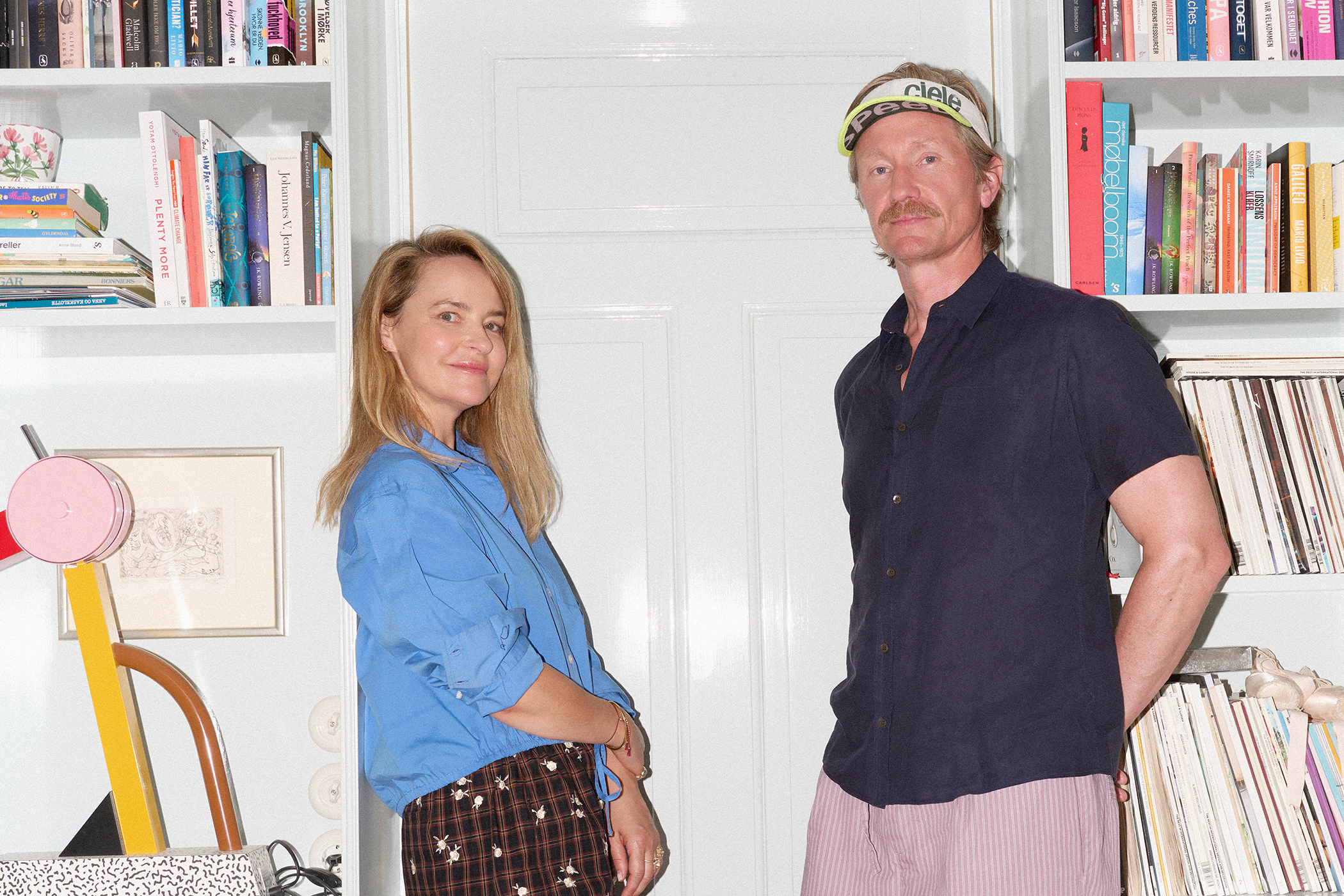
This melding of the fashion, music and art worlds is central to his output. The evolution of his eponymous brand includes collaborations with Wedgwood (he collects ceramics) and a Charles Rennie Mackintosh oak stool replicated by woodworker Angus Ross. He has curated exhibitions at the Hepworth Wakefield and at Offer Waterman in London. His art collection at home in north-east London (he splits his time between there, Holt, in Norfolk, and Paris) features works by Lucie Rie, Peter Hujar and Paul Thek. His partner is Pol Anglada, a designer and artist who worked with him at Loewe and now Dior. His best friend is Bruno Benjamin, his longtime stylist.
His work points a twisted lens at the everyday… fashion that can confuse, impress and break the internet
His work points a twisted lens at the everyday… fashion that can confuse, impress and break the internet
“He always makes me switch my brain into a different gear,” says the artist Anthea Hamilton. “Even to think about him makes me lost for words, because of the utter speed he seems to go at.” She has created works for his shows and appeared in his Loewe campaigns. He reciprocated by making costumes for her 2018 exhibition at Tate Britain.
Earlier this year, that work ethic was put into sharp relief as he unveiled his debut show for Dior, reworking classics such as the Donegal tweed Bar jackets. There was year-long speculation about a move from the LVMH-owned Spanish house Loewe, which he had turned from a style backwater to a lucrative prize, taking it from a $200m business to one worth more than $1bn, introducing the hit Puzzle bag as well as capitalising on the house’s heritage.
But getting the Dior gig is like becoming the next James Bond: everyone has an opinion. The pressure is intense. He is overseeing 18 collections a year, 10 for Dior, six for JW Anderson and two for his Uniqlo collaboration. His time is allocated in 10-minute segments.
Anderson may be dressing Jennifer Lawrence in haute couture but his own uniform of a navy sweater and blue jeans remains synonymous with his middle-class upbringing in farmland-locked Magherafelt, in Co Derry.
Newsletters
Choose the newsletters you want to receive
View more
For information about how The Observer protects your data, read our Privacy Policy
He is the eldest son of Willie Anderson, a former Ireland rugby captain who stared down the haka playing against the All Blacks in 1989. I once sat near his father at his show; he was proudly introducing himself by announcing that Jonathan had been declared the “king of fashion” by the Telegraph.
His mother, Heather, taught English at his secondary school, and helped him navigate his severe dyslexia, coming up with visual ways for him to learn. Her father, a textile designer, took him to flea markets.
The Troubles were never far away. He has recalled returning from school to find half a street blown away; his mother narrowly avoided being caught up in the 1998 Omagh bombing.
It is a close-knit clan: his parents remortgaged their house to fund JW Anderson’s first studio in Dalston, east London, in 2008; his younger brother, Thomas, is the brand’s operations director; Anderson designed a wedding dress for his sister, Chloe, a pharmacist. Asked by Vogue to nominate his dream person to dress, he said: “When I see my mum and my sister in my clothing it makes me really happy.”
But his earliest career dreams were centred on acting rather than fashion. At 13 he was staging plays at home with his friends, though he designed their costumes too. His father recalled in one interview that he “was outstanding” as Fagan.
And so it was drama that he pursued after school, heading to the Shakespeare Theatre Company in Washington DC at 18. There he discovered how to party and smoke cigarettes (he remains a committed smoker) and discovered that he didn’t, in fact, want to pursue acting. He walked out of an interview at the Juilliard. “I remember doing it and thinking, ‘I don’t know why I'm doing this’,” he told Vogue. “This school is going to cost my parents a fortune – they'll probably have to sell an organ, so halfway through the audition I just stopped.”
Neatly, performance and fashion found its way back to him, through his friendship with the film-maker Luca Guadagnino; he designed the costumes for Challengers and Queer, as well as the upcoming Artificial.
After abandoning Juilliard, Anderson returned to Ireland and got a job in the Dublin department store Brown Thomas. He applied to Central Saint Martins, but didn’t get in, instead taking the menswear course at the London College of Fashion. But it was a side gig working on Prada’s displays that implanted the retail reality and visual tools to create a brand.
He debuted at London Fashion Week in 2008. His shows became a white-hot ticket, and he launched womenswear in 2010. Sell-out collaborations with Topshop followed. In 2013, when he was appointed creative director of Loewe, LVMH took a minority stake in his own brand, and installed Simon Whitehouse as its chief executive. At the Fashion Awards Wintour divulged that Delphine Arnault had called him at 7am offering to buy his company; he’d joked he had to pretend that he was awake.
“He’s unique,” says Whitehouse. “He’s at once immediately quite glorious, in that he’s six foot one, blue eyes, blond hair, broad shoulders, but with this speed of thought and speed of articulating very unique things.”
Whitehouse orchestrated Anderson’s still-standing deal with Uniqlo to produce two collections a year. He describes the designer as “fiercely ambitious and very competitive”, as was he. “We were like ‘let’s rule London, let’s be number one. Bang, as fast as possible’.” Anderson’s approach is exacting and uncompromising. “He is direct. If you’re good, talented and focused you have no issues with it. If you’re sloppy he will pull you up on that, sometimes, in a very abrupt way, which can be jolting.”
But it is that laser focus and provocative spirit that has allowed Anderson to reach the upper limits of the industry. “Every chapter has been about pushing himself further,” says Laura Weir.
That evolution has seen him go from a punk wunderkind to “the intelligent aristocrat” described by Whitehouse, who adds: “That’s a radical change from Dalston to those corridors in Paris.”
Jonathan Anderson
Born 1984, Magherafelt, Co Derry
Alma mater London College of Fashion
Work Fashion designer
Family Partner, Pol Anglada