

When Elizabeth Bennet visits Pemberley in Pride and Prejudice, one of her pivotal conversations with Darcy revolves around the magnificence of the Peak District, particularly Dovedale.
Yet the ancient woodland that inspired Jane Austen has been devastated by ash dieback and Dutch elm disease, and the steepness of Dovedale’s ravines make it too dangerous and difficult for conservationists to plant seeds by hand.
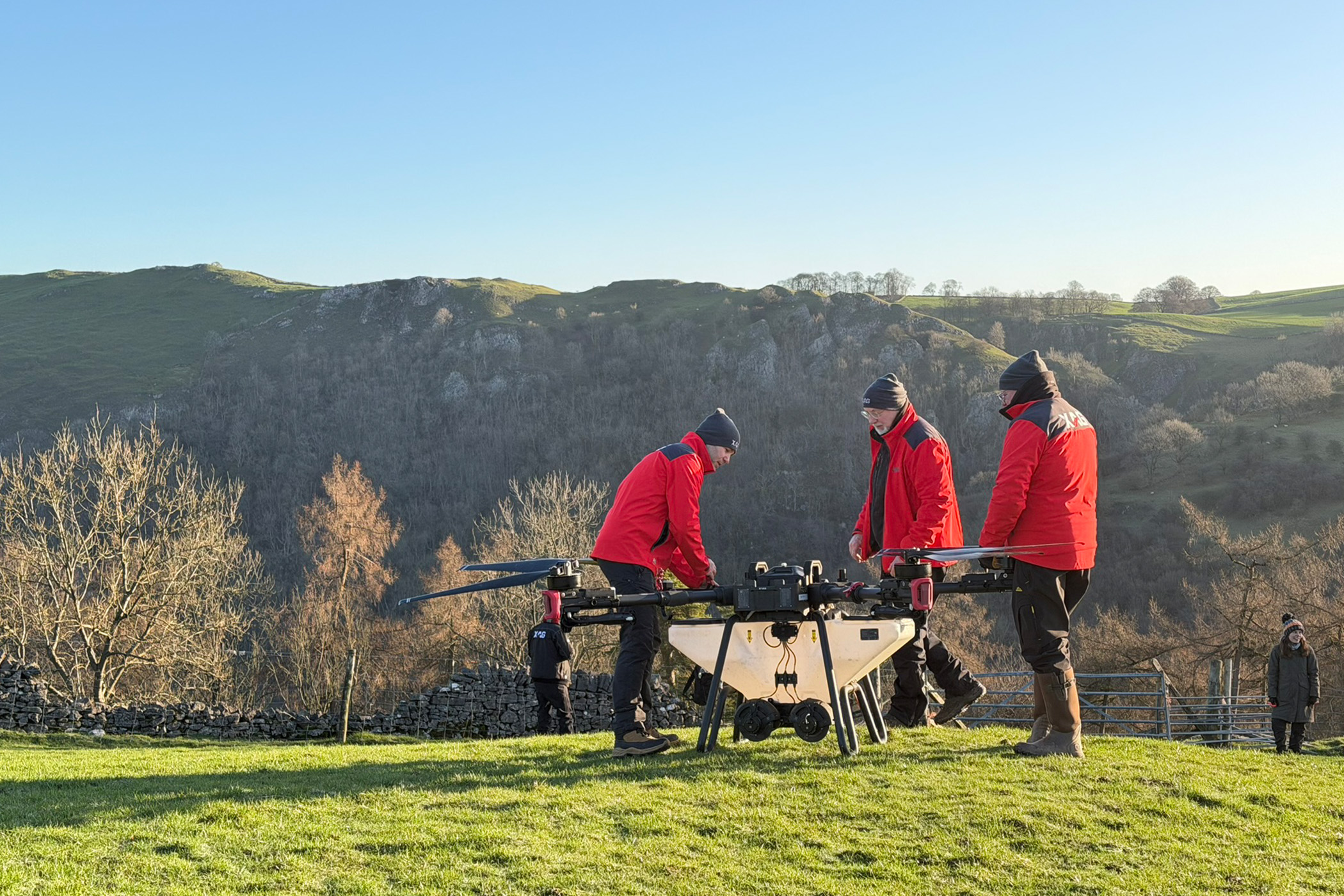
Now teams at Natural England and the National Trust have started using specially designed drones to spread seeds in parts of Dovedale and Lathkill Dale in the White Peak area of the Peak District national park.
Two small plots, covering about three-quarters of a hectare – about the size of a football pitch – are being planted with a mix of native tree seeds that would have been familiar to Austen: field maple, wych elm, alder, small-leaved lime, birch, rowan, yew, goat willow, crab apple and holly.
The trial, part of the Life in the Ravines project, involves using an XAG Agricultural drone made by QuadRotor Services that can carry up to 50kg of seeds.
‘The sheer steepness of these slopes means we must think creatively about how we restore the woodland’
‘The sheer steepness of these slopes means we must think creatively about how we restore the woodland’
Usually the technology is only used in open, flatter landscapes – drones have been used to reforest parts of the Scottish highlands and Dartmoor – so the teams have been trying out new techniques, according to Adam Linnet, lead ranger for the National Trust in the White Peak.
“The technology used in this trial mimics natural seed dispersal, so we are hopeful it could provide a solution to help trees establish in harder-to-reach areas,” he said. The trees are needed to support wildlife, store carbon and prevent the ravine sides eroding, Linnet said.
Martin Evans, woodland restoration manager for Natural England, said the drone trial was “an exciting step forward”.
“The ravine woodlands of the Peak District Dales are among the most precious and challenging habitats we work in. Ash dieback has created an urgent need to act, but the sheer steepness of these slopes means we must think creatively about how we restore them.”
The Life in the Ravines team has placed trays around the trial plots so that they can measure how accurate the drone is at dispersing seeds. They will measure germination rates and sapling survival in one-metre-square monitoring plots inside and outside the planting areas, to check whether the drone seeding is cost-effective compared with traditional planting methods.
Newsletters
Choose the newsletters you want to receive
View more
For information about how The Observer protects your data, read our Privacy Policy
Photograph by Natural England/Life in the Ravines