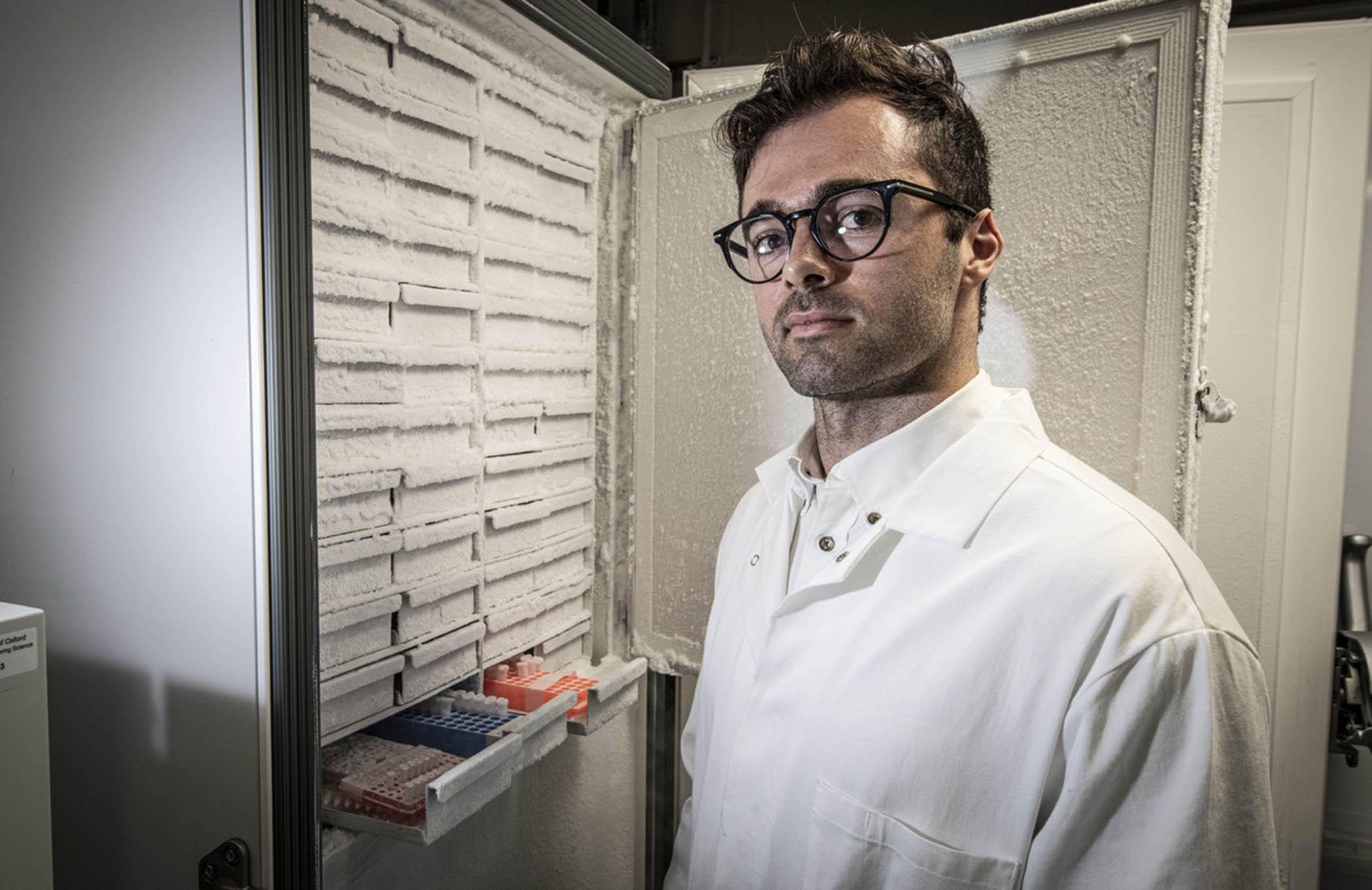


Harrison Steel has built a scientific instrument that can make protein molecules light up. Hearing about this made me imagine becoming a human lava lamp, fluorescent milkshake globulating in my stomach. The reality is much more exciting.
The new fluorescent MRI scanner that Steel and his 25-strong team at the University of Oxford’s engineering department have just unveiled is the first step towards a new genre of quantum technology that can track a dose of medicine as it courses through your body, or discover how bacteria behaves inside you.
Steel blends synthetic biology, quantum physics and AI to make scientific machines – with the care that Antonio Stradivari made violins. The fluorescent imaging device is the first time anyone has managed to engineer life’s building blocks at the quantum level, where light and magnetism interact.
Birds have proteins, probably in their eye cells, that somehow detect the earth’s magnetic field, and Steel, who is 31, uses a similar quantum mechanism to switch his proteins on and off using magnets in the MRI, making them light up. Now that the concept is proven, his lab is building more machines. The first aims to track fluorescent proteins in mice, and it would save thousands from dissection because researchers could see how drugs behave without touching the mouse.
The bigger ambition is to make drugs that respond to magnets. Doctors could precisely target a specific area by holding a magnet next to it – a powerful anti-cancer drug, intolerable for the rest of the body, could be focused intensely on a tumour.
“The boundaries of science have always been defined by what we can measure and what we can actually change,” Steel says. “In the more exploratory things we do, often nobody makes the instrument you need. So if you’re going to do exciting science, you have to take a step back and think ‘what are the tools we could build today which would enable the discoveries of tomorrow?’”
Scientific advances are often couched as amazing feats of brainpower, but that hides the feats of engineering that lie behind them. Galileo is in the history books for establishing that the earth goes round the sun, and as the discoverer of Jupiter’s moons. Yet the real leap came because he heard about the first telescopes, emerging from glass-grinding workshops in the Netherlands in 1608, which inspired him to make his own more powerful version.
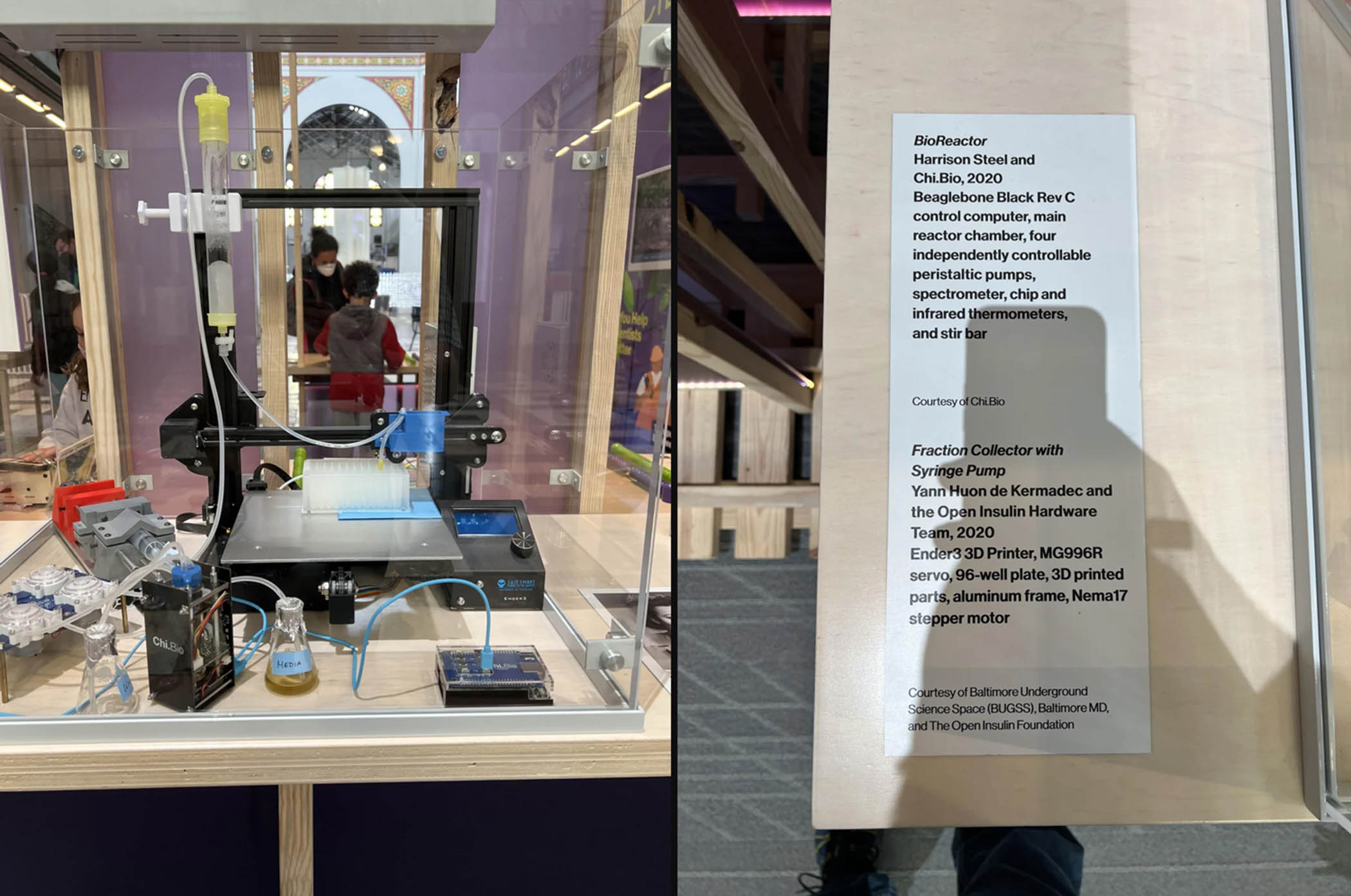
The Italian’s attempt at a microscope was more rudimentary. It took another six decades before Robert Hooke had refined an instrument good enough to make out the building blocks of cork. He called them cells.
But as technology has advanced, engineering has been eclipsed. Francis Crick and James Watson are household names for discovering DNA’s double helix in 1953; far less famous are William Henry Bragg and his son William Lawrence Bragg, who created the first X-ray spectrometer in 1912, establishing the technique used by Crick and Watson.
Occasionally big devices such as the James Webb Space Telescope become the star, but usually the instruments that scientists coax discoveries from are footnotes.
Newsletters
Choose the newsletters you want to receive
View more
For information about how The Observer protects your data, read our Privacy Policy
The tidal wave of breakthroughs from single cell analysis – revealing the anatomy of cancer tumours and leading to the development of immunotherapies – happened because labs can sequence a cell’s genome. It took two decades and about £2bn for the Human Genome Project to achieve the first sequence; now Illumina’s NovaSeq X Plus can run more than 50 a day for about £100 each.
A short walk from Harrison Steel’s lab is the Kavli institute, founded by Professor Dame Carol Robinson. If Steel is an emerging Stradivari of scientific instruments, Robinson is a Hendrix or a Paganini – a virtuosa on the mass spectrometer. She began working in spectrometry as a lab technician after leaving school at 16, and her deep knowledge of her instrument was behind her rise to become president of the Royal Society of Chemistry four decades later.
“I like machines where you can kind of tweak, fiddle, change and optimise,” Robinson says. “It's like tuning. We did tune for hours. We tuned the instrument and then I used to think, ‘yeah, it's in its sweet spot. Now's the time.’ And I loved that about it, because it wasn't some passive object where you just inject something, it's actually you're almost feeling at one with your machine.”
Mass spectrometers spit out charts – spectrums – that show how much carbon, iron and other elements are in a chemical substance. Robinson has seen so many that she understands their shifting colours and peaks in a way that Hendrix understood his guitar strings. She sees details that others don’t.
“Someone said recently in one of my lectures, ‘oh only Carol would see that shift and interpret it the way she has’. I don’t want to sound arrogant or say that no one else can do it – I’m sure they will. But I’ve dedicated my life to this and they haven’t had 50 years of looking at spectra yet.
“People say ‘can you just get AI to do it’. But it would only be able to learn what I already understand, whereas when I see something that I don’t understand, it wouldn’t know how to interpret that.”
Science is usually considered to be the antithesis of art – clean and precise, not the result of instinct and craftsmanship – yet Robinson’s artistry is not unusual among scientists.
It’s both a source of inspiration, and an achilles heel. One of the challenges Steel faces in running his lab is keeping knowledge of some of the instruments his team has built when they move on, as PhD students and post-docs inevitably do.
“Somebody will build something then we have to help them train someone else before they move onto the next project,” Steel says. This is what Dan Wang refers to as “process knowledge” in Breakneck, his book about the rise of China’s engineering state. Even if Steel’s researchers are meticulous in documenting each step of their work, there will still be some tacit assumptions they leave out, like what level of iron might be in the local water supply (the amount can affect how bacteria grow) or how humid the lab is.
The maestros of science can look towards the Japanese alps for other tips. Ise Jingu, Japan’s holiest Shinto shrine, is dismantled and rebuilt every 20 years so that carpenters and woodcutters can pass on their process knowledge to the next generation. The shrine remains, 1,300 years on.
Photograph by Simon Townsley / Panos Pictures, Nick Berardi