
The science had not changed. All of the numbers, the metrics, the fine-tuned calculations that had persuaded Liverpool to anoint Arne Slot as Jürgen Klopp’s successor two years ago still held. All of the information available to the club’s fearsomely bright and impressively extensive research department said what it had always said.
Slot had not suddenly forgotten how to coach. He had not misplaced his tactical acumen. He had not suddenly abandoned his playing style or his game vision or his philosophy, whatever we are calling it these days. He had not become a bad manager overnight, or even over the course of one deflating campaign.
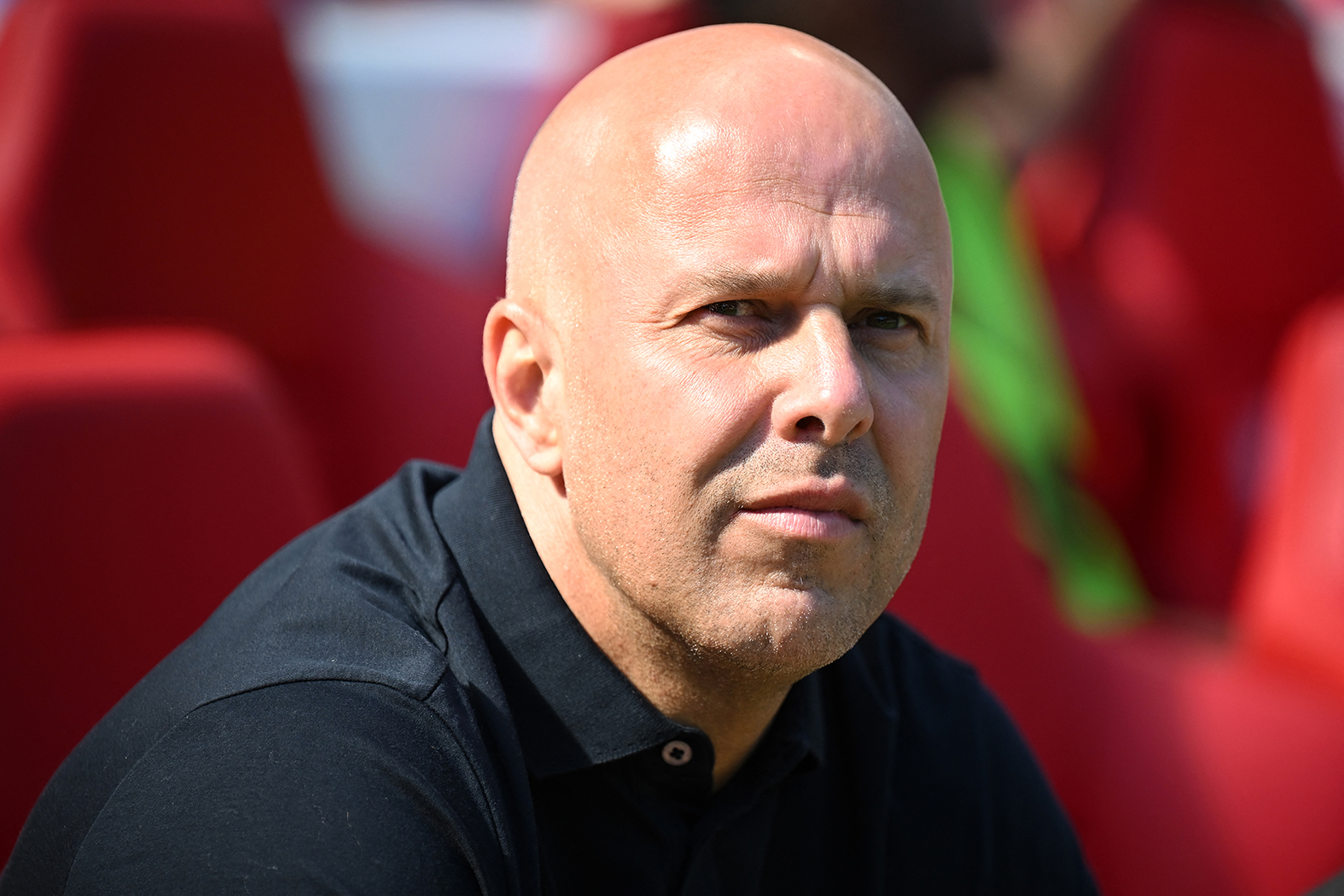
He was, on the day Liverpool sacked him, no less accomplished or talented than he had been on the day the club appointed him, two years ago, a decision that felt, at the time, at least just a little left-field. Slot, it should not be forgotten, was no headline act when he arrived. He was the relatively unheralded coach of Feyenoord who waltzed into the Premier League and won it at the first attempt.
What had changed was, well, everything else. There was an unusually gushing tone to Liverpool’s announcement of his departure on Saturday. Words like “gratitude” and “appreciation” and “legacy” featured prominently. The club’s owners, Fenway Sports Group, described him as a “leader in the field.”
“Nevertheless, the conclusion we have come to is built on a belief that the team’s trajectory is best addressed through a change of direction,” their statement read. “That does not diminish the work Arne has done here, or the respect we have for him. Nor is it a reflection of his talents.” This was one of those break-ups, in other words. It’s not you, Arne. It’s us.
Or, rather, it’s us as we are now. Institutionally, Liverpool pride themselves on their devotion to rationality. They try not to allow emotion to cloud their judgement. The club has come to reflect their ownership’s values. They recoil from the immediate, the kneejerk, the consensus. Michael Edwards and Richard Hughes, the club’s “football leadership,” instinctively reject anything that looks like received wisdom.
Slot’s dismissal, then, will have pained them. They continue to believe that history will look kindly on the Dutchman (and, probably not entirely coincidentally, their decision to appoint him.) Not just for that Premier League title, but for his more mooted achievements in an intensely difficult campaign, one hampered by injury and decline and, above all, overshadowed by the death of Diogo Jota.
Liverpool have realised that there are times when the reality that football inhabits is not rational
Liverpool have realised that there are times when the reality that football inhabits is not rational
The well wishes in the statement, the conviction that the Dutchman will have a long and illustrious career in management, are not the usual blandishments offered in these situations. Barely a couple of months ago, Liverpool were adamant – not just in public but in private, too - that Slot retained their absolute faith.
His departure does not mean all of that can be dismissed as mere posturing, false thanks, an attempt to protect his dignity. It means that Liverpool have realised that there are times when the reality that football inhabits is not rational. It is not a neat equation, one in which the numbers and the metrics and the calculations lead to a logical outcome. It is not just science. It may not be science at all.
Last season, as Slot was making winning the Premier League look like a remarkably easy thing to do, Dominik Szoboszlai delivered the most incisive explanation for his success. In an interview with Men In Blazers, he was asked about the contrast between the Dutchman and his predecessor. What did the players see when they looked at the touchline and saw not Klopp’s manic, impassioned energy but Slot’s almost detached calm?
Newsletters
Choose the newsletters you want to receive
View more
For information about how The Observer protects your data, read our Privacy Policy
What they saw, the Hungarian said, was not a lack of enthusiasm or interest or dynamism, but a manager who had everything under control.
The idea that Slot somehow inherited a title that truly belonged to Klopp was always undermined more than anyone cared to admit by the fact that in the German’s final two seasons, Liverpool finished third. Klopp had signed all but one of the players, of course. But Slot actually got them to win. In the circumstances, his voice, his manner, his style – or some combination of the three – were exactly what Liverpool needed.
And then, this season, the circumstances changed. Slot, it should be said, handled the devastation of Jota’s death as well as anyone could. His “compassion and humanity” carried the club through that brutal first shock of grief. He allowed his players time and space to mourn, and by extension granted that to the fans, too.
He deserves credit for his handling of the rather more prosaic challenge of Mohamed Salah’s tumultuous farewell. Slot did not use the Egyptian’s outburst at Elland Road as a chance to flex his muscles, to reassert his authority. He played it down, let the anger burn away, and then quietly reintegrated the 33-year-old into the squad and the team. It speaks well of Slot’s delicate touch that Salah, after another pointed social media post, started the last game of the season.
Other problems, though, seemed to flummox him. Liverpool were consistently vulnerable to set pieces, to late goals, to granting opponents huge green spaces to attack. When he tried to make them more secure, he did so by dulling their attacking threat.
He was not helped by injury, by Salah’s sudden downturn, by the unbalanced and underpowered squad expensively assembled for him by Hughes. Sneaking into the Champions League, despite losing 20 games over the course of the campaign, meant he achieved his minimum requirement. But he did so by overseeing a team that, even by a generous estimate, produced maybe half a dozen convincing performances. The fans turned; some players wavered. Faith started to erode. The club accepted that once it goes, it rarely comes back.
And that, ultimately, made his dismissal inevitable. Management is only partly a science. It is largely an act of faith. Liverpool’s squad had changed, subject to a more swift and more violent transition that anyone at the club had anticipated.
The Premier League had changed too, seemingly overnight entering its Set Piece Britain era, a phase in which a more physical, more dynamic style than Slot promised was required. He was not, all of a sudden, a bad manager. He had been the right manager. He just wasn’t any more. As Liverpool’s statement made clear, it really wasn’t him. It was them, and it was us.
Photograph by Paul Ellis / AFP via Getty Images