

An hour or so after Arsenal had cruised past Leeds United, breezily clearing yet another hurdle in their pursuit of the Premier League title, Robbie Lyle and Lee Judges huddled under the corrugated roof of the West Stand ticket office at Elland Road. Lyle clutched an AFTV-branded microphone to his chest. In the fluorescent glare of a ring light, both wore wide, almost giddy smiles.
They did not need to linger for long. AFTV – Arsenal Fan TV, as most people still think of it – has been doing this for more than a decade. Lyle and Judges are good at it. They capture a 10-minute reaction video, full of beaming positivity and gratitude, in a single take. It will, in short order, attract 112,000 views (and counting) on their YouTube channel.
Those are solid figures, but they fall some way short of the channel’s peak. AFTV is, now, an established new media business: 1.8 million subscribers on YouTube, which is quite a lot more than The Observer, home to a string of podcasts and discussion shows, all complete with brand partnerships and commercial sponsors. It claims to be the “most popular fan network in the world”.
The channel’s most popular videos, though, can all be accurately dated from their titles: Arsène Wenger Is Finished (4.6 million views); Arsène Wenger is Extinct (2.3 million); Walk Away Arsène (1.7 million). They are relics of an era – what might be called the Late Wenger Period and the Emery Window – that is less than a decade old but feels a lifetime away.
For a while, eight or nine years ago, AFTV seemed to encapsulate all of Arsenal’s myriad problems. Héctor Bellerín, speaking at the Oxford Union, chastised them for “feeding off failures” and questioned whether they could be real fans. The club suggested that Pierre-Emerick Aubameyang might like to stop inviting its stars into his box for games.
Graffiti denouncing the channel appeared outside the Emirates. Fans chanted that Lyle and his cohort should “get out of our club”. AFTV was symptom and cause: a channel that had grown popular by documenting the many and varied rifts within Arsenal’s fanbase was in itself a source of division. Factions could be pro- or anti-Wenger, pro- or anti-Emery, pro- or anti-AFTV.
The contrast between then and now is extraordinary. Towards the end of the last decade, Arsenal felt like a fundamentally broken club. Wenger’s final few years were marked by a schism that seemed irreconcilable. The owners, the Kroenke family, were loathed, particularly its patriarch, “Silent Stan”.
The attempt to smooth the post-Wenger transition, to avoid the fate of Manchester United by appointing not only Emery but a suite of executives to support him, failed almost instantly. The club had lost both direction and relevance, their drift seemingly endemic. Wenger had not made it past the Champions League last 16 since 2010. Between 2017 and 2023, Arsenal were not in the Champions League at all.
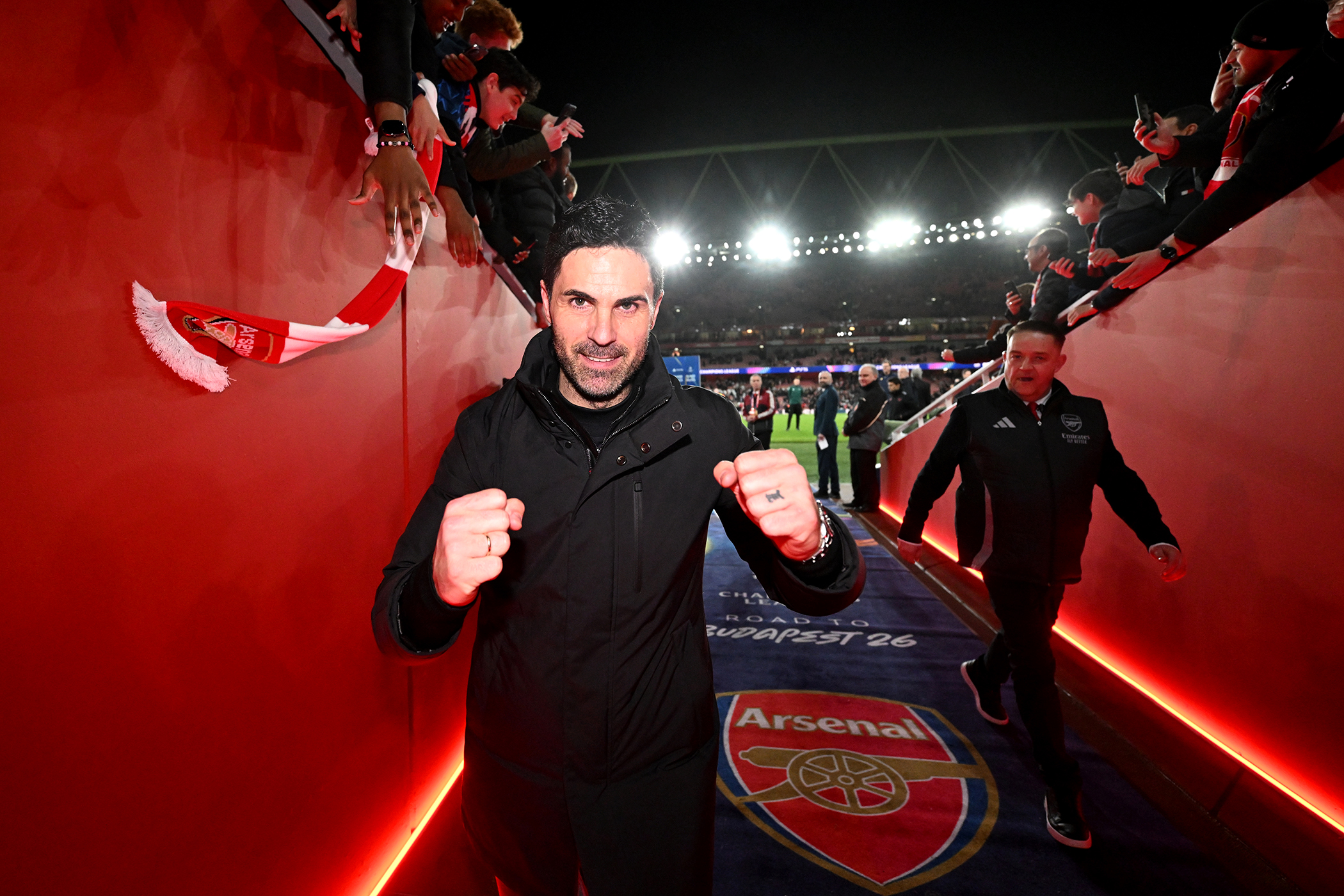
This week, they made their third quarter-final in as many seasons; that is, of course, just the start of it. Arsenal stand nine points clear at the top of the Premier League, a few weeks away from a first title since 2004. They are heavy favourites for the FA Cup. Beat Manchester City on Sunday to lift the Carabao Cup, and the prospect of an unprecedented clean sweep of trophies will feel suddenly tangible.
The manager who has overseen all of that, Mikel Arteta, tends to inspire what might be politely described as Strong Opinions in people. It is not just that observers are divided on the style of football his team play, with its emphasis on physicality and set-pieces and the sense that Arsenal do not really want the ball to be in play all that much.
Newsletters
Choose the newsletters you want to receive
View more
For information about how The Observer protects your data, read our Privacy Policy
Nor is it simply that some of his methods can play as a little gimmicky: the pickpockets, playing You’ll Never Walk Alone to get his team ready for a game at Anfield, the thing with the lightbulbs. Having a dog at the training ground is, very obviously, a good idea; all clubs should have dogs. But calling it Win is maybe a little on the nose. Arteta, rightly or wrongly, just seems to rub some people up the wrong way.
His body of work, though, cannot really be disparaged. It is not just the trophies that Arsenal might win this year, or the fact that they have mounted three title challenges in as many seasons, or even the fact that – like his mentor and opponent this weekend, Pep Guardiola – he has reshaped the Premier League in his image: the competition this season has, after all, been far more Arteta-derivative than Guardiola-infused.
More than all of that, his greatest achievement is that he has healed all of the wounds that once plagued Arsenal. It no longer feels like a place divided. That is true internally, where Arteta has accrued almost as much power as Wenger once had. Arsenal are, now, very much a club built around him: the sporting director, Andrea Berta, is less a rival power source and more a dealmaker tasked with delivering his manager’s wishes.
And, more impressive, it is true externally, too. This is ultimately what appointing a talented manager, backing him and winning games will do: there is no debate about Arteta’s position, no need for angry rants after games, no doubt and no division. Arteta has made Arsenal feel whole again, all bitterness and rancour forgotten.
Late last year, Lyle travelled to Abu Dhabi to interview Wenger at a conference. Before they went on stage, the two men chatted amiably; in Lyle’s account, he brought up the elephant in the room. Wenger, he acknowledged, had received quite a lot of abuse from the platform he started. The Frenchman told him not to worry. He understood. Everything, he said, was OK now.
Photograph by Stuart MacFarlane/Getty Images