

That sound you can hear, the one ringing through the New York hotel industry and thundering along the New Jersey transit system and echoing with feedback and distortion in one of the leafier enclaves of west London: that is the sound of a bubble bursting. Or, rather, a bubble being burst, deliberately and destructively, by a thousand grasping hands.
As a distillation of the state of football in the spring of 2026 – and maybe not just football – consider three things that happened in the space of 48 hours or so this week.
First, the hoteliers of the United States informed The Athletic that the surge of bookings that would supposedly accompany this summer’s World Cup has not really materialised. It looks like it might be a small bump, at best. At no point did any of them suggest that this may in some way be related to the fact that they had – on average – increased their prices by 328% in anticipation.
Not long after, Fifa gleefully announced that there would be yet another last-minute sales “drop” of World Cup tickets. There were seats at all 104 games available! And plenty of them, too. There are still roughly 30,000 seats available for the United States’ opening game against Paraguay at the cavernous SoFi Stadium in Los Angeles, for example. Other cities have found sales sluggish, too. It is almost like charging thousands of dollars for a single ticket puts people off.
And then, on Wednesday lunchtime, Chelsea announced that they were parting company with Liam Rosenior, three and a half months into the six-year contract he had signed at Stamford Bridge back in January. The club’s statement made it clear that they had made this decision with the heaviest of hearts. They had been forced into it, they said. They did not say who had put them, and him, in this situation.
Chelsea’s travails may seem unrelated to Fifa’s decision to turn the World Cup into less of a sporting event and more of a summer-long mugging, but they share a common root. Both illustrate the extent to which football has been hijacked by those who see it primarily as a vehicle to make money, and the damage that approach is wreaking.
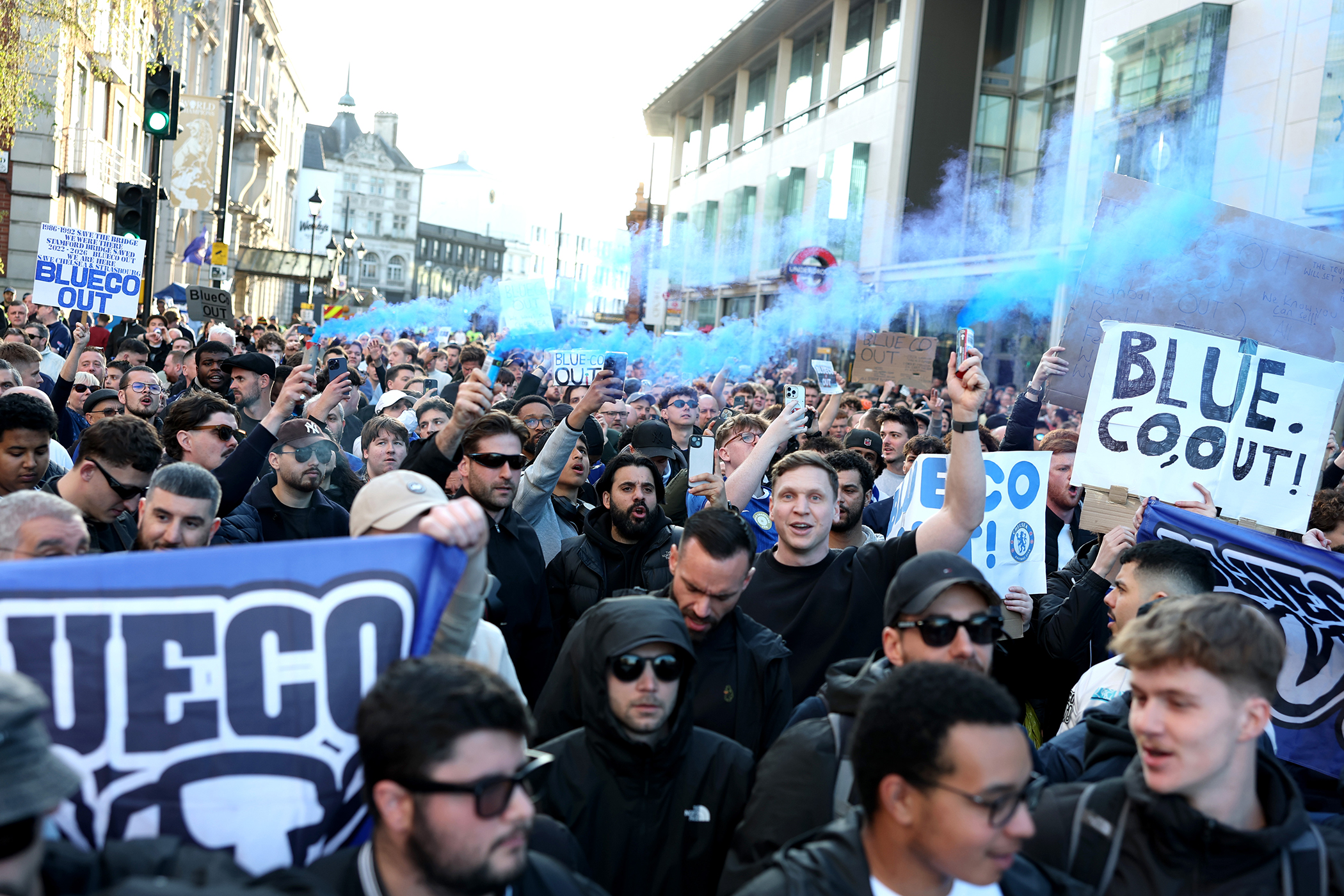
It is important to remember, now, that when BlueCo – the consortium of convenience that bought Chelsea as a distressed asset in 2022 – first swanned into the Premier League, it did so with the absolute conviction that it was run by the smartest guys in the room. The smartest guys in any room, actually.
Their attitude was, in many ways, almost a throwback to the days when the first American investors descended on European football, armed with the misplaced certainty that they had alighted on an under-developed revenue stream, adamant that they could gain an edge by teaching these backwards Europoors how to run sports leagues.
Behdad Eghbali, Todd Boehly and the others did not seem to have noticed that – in the intervening 20 years – European football, a far more ruthless environment than the cosseted, business-first major leagues across the Atlantic, had chewed up and spat out the vast majority of them. The ones that survived did so by adapting, learning and issuing the occasional public apology.
Its approach was, well, different, best encapsulated by Todd Boehly’s famous proclamation that the Premier League should stage an American-style All Star game. It is ironic that, four years on, that idea seems both quite sweet, and even moderately smart, compared with what they have actually done at Stamford Bridge.
Newsletters
Choose the newsletters you want to receive
View more
For information about how The Observer protects your data, read our Privacy Policy
To recap: BlueCo is now searching for its sixth manager in four years. Technically, the contracts of three of them – Graham Potter, Enzo Maresca and Rosenior – ought still to be running. The latter was appointed from Chelsea’s sister/daughter club, Strasbourg, prompting furious protests among that club’s fans. Rosenior lasted just 106 days at Chelsea.
They have spent £2bn on transfers since taking charge of a club who finished third in the Premier League in 2022. They have since finished 12th, sixth and fourth. Should Chelsea miss out on the Champions League this season, it will mean they have failed to reach Europe’s elite competition in three of the four full campaigns BlueCo has overseen.
Compared with the financial results, though, the sporting side is going swimmingly. In March, Chelsea posted a pre-tax deficit of £262m, the biggest ever loss by an English team. By Uefa’s figures, it was even more startling: £342m. The highest holding company in the BlueCo pyramid, HoldCo, has recorded losses of £1.6bn in barely three years of existence.
Much has been made of BlueCo’s ingenious hacks to circumvent the game’s (light-touch) financial regulations: selling first the hotels at Stamford Bridge and then the club’s women’s team in effect to itself; handing players eight-year contracts in order to amortise their costs over as long as possible. All of this is smart accounting. It does not change the fact that you have to pay João Félix all that money, or that you have bought the hotel from yourself.
That is the abiding impression, now, of the BlueCo project: not just that it is inherently stupid, but that it is offensive, too. As F Scott Fitzgerald wrote of a previous era’s finance bros, they are wanton and glib and, above all, careless people. “They smash up things and creatures and then retreat back into their money or their vast carelessness.” Poaching Rosenior smashed up Chelsea and Strasbourg, all at once, and yet the people who did it just roll on, oblivious.
Much the same thing, of course, might be said of Fifa. Or, even more importantly, of that cadre of Silicon Valley-tinged disruptors who are so feted by politicians and leaders and the executive class, the people who believe that their expertise in building electric cars means they know how to run a government, or gives them the right to organise society.
Chelsea, in that context, stand as a compelling counter-example. BlueCo arrived boasting that it could outsmart an industry it did not and does not understand, and where it has failed, completely and utterly, at every turn. It is enough to make you wonder if, perhaps, we should not be quite so in thrall to these people, no matter how smart they tell us they are.
Photograph by Justin Setterfield/Getty Images