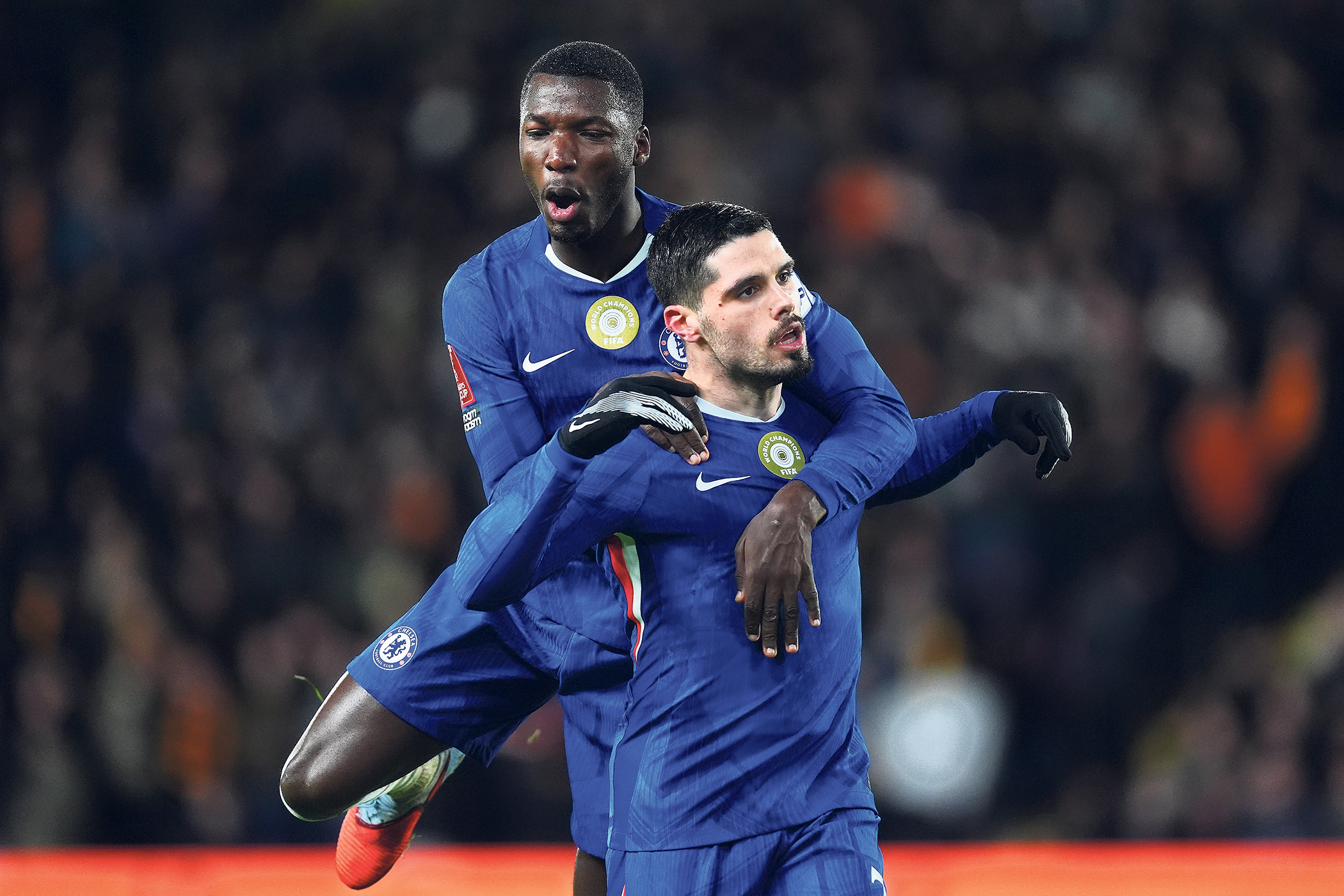



With a couple of minutes left to play, Liam Rosenior’s name rang out from the corner of the MKM Stadium. His team were cruising to a 4-0 win, and a place in the fifth round of the FA Cup. The crowd asked him to give them a wave; after pausing briefly for the sake of decency, he obliged. It would have been wholly unremarkable, save for the fact that the adulation was not coming from Chelsea’s fans.
Not quite two years after he left the East Riding, Hull evidently retains no little affection for Rosenior. The club’s owner, Acun Ilıcalı, might have greeted his return by defending his decision to fire him in 2024, reiterating this week that he felt Rosenior’s patient style was not sufficiently “entertaining”, whether it led to the Premier League or not. His former public was much more welcoming.
One pocket of the stadium, in particular, serenaded him more than once; he acknowledged them, each time, evidently touched. He had not, he said, given much thought to how he might be received; in the event, it had been a “special, special night”. What went unsaid, of course, was the contrast between that outpouring of warmth and the distinct coolness with which he is regarded by his current team’s fans.
On the grounds of his performance, it is not immediately clear why that might be. That Rosenior was a gamble when he was appointed to replace Enzo Maresca is not an especially controversial opinion; his managerial résumé was, by the standards of the candidates for the most coveted posts in European football, relatively thin. A degree of scepticism was, in the circumstances, warranted.
Since then, it is hard to see how Rosenior could have done a vast amount more to press his case. He has lost just twice, both times in the semi-final of the Carabao Cup, both by a single goal, both to an Arsenal team who have been top of the Premier League for months. He has won four and drawn one of his games in the league. He is two from two in the Champions League, including an impressive win at Napoli. It is a small sample size, but it would appear that Rosenior was worth the risk.
Given the track record of the club’s owners, it is not hard to see why Chelsea’s supporters might wish to withhold judgment for a little while longer.
Rosenior seems to exist as a test case for the idea that what you say is more important than what you do
Rosenior seems to exist as a test case for the idea that what you say is more important than what you do
The BlueCo consortium which has turned Stamford Bridge into the game’s foremost trading house has already burned through four permanent managers in as many years. There comes a point where it does not make sense to keep falling in love.
Over the course of his first six weeks in his post, though, it feels as though the perception of Rosenior – both among Chelsea’s fans and the extended Premier League universe more broadly – has surprisingly little to do with how many games he wins or how many examinations he passes. Increasingly, he seems to exist almost as a test case for the idea that, in English football’s digitally saturated modern reality, what you say is more important than what you do.
It is hardly an exaggeration, after all, to suggest that the public image of Rosenior has been shaped less by his results and more by press-conference soundbites and clips of old interviews. The games, most of them wins, have faded almost as soon as they have happened; his somewhat unconventional etymology of the word “manage”, though – “ageing men” – permeated the game’s bloodstream with astonishing efficacy.
There are plenty of other examples. In his first week in the job, he told Joe Cole that he had been coaching his school team at the age of 11. He has a weakness for a pithy – but perhaps ultimately quite vacuous – slogan. “Pressure is a privilege” is a particular favourite.
Newsletters
Choose the newsletters you want to receive
View more
For information about how The Observer protects your data, read our Privacy Policy
He has a taste for a team-building stunt, too: for reasons that have still not been adequately explained, the club’s masseur Billy McCulloch appeared at a training session with the words “always connected” taped to his forehead.
All of this is redolent of a world that appears, to those outside it, to nothing but snake oil and bromides: Rosenior has been established as an emblem of a particular aspect of high-performance culture, all motivational quotes and jargon-addled self-righteousness. He is, at least to his detractors, LinkedIn Liam.
English football is, perhaps, even more resistant to this than the country at large – which, as the enduring appeal of David Brent and Alan Partridge would attest, has a keen eye for it.
There are plenty of fans, after all, who have a longstanding suspicion that the game has become rather too gentrified in the last 30 years, infiltrated and adulterated by an unholy alliance of nerds, pseuds and the middle classes.
Whether this caricature of Rosenior is fair or not is a different matter. Even if it was, it would not excuse the abuse that he has faced on social media, at least some of it passing under the eyes of his children. It is probably worse, though, given that it relies on a selective, and in some cases quite cynical, reading of the source material.
If Rosenior has made a mistake, it might well be in thinking that the ecosystem that surrounds football – now not just the traditional media but the vast landscape of podcasts and streams and the rest of it – can sustain a sense of humour.
When he describes himself as a “strange guy” or a “weirdo” on a television interview, he does so with a smile; this is what is known as a self-deprecating joke.
Likewise, when he suggests that Estêvão, on seeing him trying to control a ball, “could not believe I was a professional footballer”, he is delivering a line, and doing so well. But when that is written down and picked out as a standalone quote, devoid of context, it has – through no fault of his own – a very different effect.
It is this, more than anything, that Rosenior will have to grasp if he is to win over Chelsea, and the rest of the country, as surely as he won over Hull: that the relationship between the sport itself and the way it is parsed and interpreted and discussed is functionally broken.
He will have to comprehend that there are two games, and people absorb the one that does not happen on the field much more easily than the one that does.
Photograph by Mike Egerton/PA Wire