
France having a high number of quality players is not exactly a shock. They have been churning out otherworldly stars for decades, are now captained by one of the best players in the world in Antoine Dupont and boast the strongest domestic league, the Top 14, of any rugby-playing country.
Having the deepest well of talent and strongest professional competition is nice, but you still have to know how to use it, and for so long Les Bleus managed to twist themselves in knots. Finishing last in the 2013 Six Nations, with a team featuring the verve of Frédéric Michalak, Wesley Fofana and Yoann Huget merged with the power and skill up front of Thierry Dusautoir, Louis Picamoles, Yannick Nyanga and Nicolas Mas, is the kind of underperformance that nowadays would lead to the launch of a gambling inquiry.
When your players and your coach are dropping soundbites such as “I feel like we’re making things too complicated for ourselves” (Philippe Saint-André) and “We’re missing something” (Benjamin Kayser), you know it will end in tears. As it did, in humiliating fashion in the quarter-finals of the 2015 Rugby World Cup, thrashed 62-13 in Cardiff by the All Blacks, who finished as champions.
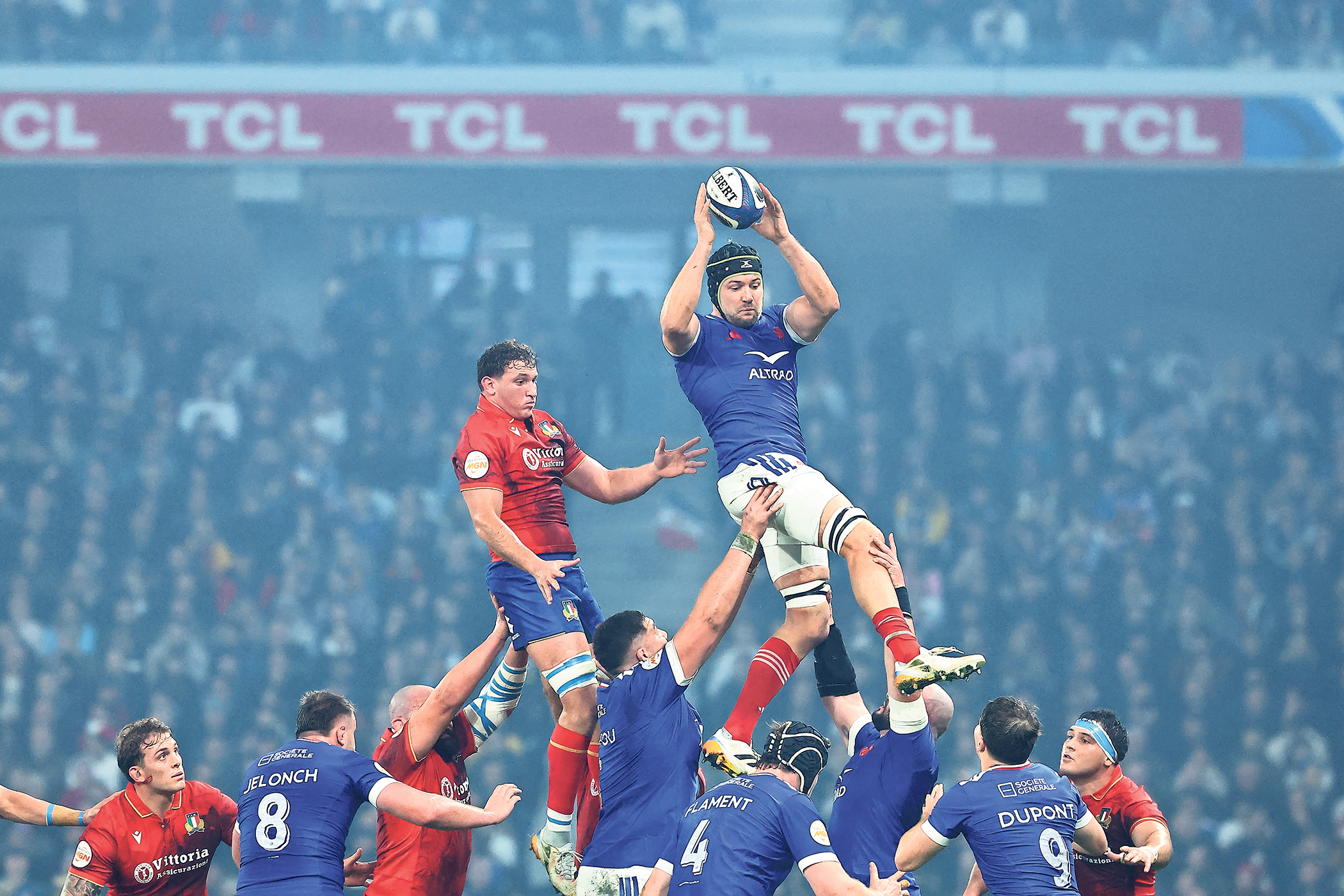
Several things are welcomingly different about this current French side. They don’t overcomplicate things. Think of France and you imagine Louis Bielle-Biarrey and co carving defences apart, but this is a team built around a strict kicking strategy to play in the right areas of the field. France’s 98 kicks in the first three games barely trails Ireland’s tournament-leading 99, and as Ireland found out to their peril on the opening night, Bielle-Biarrey and the rest of France’s outside backs can compete well in the air.
Coaches talk about winning the “crumbs” from contestable kicks, and outside of Scotland’s performance against England, no one else has done that better than France in this Six Nations. Their coach Fabien Galthié hinted in the autumn before facing South Africa that France had devoted serious time in training towards improving in the air – “How do we enable ourselves to stop being the hunted and become the hunters?” – and while they fell short against South Africa then, look at them now. No side so far have retained more kicks (25) in this Six Nations.
It is not just about contestable kicks – the high bombs sent up into the air for wingers and full-backs to chase after – but the awareness Dupont and fly-half Matthieu Jalibert have when choosing to kick in behind rushing defences, finding space.
When you have a whippet like Bielle-Biarrey who can outpace retreating defenders, give him something to chase. He usually gets there in time. Bielle-Biarrey has now scored 24 tries in 25 Tests.
A sign of a settled side is how easily new, inexperienced players can slot into a system. Galthié made what seemed like a shocking move prior to the start of the championship to leave out three older heads – Gaël Fickou, Grégory Alldritt and the country’s record tryscorer Damian Penaud – prompting questions around whether France would need some time to adjust without those leaders involved. Not really, it turns out.
Still, then to lose both of your starting centres from that dominant win over Ireland, Yoram Moefana and Nicolas Depoortère, and replace them so effortlessly with the Pau combination of Fabien Brau-Boirie (20 years old, uncapped) and Émilien Gailleton (22, one cap) is quite stunning.
The return to fitness of Moefana gives Galthié an interesting selection decision for the game against Scotland: stick with what’s working, or go back to your original choice of inside centre.
Newsletters
Choose the newsletters you want to receive
View more
For information about how The Observer protects your data, read our Privacy Policy
Galthié has boldly backed a number of young players over the past year: Bielle-Biarrey, back-three speedster Théo Attissogbie, lock Hugo Auradou and flanker Oscar Jégou. We always hear that new caps need time to find their feet at Test level. That there will always be growing pains. France, seemingly, do not understand that expression.
‘It is a serious compliment that their success doesn’t solely hinge on Dupont any more’
‘It is a serious compliment that their success doesn’t solely hinge on Dupont any more’
Even the late withdrawal of Jalibert, the talented and in-form Bordeaux fly-half, before facing Italy could not stop them, as they switched full-back Thomas Ramos to No 10 and rejigged the back three to hand a debut to Gaël Dréan, practically a pensioner, winning his first cap at 25 years old. It is a never-ending production line of talented prospects – it just seemed to take France years to figure out how to use them once they were ready.
Perhaps the highest compliment you can give to this French side is that their success no longer hinges solely on the performance of Dupont.
The scrutiny on him going into the 2023 Rugby World Cup, the weight of feverish expectation on the world’s best player to deliver a maiden trophy for France even after his fractured cheekbone in the pool stages, was intense. Now he remains vital, coming up with flashes of brilliance – one superb break in Lille against Italy down the touchline springs to mind – while otherwise diligently sticking to the script and enabling others including Jalibert to shine.
And if it all goes wrong, there is always the break glass option of letting Dupont take over the game, behind a pack of forwards who carry and clear out with such force that defences cannot rally quickly enough. The entire system is firing. France have made 56 offloads in three matches, a frankly absurd number, with no other side making more than 25.
Finally, but perhaps most importantly, France are a treat to watch. Appointment viewing for die-hard supporters and neutrals tuning into the Six Nations briefly for entertainment, with a genuine superstar on their hands in wing Bielle-Biarrey.
All the signs point to a Grand Slam title, with Scotland at Murrayfield next Saturday currently a much sterner test than England on the final night at home the following weekend, what was billed before the tournament as a potential last-day decider.
It will require an incredible effort from Scotland in the air and at the breakdown. It is one they are capable of on a good day, but even then, you expect that this young French side, who do not appear to fear anything, will find a way. No one knows how good they can be yet, which makes it hard not to be enthralled by them.
Fixtures to come – Fri 6 Mar: Ireland v Wales (8.10pm, ITV); Sat 7 Mar: Scotland v France (2.10pm, BBC1), Italy v England (4.40pm, ITV); Sat 14 Mar: Ireland v Scotland (2.10pm, ITV), Wales v Italy (4.40pm, BBC1), France v England (8.10pm, ITV).
Photography by Sameer Al-Doumy/ AFP via Getty Images