
From Ashes despair, to being two matches away from World Cup glory: how do you summarise a winter like England’s? A 3-0 one-day international thrashing at the hands of New Zealand back in October. A disastrous Ashes series. Deserved and impressive ODI and T20 series victories in Sri Lanka, and now a T20 World Cup where the team have muddled through to the semi-finals.
This was meant to be the stop-gap World Cup. Following the Ashes, head coach Brendon McCullum was a dead man walking. But for the sake of stability, he was to be given this tournament to continue, and then a formal decision on his future would be made in the three-month period between the end of the World Cup and the start of England’s Test summer in June. Brendon, we’re breaking up with you in April.
But instead, in a World Cup that doesn’t drive the passions like an Ashes but is nevertheless still absolutely a World Cup, England have performed. It may not have been pretty to this point, and they remain without the perfect performance (although the win against New Zealand came close), but they have got the job done.
“We obviously want to play well in them but we’re not gutted that we haven’t played a perfect game,” said Will Jacks, who has been by far and away England’s standout player of the tournament, winning four player-of-the-match awards in seven outings.
“That’s Twenty20 cricket. What we have done well is the key moments. We have kept a calm and clear head and we’ve managed to get those rewards.”
The criticism of McCullum’s Test team is that they prioritise entertainment over results. Now his T20 team are best viewed from behind the sofa, but with a bottle of champagne to hand.
Stuttering wins have come against Nepal, Italy, Scotland, Sri Lanka, Pakistan and New Zealand. But they are wins nonetheless. In total, they have won 16 of their last 18 matches in the format.
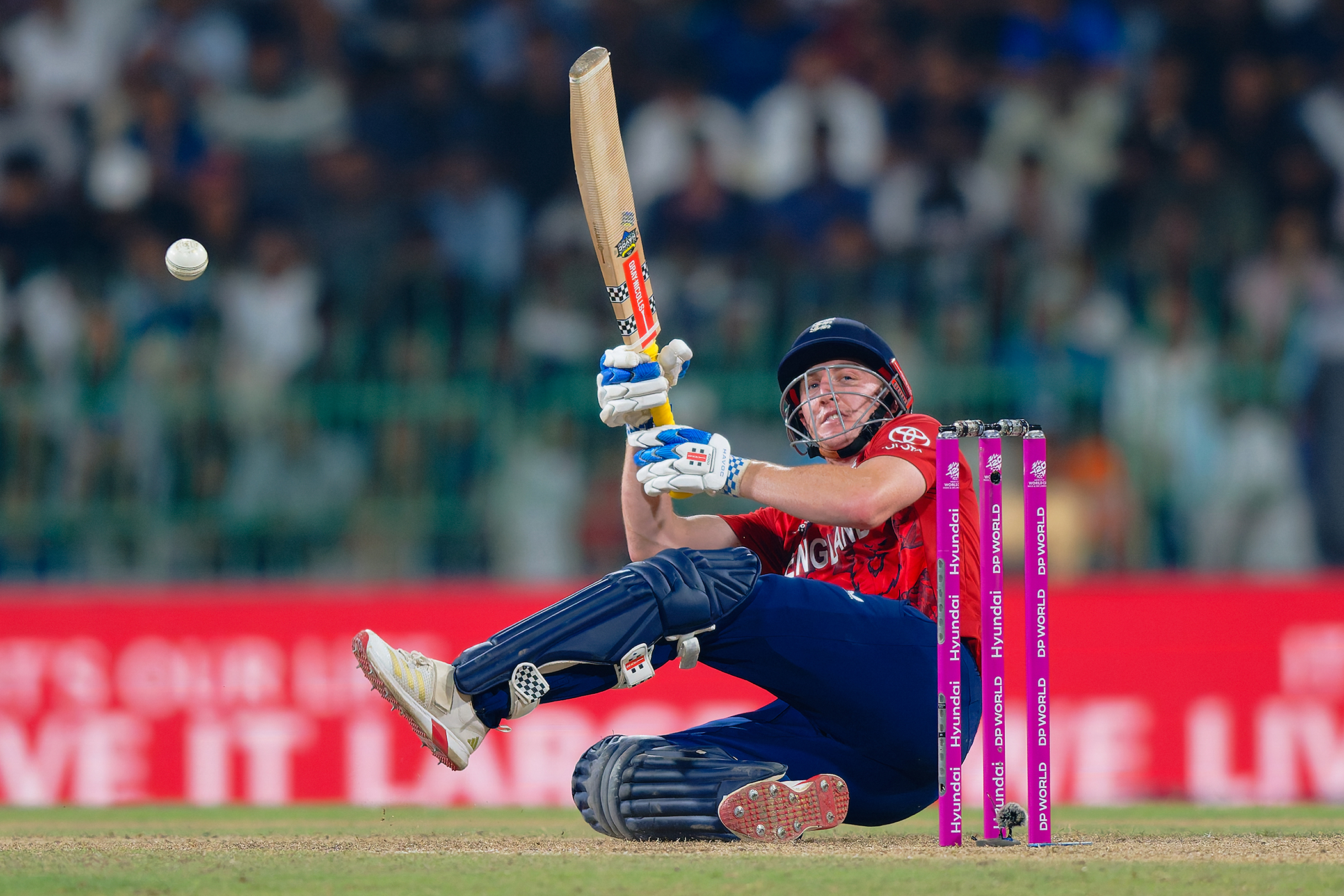
Furthermore, such is the individual quality within the team, that you wouldn’t bet against them finding two more wins over the next seven days. In this instance, Harry Brook’s century against Pakistan was the perfect example. Brook, batting at No 3 for the first time in T20 international cricket, made 100 off 51 balls. Only two other England players made double figures as they reached 166 with eight wickets down.
For the England and Wales Cricket Board, success has made everything a bit messy. Had England kept losing, it could easily have told McCullum, with regret, that his time was done. The Ashes debacle will remain the major memory of the winter, but the question now becomes whether success in Plan B redeems failure in Plan A.
McCullum now boasts a walkie-talkie on the sidelines and is taking a more proactive role with the side. The newly installed curfew remains in place and so does the reappointed fielding coach Carl Hopkinson. McCullum is changing, therefore the ECB may decide not to change McCullum.
Newsletters
Choose the newsletters you want to receive
View more
For information about how The Observer protects your data, read our Privacy Policy
Aside from England, the tournament continues to balance the fact that while the cricket itself is excellent, the ICC administration is bad to the point of farcical.
The pre-seeding of the Super Eight groups led to the bizarre situation where all four first-round group-stage winners were in the same Super Eight group, meaning there was no competitive advantage gained from topping your table. The West Indies’ reward for beating England and finishing first was to be placed in a group including South Africa and India, arguably the two strongest teams.
The ongoing manipulation of the draw to ensure that India play Pakistan casts a long shadow over the integrity of the competition, but less well debated is the continued insistence on not playing final group-stage games concurrently. This is a decision which allows the tournament to maximise the broadcast revenues, but denies sporting fairness, as those who are playing last are able to know exactly the permutations they require to qualify and therefore gain an advantage.
It is a situation which most helped Pakistan on this occasion, but has been a benefit given to India in five of the last six ICC men’s events.
It is cricket’s eternal struggle. A brilliant sport, that is administered poorly, if not negligently.
Photograph by MB Media/Getty Images