
It’s 50 years since Southampton landed the FA Cup and five since Leicester City added it to their 5,000-1 Premier League title win.
Southampton versus Leicester – the rematch! – might not sound like the hottest new show on Broadway. But this tie was a rerun of an astonishing league game on Tuesday night. It was a gathering too of FA Cup ghosts. Once an FA Cup winner, always an FA Cup winner, in the recesses of memory that preserve a club’s identity.
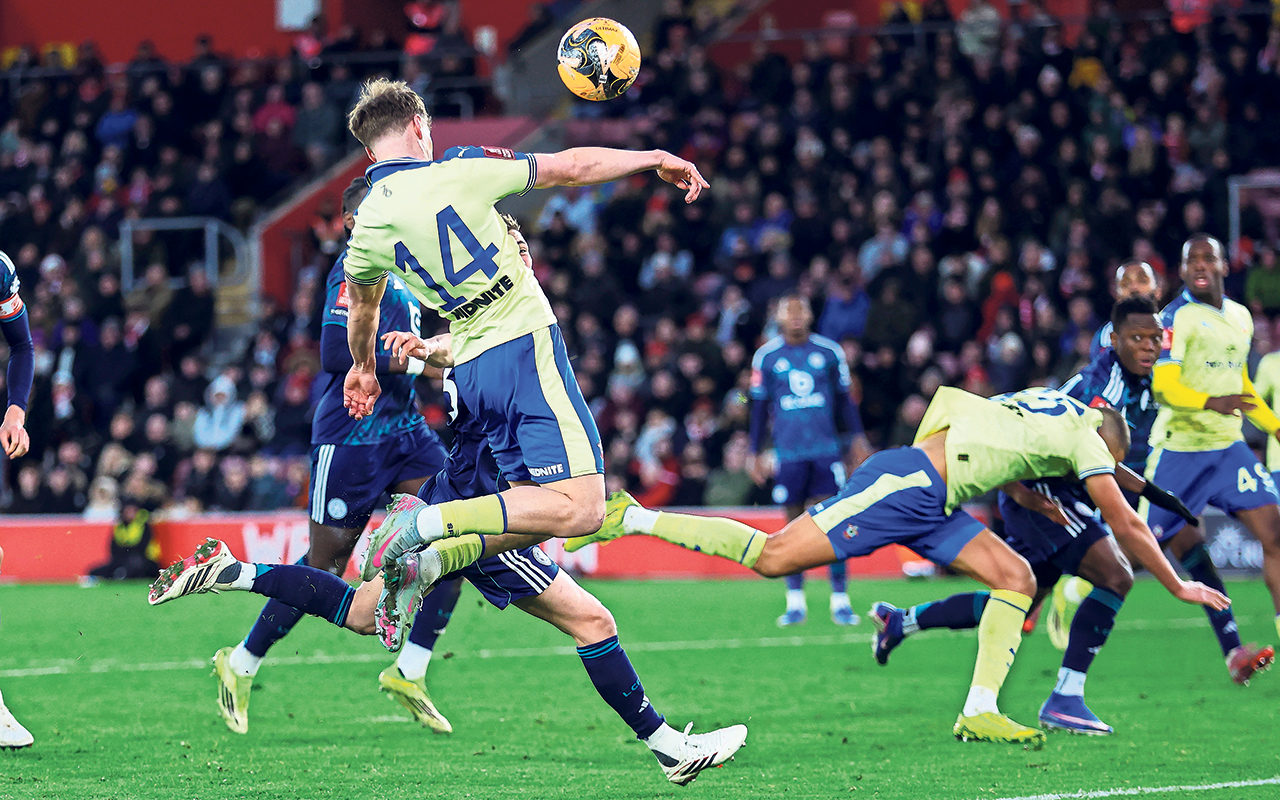
After extra time, Southampton completed a four-day league and cup double over opponents who have become a cautionary tale. James Bree’s 109th-minute header was the difference this time in a 2-1 win.
After Tuesday’s match, Leicester’s caretaker manager Andy King walked into the press debrief and said: “The feeling I have at the moment is complete anger towards the performance.”
It wasn’t a Mike Bassett-esque overstatement. Leicester had been 3-0 up at half-time and 3-1 in front going into the 82nd minute. But hey presto – they threw the game away, 4-3. Southampton’s winner was in the sixth minute of added time. The 957 Saints fans who made the trip will talk about it all their days.
That was the league, this was the cup, and despite Tuesday’s melodrama, the crowd here was thin (17,359 in a 32,384-seat ground). The entire Chapel Stand behind one of the goals was empty. There was precisely no one in it when Southampton’s Cyle Larin opened the scoring, with a penalty, or when Oliver Skipp equalised with a bicycle kick.
“Three-nil, and you fucked it up,” Southampton fans had been singing at a wedge of listless Leicester supporters. This game was much tighter, with young substitutes flooding on, and the game crawling into extra time while a swirl of seagulls gatecrashed the stands.
A measure of where promotion from the Championship stands in the priority of its 24 clubs is that Southampton made 10 changes to the authors of that midweek miracle – a result that Southampton’s head coach Tonda Eckert described as “unique, special, historical”.
Leicester, who are at risk of dropping into League One, made six. In mitigation, both clubs could cite emotional exhaustion as a reason for the rotations. But there was no avoiding the familiar sense of the FA Cup’s early rounds being treated as an optional extra rather than an opportunity. Leicester’s Harry Winks, who is slumming it at this level, must have pined for his England days.
Southampton were city-centre celebrants in 1976. Leicester were champions in the mother of all cup competitions in 2021, before disintegration, and, recently, disgrace: a six-point deduction for breaking financial rules.
Newsletters
Choose the newsletters you want to receive
View more
For information about how The Observer protects your data, read our Privacy Policy
Premier League champions only a decade ago, Leicester are a point from safety in the relegation zone of the Championship. Meanwhile, Southampton were settling into an ossified state familiar to clubs who crash out of the Premier League only to discover that readmission requires more than a familiar name and an application form.
They were going south in 21st place in the second tier until Eckert took over as manager in November. Now they are 10th, two points off the play-off spots. But they have conceded a whopping 44 goals in 32 games. With that improving league position, it was no surprise to see Eckert fielding a shadow side. Sad, but explainable, with the financial gulf that separates England’s top two divisions.
Both these FA Cup fourth-rounders exemplify the wild undulations, the mad crashes and bangs of clubs “too big” for the Championship but recently undone by life in the Premier League. Leicester will have been a lot shorter than 5,000-1 to drop a level within 10 years of their fabulous title victory, even if their 2021 FA Cup win against Chelsea suggested that they would stick around at the top.
That winning Leicester side contained Kasper Schmeichel, Wesley Fofana, Youri Tielemans, Jamie Vardy and James Maddison (as sub). The 1976 Southampton team, who rose from the old Second Division to shock Manchester United, had Mick Channon and Peter Osgood. The game’s only scorer, Bobby Stokes, won a car for getting the first goal but was the only non-driver in the Southampton squad.
Beaten finalists three times as well, Southampton had the greater FA Cup tradition of these two sides. The corridors of St Mary’s are lined with monochrome photographs of the 1976 heroes, with their moustaches and giant-killer glow.
The fielding of reserve teams by Championship clubs is perhaps the biggest clue to the Cup’s diminishment. Crystal Palace making it the first major trophy win in their history last summer, and then Macclesfield knocking them out in this season’s third round, rebalanced the narrative.
Whatever economic forces continue to assail the game, Southampton and Leicester have a bragging right that can never be taken away. The FA Cup may fade, but the mark in history is indelible. That permanence is precisely why it’s worth giving it a go.
Photograph by Robin Jones/Getty