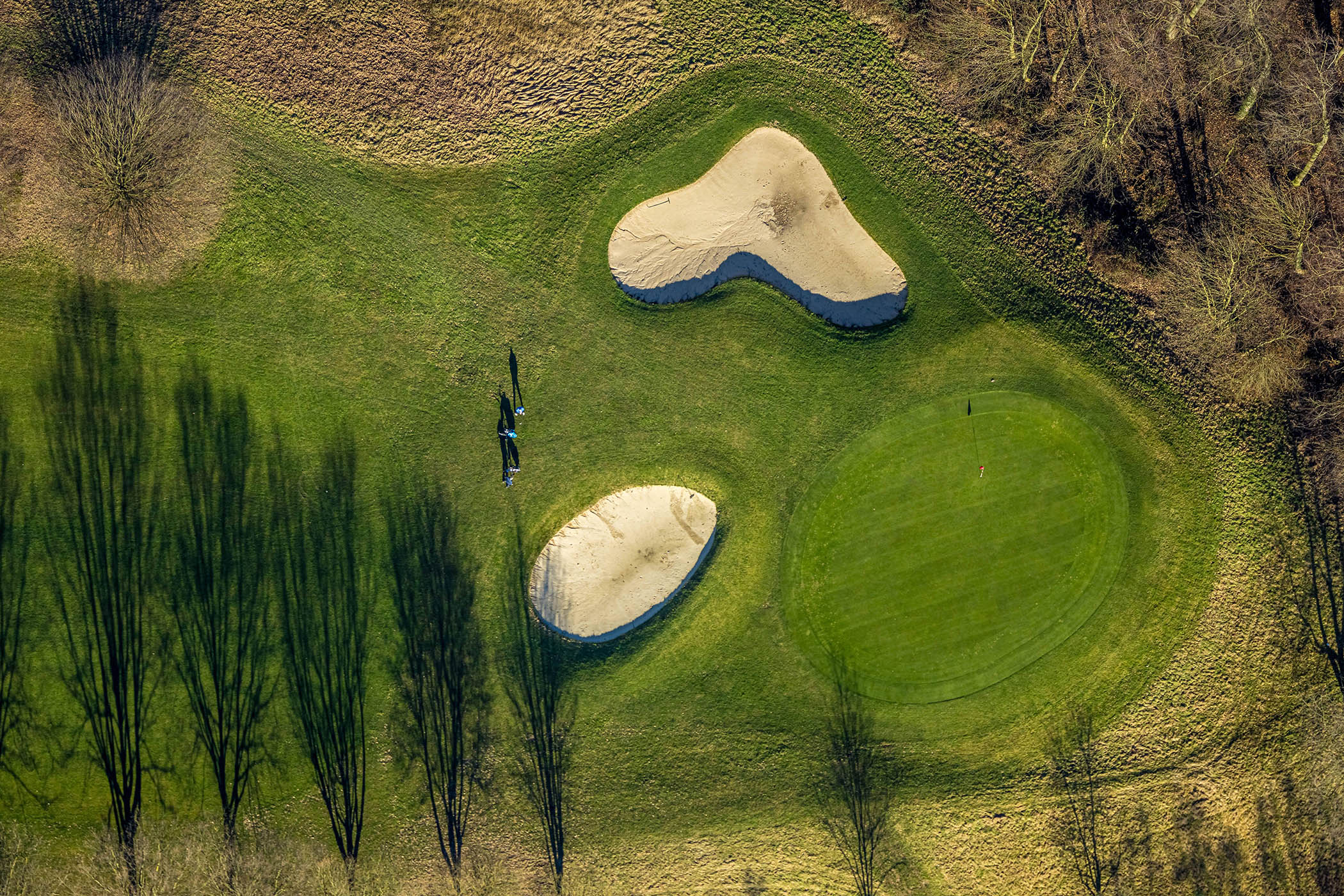

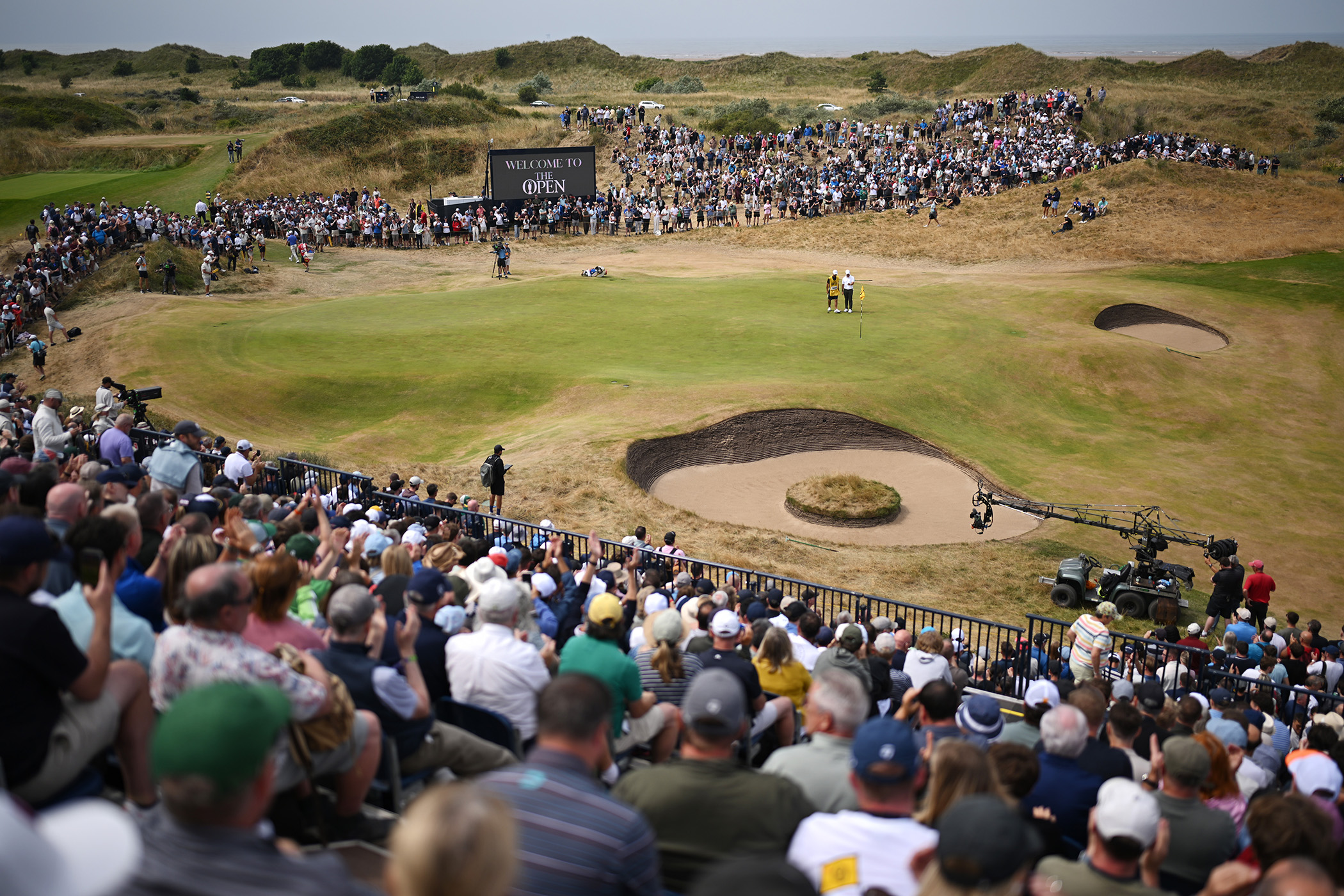
Look at satellite images and you’d think ours a country obsessed with golf. The map is splattered with about 3,000 courses; only the US, which has a land mass 40 times the size of Britain, has more. As some might put it, golf spoils an awful lot of good walks in the UK: by some estimates it covers a third of our open green space. And golf courses are still opening, most recently in 2024: one on the outskirts of London, and one in Basingstoke. But for years now, fewer and fewer Brits have wanted to become members of golf clubs.
The rise in golf’s popularity started in the 1980s, when television fuelled enthusiasm for the sport and made idols of its stars. The number of British players soared; by the end of the decade almost every club had a waiting list for new members. In the 1990s, golf courses spread across the land, turning the sport from a rarefied gentleman’s pursuit into a multimillion-pound business. Landowners everywhere were carving out sand pits and mowing their lawns to perfection.
Most of these new clubs were booming businesses, elbowing aside traditional members’ clubs and the council-owned municipal courses designed to democratise the sport. By the early 2020s, as committed locals drifted to the commercial clubs, councils began losing money. When the economic downturn forced them to cut their budgets, golf courses were the first to go.
Now the game faces a reckoning. At the top end, golf clubs are still afloat. Queenwood Golf Club in Surrey is believed to have a joining fee of £200,000 and annual dues of £15,000. It can afford to keep its membership exclusive, admitting a few hundred a year by invitation. Wentworth, which was sold in 2014 and rebranded as a luxury venture, told furious members they would have to reapply to join, paying £100,000 for a term of 50 years and doubling annual subscriptions. Its finances are in shape.
But lower down the scale, clubs are struggling. A recent white paper estimated one in six face closure. In the past year about 22% had more leavers than joiners, and waiting lists are shortening. Many have gone bust. In Scotland, where golf originated, 9% of the population played at least once a month in 2007, falling to 6% in 2017. An upswing in interest since the pandemic is now levelling out.
A full membership of a club costs about £900 a year on average. As membership shrinks, some find themselves in a doom spiral
A full membership of a club costs about £900 a year on average. As membership shrinks, some find themselves in a doom spiral
It’s a lesson that even viral interest on social media and a new youthful following – thought to be the solution to reviving almost anything – doesn’t always work. In the past few years, golf has gone through a cultural renaissance. Golf influencers have become stars whose videos rack up hundreds of millions of views. Rick Shiels, a YouTuber from Bolton, has 3 million subscribers, more than the US Open champion Bryson DeChambeau, who has nearly 2.4 million. Paige Spiranac, who has over 4 million followers on Instagram, is one of many female influencers expanding the perception of the sport.
This is everything golf club owners once said the game needed, the common wisdom being that golf was being held back by its stuffy, elitist image and the idea that it was an “old man’s game”.
And it’s true that golf is changing... slowly. In 2024 the average age of club members in England fell from 56.18 to 54.99. While only 20% of adult golfers are women, they make up one in three new joiners. In 2019, Glasgow Golf Club became the last to open its doors to women.
Participation is certainly booming because the number of casual players is on the rise, but this isn’t helping clubs retain members, their true source of steady revenue. A recent survey found about 78% plan to renew their membership this year, and that younger golfers are much less committed than older ones. The heart of the problem is that, for many, it is now unaffordable. A full membership of a club in England costs about £900 a year on average. Clubs are forced to demand more as energy bills and staffing costs soar, and are trying to coax new members with gyms and better restaurants. As membership shrinks, some find themselves in a doom spiral.
It may be no bad thing if more courses go bust, however. By one estimate – and some controversial mathematics – the land covered by golf courses in England is only slightly smaller than that covered by housing. London, perennially short of space, has 95 courses, which occupy nearly as much land as every other type of sport put together. The architect Russell Curtis has calculated that the average hole on a golf course, from tee to green, occupies space that could accommodate 100 homes. Building on the capital’s golf courses, he has said, could help us squeeze in another 345,257 people.
Newsletters
Choose the newsletters you want to receive
View more
For information about how The Observer protects your data, read our Privacy Policy
Replacing golf courses with housing, or shaving down their size, may be worth considering. The numbers of people who can play golf are anyway limited. An 18-hole course takes up between 120 and 200 acres, but can only fit in 72 players at a time. Our golf-dotted landscape tells us something about the aspirations of our past, but little about our current interests or needs.
Photograph by Alamy