


There was a lot of hand-wringing in ice hockey’s National Hockey League this time last year. Viewership was in decline, with an average of only 394,000 viewers per game on television in the United States during the regular season.
The play-offs were not much better, with viewership down 28% as none of Boston, Chicago, Detroit or either of the New York teams made it past the regular season.
Across the border, the number of Canadians playing ice hockey is decreasing, with no sport declining in viewership in that country as fast as ice hockey. The sport needed a spark from somewhere to rejuvenate interest in it.
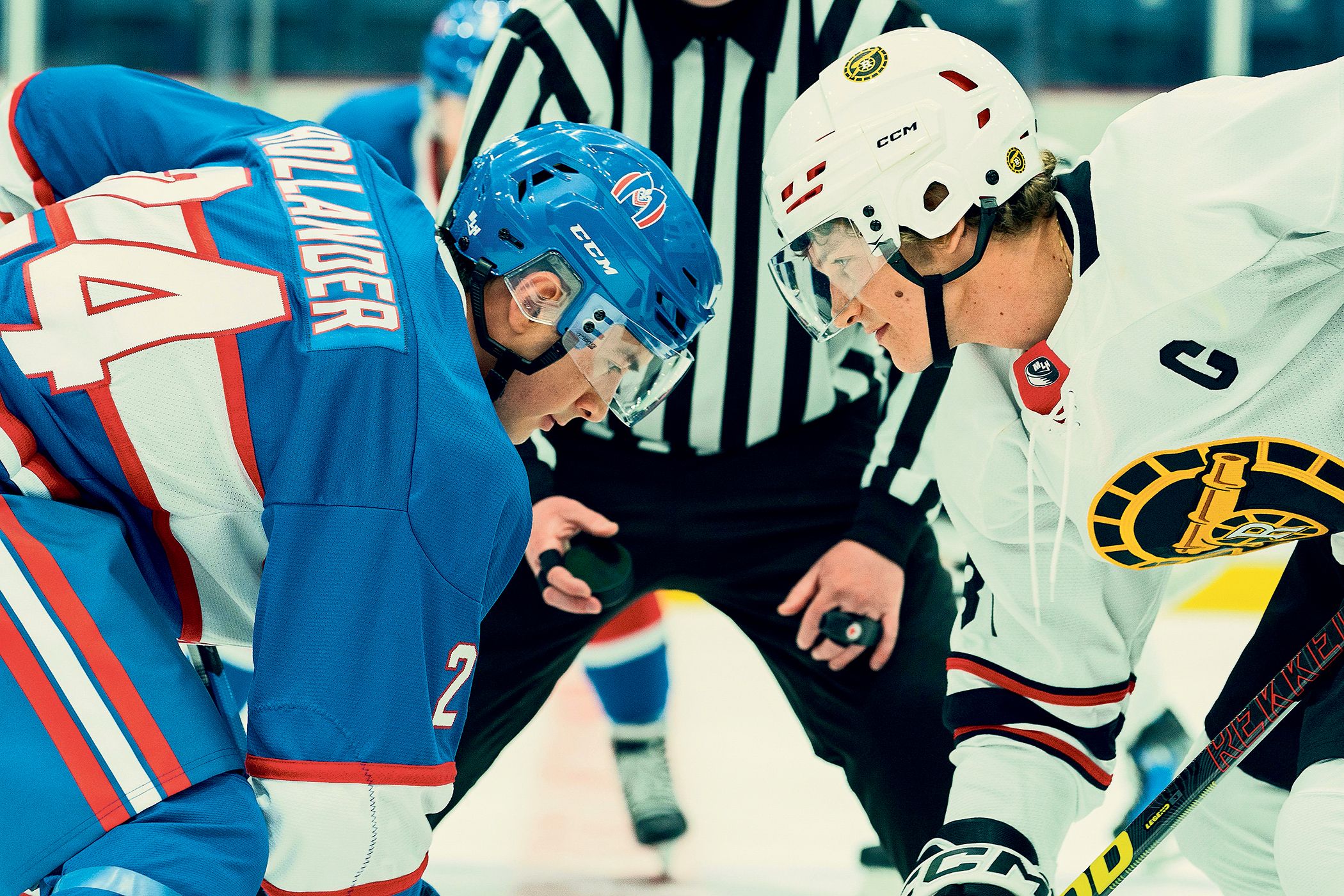
Enter ice rink left: Heated Rivalry. The television series that was released in the UK on Saturday features the story of Ilya Rozanov and Shane Hollander, two star ice hockey players who are secretly having an affair. The show is unabashed in its depiction of the duo’s relationship, featuring gay sex as much as it does sport.
It has been an immediate and unexpected hit since its release in North America, becoming Canadian streaming service Crave’s biggest original series ever. New fans are flocking to the NHL as a result.
“I’m here because of Heated Rivalry,” says one post on the Reddit page for ice hockey. “Tell me where to start.”
This is not an entirely new trend. There was a similar surge a decade ago off the back of a web comic called Check, Please! by Ngozi Ukazu, which told the story of a college hockey player navigating his sexuality. The rise of “BookTok”, the TikTok subculture where users share literary content, has boosted sports romance as a category. Ice hockey is one of the most well-liked sub-genres and Heated Rivalry was adapted from an already popular novel by Rachel Reid.
‘It came from a place of me being angry at hockey culture and how homophobic it was and is’
‘It came from a place of me being angry at hockey culture and how homophobic it was and is’
Rachel Reid
So far, so good, and NHL teams have been quick to latch on to the opportunity that has opened up in front of them. The Boston Bruins posted a tweet captioned “Heated Rivalry” with photos from their match against Montreal Canadiens. In the show, Hollander plays for a fictionalised Montreal side and Rozanov a Boston one. An NHL spokesperson told the Hollywood Reporter that “in the NHL’s 108-year history, this might be the most unique driver for creating new fans”. When asked about new NHL fans, Hudson Williams, who plays Hollander, told Seth Meyers that “it would be very disappointing because there’s so little gay sex when I watch hockey”.
These fans are coming from demographics that have traditionally been excluded, primarily women and LGBTQ+ people. Reid wrote the Game Changers series, which Heated Rivalry forms part of, in explicit response to the homophobia and misogyny she saw in the NHL. In 2023, Reid, whose real name is Rachelle Goguen, told The Washington Post that the series “came from a place of me being angry at hockey culture and how clearly homophobic it was and is”.
The NHL has taken an increasingly regressive stance to LGBTQ+ inclusion over the past couple of years. In 2023, the league banned Pride tape, a rainbow tape that players had been putting on their hockey sticks across the previous seven years to show support for LGBTQ+ communities. It came after some players had refused to wear Pride jerseys for the designated Pride nights that teams host. At the time, NHL commissioner Gary Bettman said the decision was because “the issue of who wanted to wear a particular uniform on a particular night overshadowed everything that our clubs were doing”. The league rolled back on the Pride tape ban after a couple of weeks following protests from players, but tensions remain. This season, Carolina Hurricanes announced that their Pride night would be rebranded as a “Hockey is for Everyone” night.
Newsletters
Choose the newsletters you want to receive
View more
For information about how The Observer protects your data, read our Privacy Policy
The use of homophobic language is also an issue, even if players say it has improved in the decade since Andrew Shaw from the Chicago Blackhawks was suspended for using an offensive epithet. Its prevalence is cited as one of the reasons that the NHL is the only one of the four main professional men’s sports leagues in the United States never to have had a former or active player come out. Luke Prokop, who came out in 2021, was under contract with the Nashville Predators, but never made an appearance for them.
Misogyny is rife, too. In 2022, it was revealed that Hockey Canada had been paying out of a reserve fund drawn from minor league hockey membership fees to settle accusations of sexual assault that had, allegedly, been perpetrated by Canadian hockey players. This week, a former employee, an IT coordinator named Rose Harris, filed a lawsuit against the Anaheim Ducks and the NHL claiming she was subjected to “repeated and unchecked” harassment which included “nonconsensual sexualised touching, near constant vulgar, sexist and derogatory comments, including homophobic slurs”.
There is a stark contrast between the values that the NHL espouses and those held by its new fans. That creates its own tension.
Cosplayer Stella Chuu recently posted a picture of herself at an Anaheim Ducks game wearing a T-shirt that said: “I’m at the boy aquarium because of two gay guys on HBO Max.” The controversial phrase “boy aquarium” has been popularised on TikTok to refer to women watching male hockey players through the glass, off the back of the popularity of hockey romances.
Some negative reactions made it clear that these fans who have come to ice hockey through Heated Rivalry are not welcome. “You’re part of the problem, we don’t want you in our sport,” replied one user.
There have been issues in the past with fans from BookTok encroaching on the personal boundaries of ice hockey stars. In 2023, Seattle Kraken forward Alex Wennberg and his wife, Felicia, posted statements calling out fans for objectifying NHL players.
“The aggressive language about real life players is too much,” said Alex, while Felicia said certain comments made about her husband were “predatory”. The Krakens had previously created content aimed at BookTok fans, which was deleted following the Wennbergs’ statements.
Heated Rivalry has already been greenlit for a second season, so interest is unlikely to melt soon. New communities are developing within the sport. As Jack Williams, a Nashville Predators reporter, wrote on X: “I no longer feel like the only gay man who has an interest in this sport or the NHL.”
Some of Reid’s other ice hockey novels have taken more direct aim at a thinly disguised commissioner’s office, so the lines between fact and fiction are likely to blur. For now, the NHL may be celebrating its new section of fans.
Yet Heated Rivalry’s strongest legacy could be the attention that it draws to the unsavoury aspects of the sport, too. No consequence would more aptly fit Reid’s original intention than if the NHL was forced to evolve beyond its current culture of homophobia and misogyny.
Image: Crave via AP