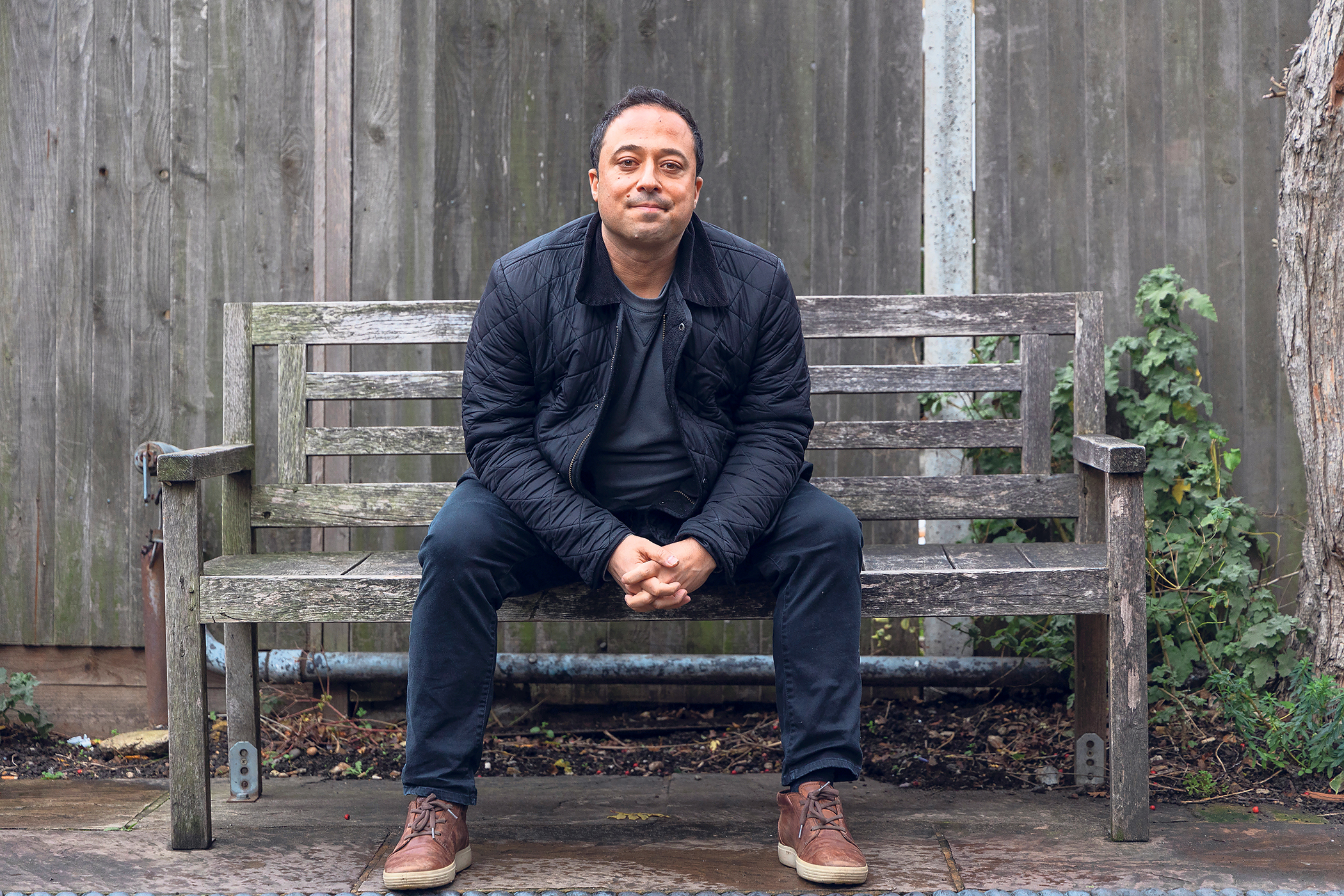
On Christmas Day 2015, Mark Scott left his mum’s house in Brixton at six o’clock in the evening. He made his way to Victoria Bus Station and caught a coach. His destination was Bournemouth. Specifically, the Premier Inn.
“I was the only person staying there,” says Scott. “I felt like Alan Partridge in the Travel Tavern.”
Scott had travelled to the south coast to commentate on Bournemouth’s Boxing Day clash with Crystal Palace for Match of the Day. Unable to drive, but desperate to take an opportunity he had long awaited, Scott’s debut on the programme was for a 0-0 draw that was shown as the last set of highlights.
“They ran the ninth worst game with an intro from Gary [Lineker] and then ran my game off the back of it,” he says. “So I didn’t get my intro from Gary. As an aspiring commentator, that was like the holy grail. Funnily enough I saw Gary at a Crystal Palace game a couple of weeks ago and I mentioned that to him. He was like, ‘I think I’ve said your name enough times since then.’”
A commentator for more than 15 years, Scott has worked for the BBC, Premier League and Uefa. This Boxing Day represented a decade since that first appearance on Match of the Day. Born to an English father and a Trinidadian mother, Scott also became the first person from a Black and Minority Ethnic (BME) background to commentate on the show.
“Someone mentioned it to me in passing in the build-up to the commentary, and I didn’t think too much about it,” he says. “But when I’d done it, I doublechecked and it had only been white commentators. At the time, Jacqui [Oatley] was the only non-male who had done it. It didn’t feel like a massive deal at the time, but the more I think about it, the more maybe I should have realised.”
A 2020 report highlighted the uneven way football commentary treats white players compared with their BME counterparts. Lighter-skinned players were more likely to be praised for their intelligence or technical ability, with darker-skinned players praised for their athletic qualities like pace or power. With almost all commentators being white – Seb Hutchinson and Tom Gayle are the only other BME commentators at the top level of the sport – these unconscious biases can have far-reaching implications.
But Scott is adamant that the answer isn’t just to put people from BME backgrounds into the commentary box. “What you need to do is get more people from those backgrounds thinking it’s a career they can get into,” he says. “There is a generation of young ethnic minority people who think it’s just the sort of job Oxbridge graduates or white men do. I hope my experience would help anybody from a diverse background feel that it’s possible.”
‘I had a proper cockney accent. I worked hard on my diction, to be broadcastable’
‘I had a proper cockney accent. I worked hard on my diction, to be broadcastable’
Mark Scott, football commentator
Scott’s own interest in commentary began at a young age. Growing up in Streatham, South London, there was one man in particular who got him hooked on the art.
“Being a South London boy, nobody listened to [BBC Radio] Five Live,” he says. “In London, everyone listened to Capital Radio and the reason was Jonathan Pearce. His commentary was iconic. Kids in the playground would recite it.
Newsletters
Choose the newsletters you want to receive
View more
For information about how The Observer protects your data, read our Privacy Policy
“Sometimes I used to tape it on cassette and listen back to it, and then start doing my own commentary when my mates were playing. I realised I’d never be a good enough player so this was the next best thing. When I was growing up, it never really dawned on me that this was something I couldn’t do. It was only when I started getting into press boxes that I would look around and think this is interesting, there’s no one of colour here.”
Scott felt he had to make sure that his voice was “broadcastable”. “I had a proper cockney accent,” he says. “I worked hard on my diction.”
Does he think that the idea of there being a correct kind of voice for commentary is limiting the diversity?
“When it comes to commentary, one person’s broadcastable is another person’s wailing banshee. It’s all down to what the head of the channel or the production executive thinks of it. Some people might like something that sounds a bit different, like someone who had a raw South London diction and was talking in an unpolished way. But someone else might go that’s too far away from what everyone is used to.”
That also applies to the kind of words used within commentary. As language develops, the ideas of what can and can’t be said on air also changes.
“I keep a little book to write down words to try to broaden my vocabulary,” says Scott. “It’s to ensure that I don’t say the same words all the time. I like to try to be abreast of the word that’s on everyone’s lips.
“I was playing football with some mates and someone did this really good piece of skill. They were like ‘That is filthy.’ So when I was doing Arsenal against Brentford the other day, Noni Madueke did something and I said: ‘Filthy skill.’ Then someone tweeted me saying: ‘You can’t say that! It’s not appropriate.’ It’s an interesting thing to move from the old days of commentary to keeping it fresh and contemporary.”
What Scott feels most struck by is how little diversity in the commentary box has improved in the 10 years since his first appearance on Match of the Day.
“Being the first BME person to get on Match of the Day didn’t feel like it was a massive thing at the time. But as time has gone on, there’s still not been that much change.
“I’ve had a few young commentators from diverse backgrounds that I’ve chatted to, and that feels quite special. I’d never see myself as someone that is there to be looked up to because I still look up to a lot of the other commentators around.
“I can look on the call sheet and see that I’m on with Guy Mowbray, Steve Wilson, Jonathan Pearce, Simon Brotherton. These are people I grew up doing my own versions of them and now I’m on the same programme. I still feel quite humble about it all. I don’t feel like I’m anything special but I certainly feel proud of it.”
Photograph by Andy Hall for The Observer