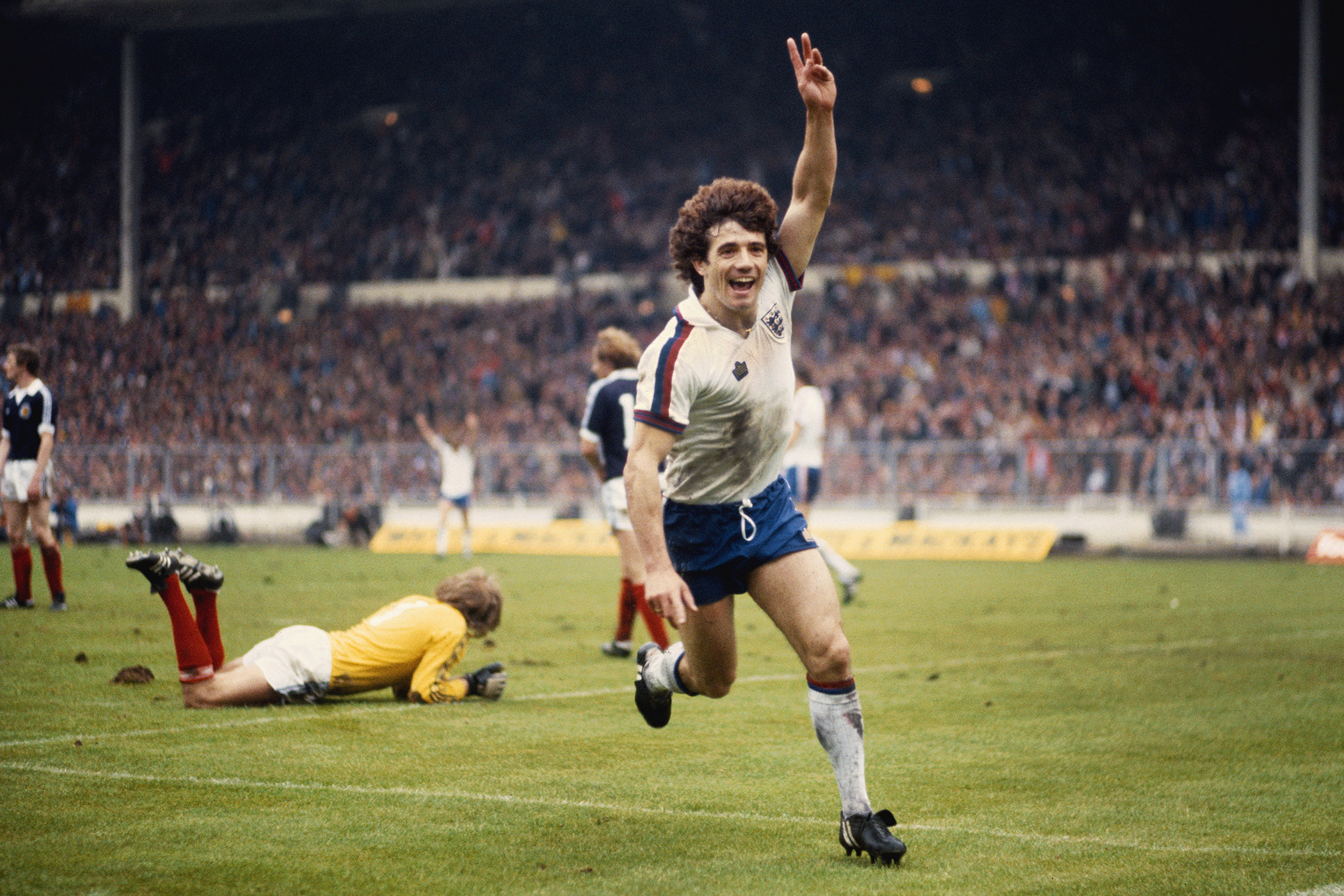

Whenever a star has to die for us to fully appreciate how special they were, the problem is us, not them. With Kevin Keegan, some landmark disappointments in a 40-year career of playing and managing fell away to allow the real story of his character and accomplishments its rightful glow.
In great sporting lives the departed dwelt in a binary world of good, bad, won, lost, veneration, scorn. It’s odd to think now, after Keegan was waved off this week with so much respect and warmth, that there were points in those 40 years when public and media opinion inflicted brutally reductionist opinions on him. There was a lesson. Maybe don’t fixate on the 10% of flops in a person’s life at the expense of the 90% creativity, excitement and joy?
Days after Sir Garfield Sobers’s death restored the radiance of his life, eulogies for Keegan described an almost farcically rich history in which he had been a working-class Stakhanovite, Bill Shankly project and Liverpool superstar, curly-permed 1970s TV idol, two-time European Footballer of the Year with Hamburg, Newcastle United messiah – as player and manager – and England boss in a reign that ended, symbolically, in the last game before the old Wembley was torn down. Anyone who could send people running to ‘Woolies’ to buy Brut aftershave, as Keegan did, was a stone-cold advertising genius.
That summary omits his fine work in getting Fulham and Manchester City promoted – and much else. The point is not to repeat the appreciation pieces we’ve already read, which you wish Keegan could also see, because throughout his life he was easily hurt by criticism, and felt everything – good and bad – with a sharpness that helps explain why emotion drove his view of what football could and should be.
The negativity that attached itself to him on his remarkably diverse journey out of Scunthorpe in 1968 to a doomed second spell in charge of Newcastle in 2008 was rooted in four main subjects.
The first was people categorising him as a workhorse player, an autodidact who made the most of limited talent, compared, say, to his Liverpool successor, the more balletic Kenny Dalglish. Observe the footage of Keegan’s restless, relentless wide-sided attacking and try denying that he would be worth £120m-plus today. Journeyman toil has never won the European Cup or two European Footballer of the Year awards.
Next is him missing a simple header for England at the 1982 World Cup after he had been unavailable for the first four games with a back injury. That miss was allowed to taint his international career, which was no messier than England’s tournament record in his era.
The third was Newcastle blowing a 12-point lead to Manchester United in the 1996 title race, and Keegan’s prior outburst on TV (“I would love it if we beat them,”) which group-think has decreed to be the ultimate crack-up, when it would have been remembered as the rallying cry of a mind games virtuoso had a brilliant, buccaneering Newcastle side held on.
Again, the human choice to view an event positively or negatively has rarely been more applicable than in the case of Kevin Keegan’s Newcastle. No, they didn’t win the title. Yes, they were a privilege to watch – an overdose for the senses. Even without the trophy, Keegan was in the top rank of managers in British football who have built immortally thrilling sides.
And the fourth has to be his flagellating resignation in a Wembley toilet block in October 2000. When players and Football Association staff tried to dissuade him, Keegan summoned a response worthy of a stage play: “No, no, no. I’m off. I’m not for this.” England had been awful at Euro 2000. So had Germany, in a group game that gave birth to an Italian newspaper’s simile of “two big beer drinkers pushing each other around.” When he quit at Wembley, playing Gareth Southgate in central midfield was held against Keegan as some kind of defining crime, when it was merely a minor contributing factor.
Newsletters
Choose the newsletters you want to receive
View more
For information about how The Observer protects your data, read our Privacy Policy
The spotlight found him because it saw the natural star in him and flowed in his direction. When John Giles and Billy Bremner picked someone to fight with in the 1974 Charity Shield, they chose Keegan. When Yugoslavian police were looking for an England player to punish in 1974 for impropriety on a flight (a player jumped on the luggage carousel too) it was Keegan they arrested, even though he wasn’t involved in either incident.
It’s often the case with exceptionally magnetic people that they’re excluded from a rule that applies to the rest of us: they’re not allowed to fail. Or, if they do, the failure is used to chop away at their success.
Inventive and spirited people aren’t entitled to eternal applause just because they have laudable impulses. It’s not that Keegan should have been spared cross-examination either as England or Newcastle manager; more, that it’s a shame the dismissiveness went so far, and obscured a life of achievement few great sports people could have any hope of emulating.
He was safe in the adulation of Newcastle fans. Maybe the rest of us should have been more appreciative of what Keegan represented, and less hard on him for what he didn’t do. And better to make that correction before they die, when they’re still here to see it.
Photograph by Steve Powell/Allsport/Getty Images