
Amid the glories of this sporting summer, the world’s two biggest governing bodies have caved-in to autocrats. One picked up his phone to call Fifa, the other heaped Kremlin pressure on the Olympics.
Donald Trump cajoling Fifa to let USA’s Folarin Balogun play against Belgium – despite his suspension for a red card – obeyed the law of unintended consequences. Belgium were outraged and rode their anger to a 4-1 win.
Ooops. Helping Belgium through to the last eight was only part of it. Direct White House interference on the field of play – a death knell for the tournament’s integrity – helped create an outcome where all three hosts – USA, Mexico and Canada – were out before the quarter-finals.
Fifa’s sycophancy to the Trump administration was based on the conceit that powerful men can be controlled if you flatter them enough. The West used to think that about Vladimir Putin, until he invaded the Crimea region in 2014 and then launched a full-scale invasion of Ukraine in 2022.
While Fifa’s ‘independent’ disciplinary commission was writing a judgement on Balogun that was remarkably adjacent to the pressure exerted by a phone call from the world’s most powerful man, the IOC was lifting its ban on Russia competing at the 2028 LA Games and beyond.
Russia’s pariah status in Olympic sport was more complex than the Fifa-Trump love-in. Most people would agree that invading your neighbour and firing ballistic missiles into their homes is incompatible with the Olympic rhetoric of bringing the world together as one big happy family. Which is why, in October 2023, the IOC suspended the Russian Olympic Committee, which had two huge debits next to its name.
One was the state doping programme that turned the Sochi Winter Games into an FSB-run caper of detection avoidance for Russian athletes using performance-enhancing drugs. The other was Putin’s unconscionable attack on Ukraine.
The Olympic punishment of the Kremlin was never unequivocal. Fifty-two “Individual Neutral Athletes” (as the IOC call them) in total from Russia and Belarus showed up at Paris 2024 and Milano Cortina 2026. Each was vetted to make sure none had publicly endorsed the war on Ukraine.
Now the Olympics have flipped and the smart money is on Fifa grabbing the chance to follow the IOC’s lead and readmit Russia.
What changed? Not the conflagration in Ukraine. The Centre for Strategic and International Studies estimates that Putin’s aggression has led to 1.4m Russian and over 600,000 Ukrainian deaths.
Newsletters
Choose the newsletters you want to receive
View more
For information about how The Observer protects your data, read our Privacy Policy
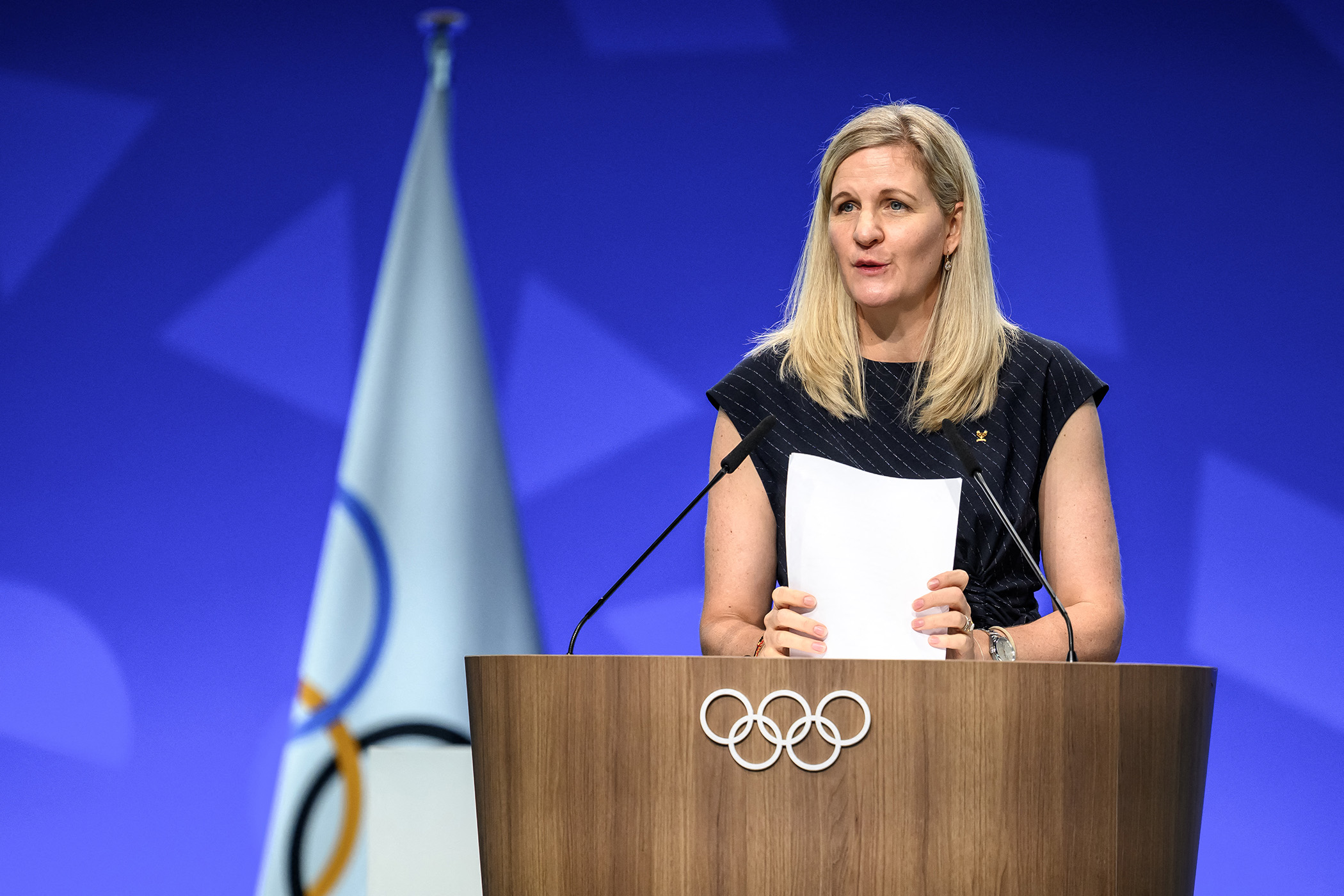
Unlike the world governing body of athletics, the IAAF and the IOC has relented. The justification cited by its president Kirsty Coventry this week was that individual athletes shouldn’t be punished for their government’s actions. That was never the aim. The purpose was to deny Russia and its ‘anti-doping’ apparatchiks a propaganda victory.
Another reason given was that Russia is no longer claiming jurisdiction over sport in parts of Ukraine it occupies, as if ceasing to do something illegal is now deserving of a prize.
Sports under the Olympic banner are now free to use their own “discretion” on whether to “host events and sports competitions in Russia, to invite Russian government or state officials to competitions, or to allow the display of the Russian flag, anthem, colours or any other identifications.” The IOC themselves will not send events to Russia but will make decisions on flags, anthems etc. at “an appropriate time.”
By any measure it’s a surrender. And this isn’t a 2028 story. It’s happening now, because in most sports, qualifying for LA 2028 has already started.
The pressure groups Global Athlete and Fair Sport said: “The IOC has not simply changed its Charter; it has changed what the Olympic Movement stands for… Clean athletes who have lost medals, opportunities, and careers because of institutional failures now see that even the gravest violations of Olympic principles can ultimately be overlooked.”
In Moscow, the tactic of dropping Soviet-era indignation in favour of diplomacy has paid dividends. The aggressor has been recast as the victim. Russia’s sports minister Mikhail Degtyarev exulted: “This is a clear path to ensuring that all federations of all sports reinstate Russian national teams and return them to international competitions. We’ve done extensive diplomatic work to reinstate our athletes.”
In full post-truth mode, Degtyarev said in St Petersburg last month: “Political sanctions cause harm to the entire Olympic sport. The full return of Russia to the Olympic movement will bring benefits to the whole world.”
Decisions on who to exclude – and for what crimes – are not easy. But this week, autocrats have exploited the malleability of Fifa and the IOC, exposing the folly of cosying up to volatile leaders and anti-democratic governments.
The IOC displayed not only sanctions-fatigue but a desperate urge to avoid further diplomatic quagmires, especially if they involve future American adventurism. We’re in a dangerous place when the US President can interfere directly in a World Cup match and the Olympic movement can impose an arbitrary statute of limitations on a catastrophic invasion.Trump’s phone call backfired on America. Russia’s reprieve is a gift it won’t squander.
What are your thoughts on this? Send us a letter to letters@observer.co.uk
Photograph by Fabrice Coffrini/AFP via Getty Images