
While bagging and labelling all my stats in the BBC commentary box after the end of the Sydney Test, and as a queue of lorries waited by the stadium gates to take away all the “What ifs” left behind by England over the course of the series, I found a checklist. It was dated 20 November 2025, authorship unknown, slightly tear-stained, and titled: Things England Need To Happen To Win The Ashes.
History now enables us to analyse how successful England were in achieving the key requirements for a series victory.
Australia to be disadvantaged by the age of their great pace bowling trio
Success
Pat Cummins (aged 32) and Josh Hazlewood (34) played one match between them.
Unfortunately for England, Australia responded by selecting even older seamers in their places, and smashed the record for most wickets in a series by bowlers aged 35 and over. Mitchell Starc was the decisive figure in the first three Tests, Scott Boland and Michael Neser probed relentlessly, aided by Alex Carey’s magnificent wicketkeeping, and England lost a wicket every 41 balls across the series, their lowest such figure in any Ashes series. Cummins was characteristically influential in his one match, taking six top-seven wickets, including Joe Root twice in just 23 balls.
Brook to score consistently
Success
Harry Brook reached 30 seven times in nine innings (ignoring his 18 not out at the end of the MCG Test). He was only the second England player to do so in a series in Australia since 1970-71 (a six-Test series), after Nasser Hussain in 1998-99.
Unfortunately for England, Brook, who still awaits his first Ashes hundred after 10 matches, having scored 10 in 25 Tests against other opposition, was out twice in the 30s, thrice in the 40s, and made only one score over 52. His average in those seven innings was 46.4 – he added an average of just 16.4 more after passing 30, the third worst such figure ever recorded by the 102 players with seven or more 30-plus scores in a Test series, and comfortably the worst in Ashes history.
Newsletters
Choose the newsletters you want to receive
View more
For information about how The Observer protects your data, read our Privacy Policy
Joe Root to score hundreds
Success
Root made two outstanding and hefty centuries, his first in Australia.
Unfortunately for England, he was also out for sub-20 scores seven times. In his 2017-18 and 2021-22 century-free series, Root had a total of six sub-20 dismissals. His first-innings cocktail of two hundreds and two ducks across a series has only happened once before – Sunil Gavaskar, for India against West Indies, in 1983-84.
Duckett to get England off to good starts
Partial success
Ben Duckett reached 20 six times.
Unfortunately for England, he did not reach 50, becoming the second England player in men’s Ashes history to post six 20-plus scores in a series without reaching 50, after leg-spinning all-rounder Len Braund in another disappointing 4-1 defeat, in 1907-08.
Wickets from support bowlers
Success
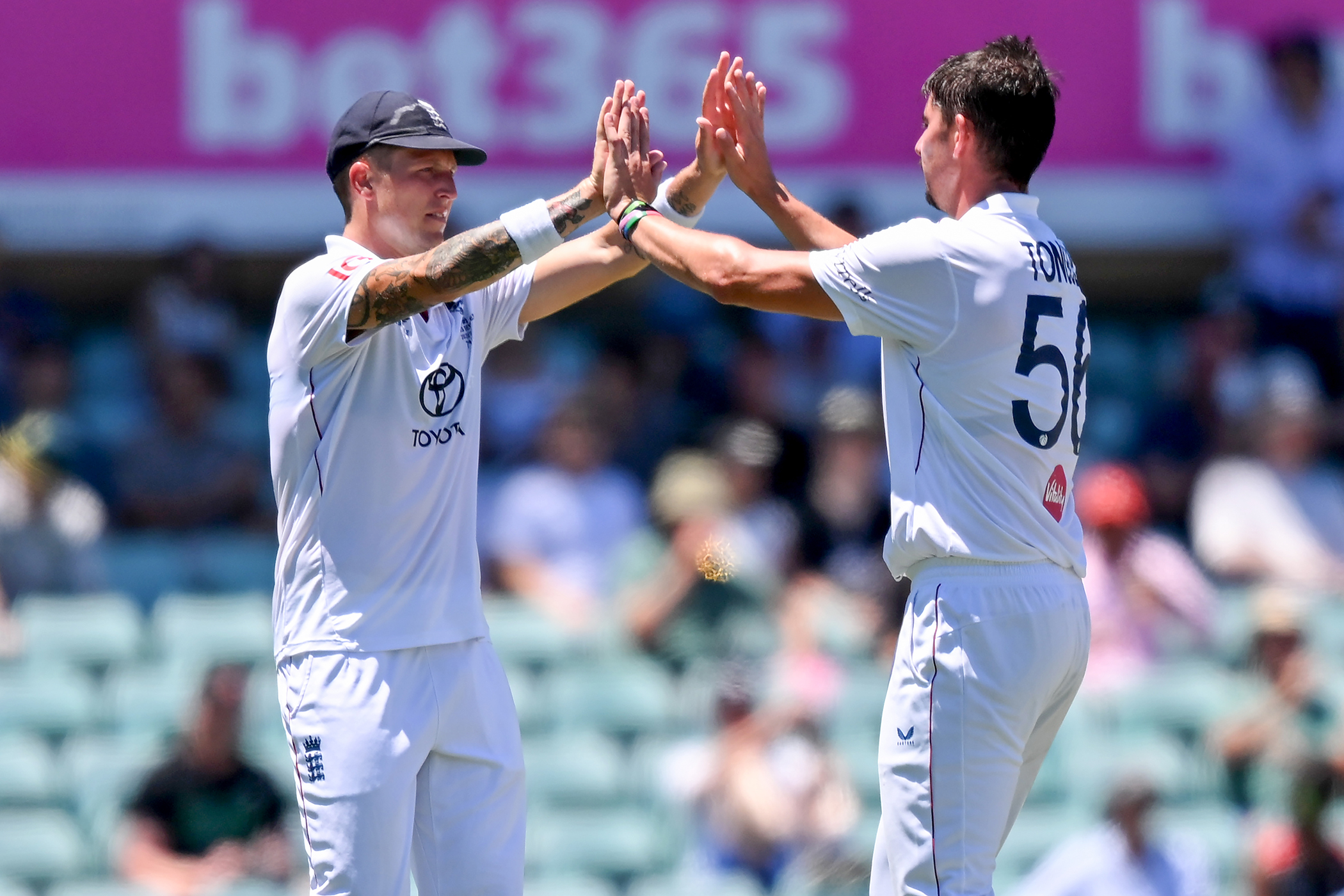
Brydon Carse took 22 wickets, Josh Tongue 18, at a superb average of 20.1, and their strike rates (38 and 32 balls per wicket, respectively) were the best for England by bowlers with 15 or more wickets in a series in Australia in the last 120 years.
Unfortunately for England, Carse also conceded runs at 4.8 per over, the worst by an England player who has bowled 75 or more overs in any Test series, and Tongue went wicketless in the first two Tests, somewhat hampered by not being selected.
Bashir not to be smashed out of the attack
Success
Shoaib Bashir held his own... by not playing.
In 2021-22, Jack Leach, a far more experienced bowler than Bashir, was aggressively pulverised in the first Test, and comfortably milked thereafter. Bashir, after a striking start to his Test career, had averaged 51 and conceded 3.9 per over in his previous 13 Tests against top-eight ranked opposition, so there were concerns that he could face a similar onslaught. Those fears were, emphatically, not realised.
Australia’s top three – Khawaja, AN Other and Labuschagne – to struggle
Success
Usman Khawaja had one good match, Jake Weatherald was mostly ineffective and Marnus Labuschagne played some valuable innings at either end of the series, but scored 47 in a five-innings sequence in between.
Unfortunately for England, Khawaja’s first-Test injury led to Australia unleashing Travis Head to have one of the great series by a Test opener, over 600 runs, at a strike rate of 87 per 100 balls, comfortably the fastest by a player in an Ashes series in which he scored more than 500 runs, becoming the second player since 1948 to score centuries in three separate victories in an Ashes series (after Ian Bell for England in 2013), and just the fourth Australian opener to score 600 in an Ashes.
Avoid bowler burn-out
Success
No team in an Ashes in Australia has ever bowled fewer than the 622.1 overs that England delivered in this series. England’s most-used bowler, Carse, bowled 138.4 overs, putting him joint-108th on the list of Most Overs Delivered by an England Bowler in a Test Series in Australia.
Unfortunately for England, Australia scored at a historically rapid rate in the overs that they did face, and injuries convincingly trumped burn-out.
Starc’s returns to diminish through the series
Success
Starc, whose career stats suggested that he had tended to decline over the course of series, took five fewer wickets in the last three Tests than he did in the first two, and his average doubled.
Unfortunately for England, his performance in the first two Tests was historically outstanding (18 wickets at 14), and he remained a threat throughout (13 at 28 in the final three Tests). He took a total of 11 wickets in his opening spells, and became the first bowler in Ashes history to take a wicket in the first over of four different innings.
Stop Smith scoring heavily
Success
Steve Smith failed to reach 300 for the second consecutive home Ashes.
Unfortunately for England, he still averaged close to 60, thanks to his final-Test 138 and a gaggle of second-innings not outs. Furthermore, despite missing one match, he took 14 catches, only one short of equalling the all-time series record by a non-wicketkeeping fielder. England’s Jamie Smith obviously misinterpreted the “Stop Smith scoring heavily” recommendation.
Photograph by Ayush Kumar/Eurasia Sport Images/Getty Images