


The empty spaces were dotted around Molineux, swatches of old gold and deep black that sat silent and spoke volumes. Both corners of the upper tier of the Steve Bull Stand were largely unoccupied. Several rows in the looming Stan Cullis Stand, behind one of the goals, were populated only sparsely, evidence of 3,000 or so tickets either unsold or unwanted.
Empty seats are vanishingly rare at Premier League games; the league’s own figures suggest its “occupancy rate” has hovered at about 98% for years. The competition’s booming popularity means most stadiums are full most of the time. To see vast swathes of upturned plastic, then, is eye-catching. Absence, in English football, tends to be notable.
At times, though, it is probably worth looking at an issue from the other side. On a bitterly cold January afternoon, the pavements sprinkled with snow and wallets recovering from the festive period, 29,874 people had the commitment and the blind faith to devote a day to the Premier League’s derby of the damned.
None of them did so in expectation. Increasingly, joy is an elusive quality in the Premier League. English football might be awash in money and talent and power, but whether anyone is actually enjoying it in any meaningful sense is a different matter. Aston Villa are happy. Sunderland and maybe Leeds, too. Arsenal might be, in the end, though the overriding emotion now is probably anxiety.
Almost everyone else seems to be stressed, or frustrated, or downright angry. Even by those limited standards, though, Wolves and West Ham feel particularly beleaguered, and have done for some time. This was a meeting of the two teams who might, at this juncture, be the two most miserable sides in English football.
That is not just because of their results, though they are bad enough: Wolves started the day on course to record the worst season in Premier League history, having mustered just three points across the first half of the campaign. West Ham have not been quite so poor, but they have had few reasons to cheer. They have, after all, won three games in five months.
Worse, though – much worse – is the sense that both have been left to drift by owners who are either uncaring or incompetent, depending on the kindness of your interpretation. Neither club appear to have a coherent vision. Neither seem to have much of a plan. The consequence has been that, for some time, neither can claim to have had much of a purpose.
In that context, it is quietly remarkable that – despite everything these clubs have put and continue to put their fans through – so many of them still made their way to Molineux regardless, that the stadium was still 90% full, that presence outweighed absence. That is what it is to be a fan, that unwavering devotion in drought as well as flood, but that does not mean it should be taken for granted.
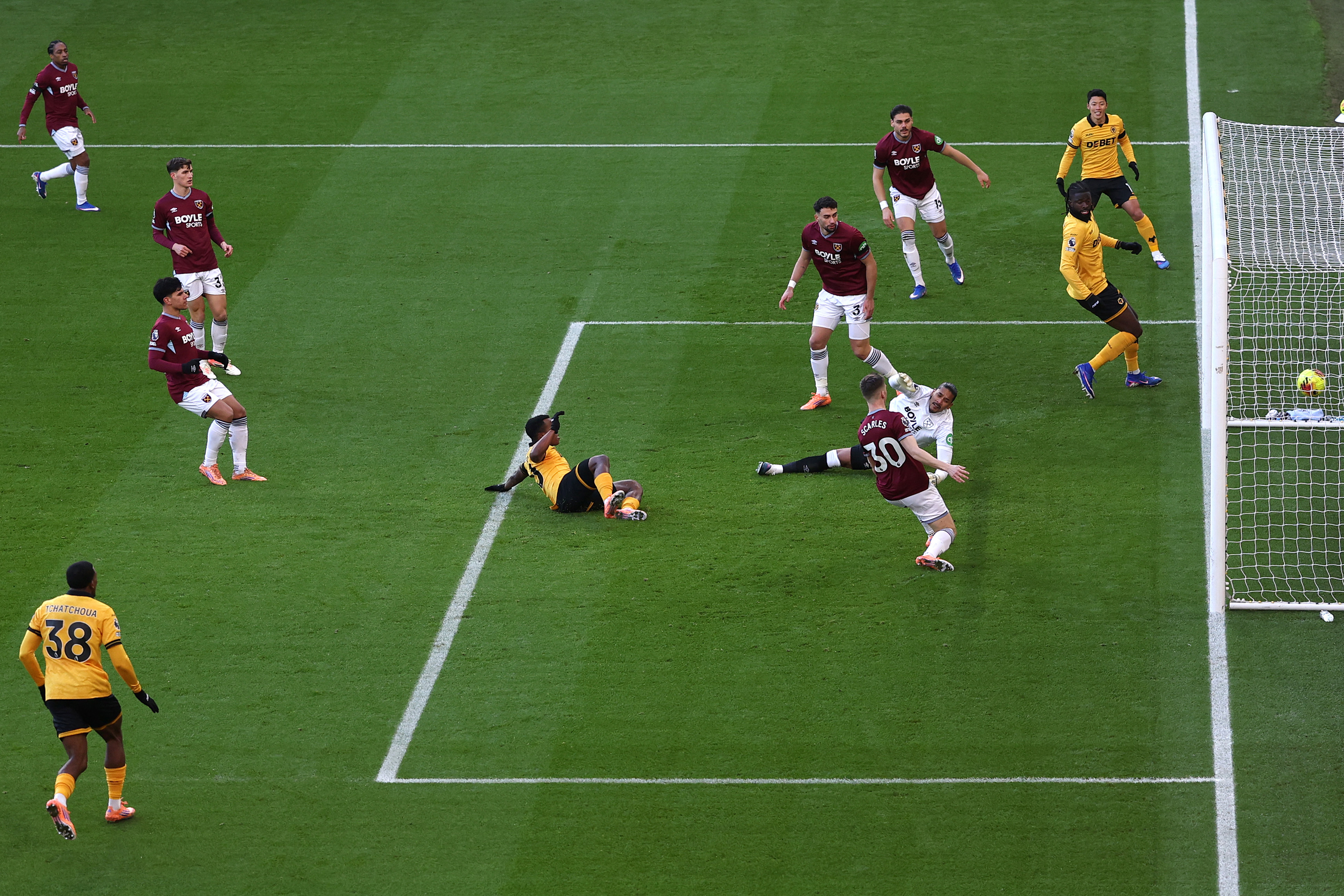
The reason that they had done so became clear within four minutes, when Jhon Arias tapped home to put Wolves ahead. It was the first time that they had led in a game since the start of October. Molineux felt giddy with relief. Within half an hour, they were two ahead, Hwang Hee-chan converting a penalty. Mateus Mané, just 18, made it three before half-time. The euphoria felt exhilarating. The fans gave the players a standing ovation at the break.
Wolves fans know, of course, that it will make little difference. They now have six points. They are still 12 points from safety. The maths suggests that it is all but impossible for them to survive. They greeted it all with the irony that is typical, almost compulsory, of fans who know how the story ends, their songbook laced with bleak humour and just a touch of malice.
Newsletters
Choose the newsletters you want to receive
View more
For information about how The Observer protects your data, read our Privacy Policy
“We’re going to win the league,” they sang, after the third goal, and “unbeaten in one”. “You’re going down with the Wanderers,” they told West Ham’s fans, and: “You’re nothing special, we’ll see you next year.” There was little argument.
Nuno Espírito Santo, West Ham’s manager, described it as his worst day in football. “I can’t remember a day I felt so bad,” he said. He called his team’s display “embarrassing. To the fans, I have to apologise. We are sorry, we are sorry.”
But deep down, though they may not want to admit it, there may just be a little hope, too. Wolves had been admirable in defeat at Anfield a week ago. They took a point from Old Trafford a few days later (neither of these things are quite as hard as they used to be, admittedly). And now they have won a game too.
That is why they were here, and it is why, when West Ham host Nottingham Forest on Tuesday, there will be tens of thousands there too: the faint, indelible hope that things will be different. At the end, as Rob Edwards and his players basked in the applause of the Jack Hayward Stand – home to the hardcore – the fans sang of their love for their team. There were only a couple of empty seats.
Photograph by Michael Regan/Getty Images