Walid Regragui wrote his name into the history books on 10 December three years ago when his Atlas Lions, Morocco’s national team, became the first from Africa to reach the semi-finals at a World Cup.
But three years is a long time in a result-orientated sport. And now his countrymen are demanding that the hosts of the Africa Cup of Nations (Afcon), who begin their campaign against the Comoros on Sunday in Rabat, end a long, painful 50-year trophy drought since their only such title win – in 1976 in Ethiopia.
Morocco have not even reached an Afcon final since 2004, when the Lions, then managed by former goalkeeping legend Badou Zaki – the 1986 African Footballer of the Year who is now in charge of Niger’s national team – lost to hosts Tunisia.
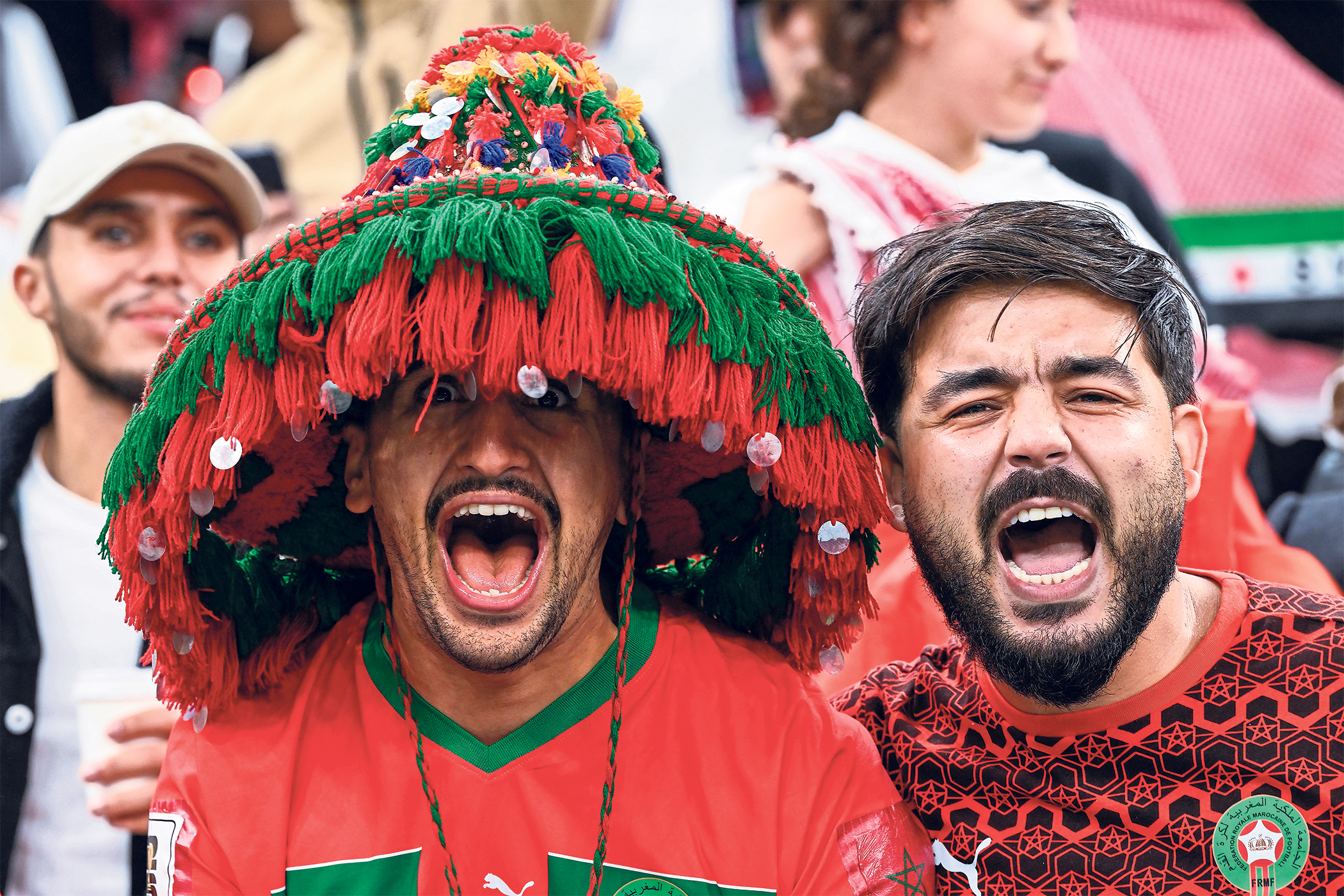
A country of around 38 million people, with 45% of the population under the age of 30, football is akin to a religion in Morocco, putting tremendous pressure on Regragui and his players to lift the trophy.
“This group has been built over the last two years. Our results speak for themselves. This competition will last a month, and we hope that we will get the benefits of working with the players for a long time. We hope that the team is the best possible one to win the trophy,” Regragui said in a recent interview with Royal Moroccan Football Federation (FRMF) TV.
“Regragui has got all the pieces to provide the players with the right motivation,” says Amine El Amri, one of the country’s most respected football journalists.
“The results, since the 2023 Afcon [played in 2024], the quality of the roster and the general conditions around the team are optimal. This is our chance to break our biggest disappointment in football so far.
“Not winning an Afcon in 50 years is the biggest hurdle. It is translated into tremendous pressure that keeps everybody’s feet on the ground, which sometimes can be a break to one’s ambition. I am old enough to have seen many good Moroccan teams underachieve in the face of mental barriers.”
Few can forget the heartbreak of 23 March 1988, when Morocco, who were also Afcon hosts that year, lost to Roger Milla’s Cameroon in the semi-finals. It is a sour memory that only lifting the trophy on 18 January can bury.
Without question, this year is the busiest in the country’s football history, having staged the Women’s Africa Cup of Nations (Wafcon) in July and the U-17 Women’s World Cup between October and November.
Newsletters
Choose the newsletters you want to receive
View more
For information about how The Observer protects your data, read our Privacy Policy
They are staging a consecutive Wafcon between March and April 2026 and four more U-17 Women’s World Cups until 2029. And all this is being done in addition to the enormous task of readying themselves for co-hosting the 2030 World Cup with Spain and Portugal.
“We are very happy to have all these events. Morocco is well known for staging international events. And not just sports events, but events at large. Last year, we had the World Bank meeting,” says Omar Khyari, who manages the FRMF’s international relations.
“Morocco is the most open Arab nation that I know,” says Sunday Oliseh, the former Ajax, Juventus and Borussia Dortmund player, who won every Afcon medal with Nigeria’s Super Eagles – gold in 1994, a silver in 2000 and the bronze medal in 2002.
Married to a Belgian-Moroccan, Oliseh has observed the development of the country over the last two decades, during visits to his in-laws.
“Any time I go to Morocco, I always put on weight. The people are so friendly… I sound like a salesman for Morocco now,” Oliseh laughs.
“If you are down to earth with them, you will really enjoy Moroccans. But if you come with an attitude, you’ll get an attitude back.”
As bookmakers’ favourites, Morocco’s hopes for winning the title aren’t without merit. They have considerable star quality with the likes of Paris Saint-Germain’s Achraf Hakimi – who finished in sixth place at this year’s Ballon d’Or – Real Madrid’s Brahim Diaz and Fenerbahce’s Youssef En-Nesyri, though there are fitness concerns over Hakimi and Lille’s Hamza Igamane.
The hosts have also enjoyed recent trophy success, winning the U-20 World Cup in Chile earlier this year and the 16-team Arab Cup this week, beating Jordan 3-2 in the final on Thursday. Many in Morocco have called on Tarik Sektioui, who led the latter team to glory, to take over from Regragui should he fail to win the Afcon.
Aside from the hosts, Senegal are among the favourites as a well-balanced, experienced squad who lifted the trophy in 2022.
Oliseh believes that Nigeria have a chance, despite failing to qualify for the World Cup for the second successive tournament. “Contrary to what many may think, I am very optimistic about our chances at the Afcon,” he said.
“To start with, the players only have one goal in mind, which is the Afcon. I find it unfair that a lot of people are beating down on these boys. At the end of the day, they are representing us… some support [from Nigerians] would help.”
The huge investment in football, general sports infrastructure and staging major international events in Morocco has not gone down well with everyone, however.
Thousands of Gen Z youngsters took to the streets in September and October, chanting slogans such as “Hospitals not stadiums” and “Healthcare first”, as they expressed their anger about the country’s plan to pour billions of dollars into hotels, airports and stadiums ahead of the 2030 World Cup, even as public hospitals are handicapped by broken scanners and severe staff shortages.
“Setting the organisation of major international events against basic social issues is less a genuine debate than a form of political and media overbidding, driven by certain highly visible actors,” said Professor Abderrahim Bourkia, president of the Moroccan Association of Sociology of Sport (MASS).
Striking this requisite balance is the high wire that the country will have to negotiate over the next five years.
But Morocco’s domestic issues will be revisited after the country, and the rest of the world, enjoy the four-week feast of the 35th Cup of Nations.
Photograph by Mahmud Hams/AFP via Getty Images