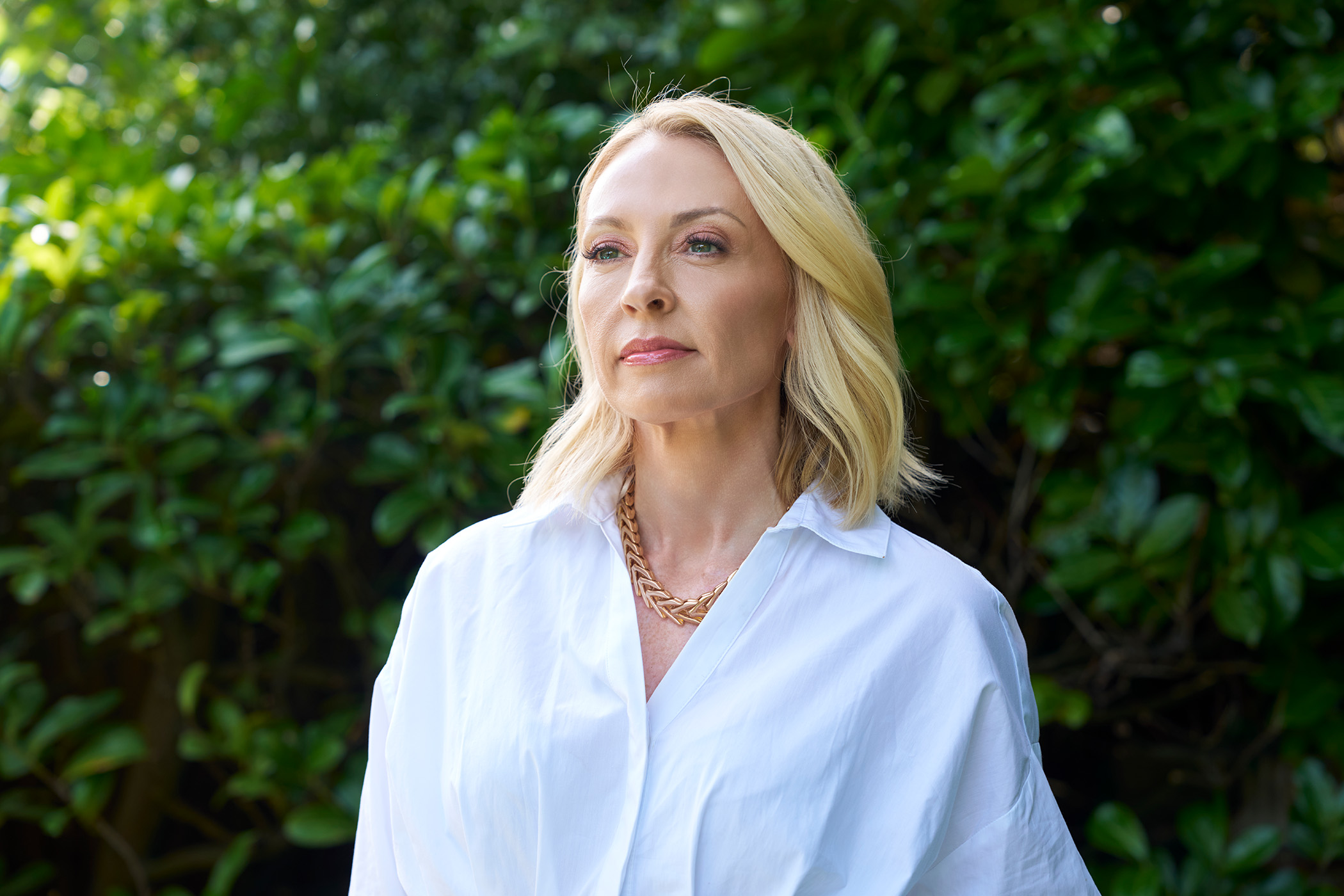
At the start of May, Natalie Pirks posted on Instagram that she had made the decision to step away from her role as a sports correspondent at the BBC.
“In two weeks I’m leaving the job I always dreamed of having. Here’s why,” said the post.
The attempt to balance her work life – where she was expected to be away at sporting events for weeks at a time – with her family life was no longer sustainable.
“Behind the highlight reel? Spinning plates wondering when they’d crash. Swallowing guilt. Missing bedtimes and birthdays. Constantly feeling like someone was being shortchanged,” she wrote on LinkedIn.
Comments from colleagues, particularly ones with children, flowed in.
“Why do I always feel like I’m in the wrong place?” replied BBC commentator Robyn Cowen, who took her two children with her to Switzerland last year when she was covering the Women’s European Championship.
Faye Carruthers, who is currently at the World Cup with talkSPORT, commented “Hard relate!” under the post.
Pirks began working in broadcasting as a 22-year-old, after completing a degree in multimedia journalism where she was the only woman who specialised in sport. Her career has taken her all round the world, covering Olympics and World Cups. Yet when she chose to have children, her life changed.
“I don’t think before you have children you fully comprehend what an undertaking it is,” said Pirks, speaking at her family home in London.
“They are my absolute greatest gift,” she says of her two daughters who are now 10 and 14. “But it has been really, really hard.
Newsletters
Choose the newsletters you want to receive
View more
For information about how The Observer protects your data, read our Privacy Policy
“I want to be able to say that I saw my kids grow up, and if I’d have carried on in that job, I don’t think I could have hand on heart said that.”
Pirks planned both her pregnancies around the Olympics, first in 2011 and then in 2015. As a result, their birthdays are only five days apart, despite the four year age gap.
When she was three months pregnant with her first child, a senior male executive at the BBC found her at the tea station to congratulate her. He followed it up by saying “I hear it’s terrible timing.” Pirks, who knew she was planning to be back in time for the London Olympics wanted to tell him it was a “miraculous feat of female ovulation”.
Instead she just apologised. “I don’t think he meant it to be mean. I just think he didn’t think.”
‘I bet that no man got asked who was looking after their kids when they’re away. I got it constantly’
‘I bet that no man got asked who was looking after their kids when they’re away. I got it constantly’
With the World Cup in the US, Mexico and Canada, plenty of parents are away from their children for the tournament. Yet Pirks believes people underestimate how much more of a toll that time away from home takes on mothers.
“There are so many men that are now at the World Cup who have kids, who had emotional goodbyes and miss their children, and are wonderful fathers. But I would bet this house that not one of them got asked who was looking after their kids when they’re away,” she said.
“I would get that question constantly. I’m very privileged to have a partner who 100% supported me, but every time he’s had to go abroad [for work], no one’s asked him.
“I’m not dismissing the men who do this job who have kids. I know they work hard and I know they love their kids. It’s just not quite the same. I don’t know whether it ever will be.”
This World Cup has seen women excelling on television, whether it is Emma Hayes doing in-match analysis for ITV or Kelly Cates and Gabby Logan presenting for the BBC from Manchester.
Cates and Logan are 50 and 53 respectively; Hayes is 49. Yet Pirks is concerned that you can count the number of women over-50 on television “on one hand”. Anecdotally, she has heard of people saying that if they have one woman on screen, they will say they don’t need another one.
Commentary, criticism and abuse have all also grown as a result of social media.
“You only have to look at the [criticism of] Emma Hayes last week to know what it means to put yourself above the parapet to dare to have an opinion about the men’s game,” Pirks said.
“As a woman you’ve always had to prove yourself more. And I think we’re regressing. You can see the move towards an almost Trumpian politics in this country. And you can see it play out online – people are emboldened to say things that they might not have said 10 years ago.”
The worst abuse Pirks got was when she was pregnant. People would write online that she was fat or that she needed to go to the gym.
“If you are a person of colour, or if you’ve got a disability, or if you are from an LGBTQ+ background, or a woman who’s working in a sport industry that’s very male dominated, you are not the norm. It attracts more harassment, which is such a shame.”
While these issues faced by women in sports media are broadly the result of cultural norms of misogyny, one of the particular challenges mothers face is something without an obvious easy solution. Sports media has a strong ethos of presenteeism. But being expected to jump to cover a breaking story at a moment’s notice is not necessarily feasible.
“You’re constantly worrying that if you prioritise your children, you’ll get overlooked for that promotion, or that trip, or that thing you want more than anything, because your career is still hugely important to you.
“You don’t become a mum and suddenly decide that you don’t want a career.
“The news agenda doesn’t care whether you’ve got kids or whether you’ve got to get back for nursery pickup. It just happens.”
What comes next for Pirks then? Her hope is to take everything she has learned from her 25-year career so far and turn that into media training, podcasts and lecturing. She says she wants to try different things that she’s “not necessarily been allowed to do before”.
“There comes a point in your life, especially when you’re a woman in your 40s, where you go I’m fresh out of fucks now.
“The field in which I hold my fucks is barren. I want to live on my terms now.”
Photograph by Suki Dhanda for The Observer