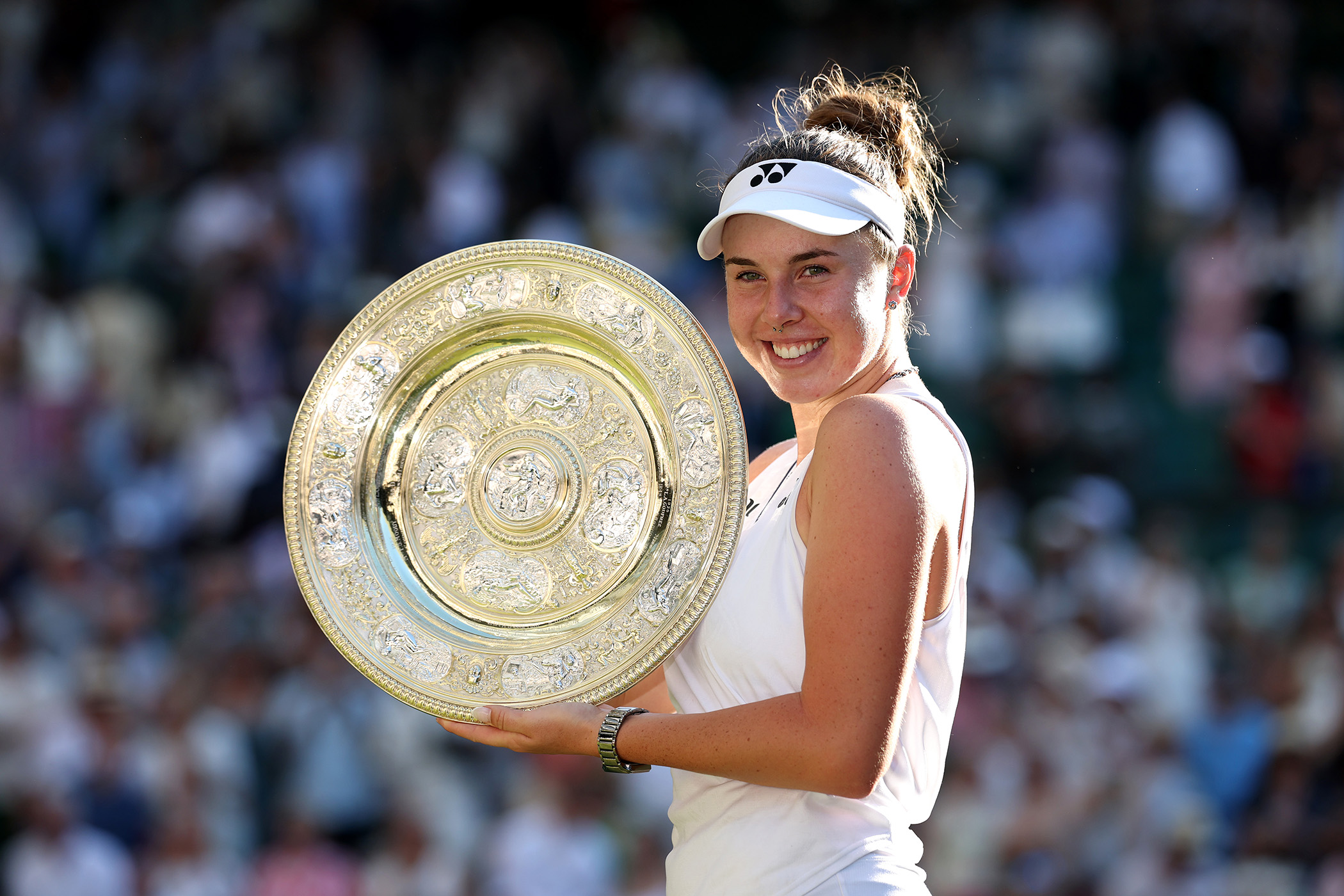
The greatness of Martina Navratilova touched this all-Czech women’s final until darker memories of the late Jana Novotná’s collapse in 1993 became a more urgent image.
On a day that’s fixed on lists of great sporting implosions, Novotná (also Czech) cried on the shoulder of the Duchess of Kent after surrendering a 4-1 third set lead to Steffi Graf. Novotná recovered to win the 1998 Wimbledon title: a catharsis that might have drifted through the mind of 21-year-old Linda Nosková as she blew a one-set, 5-2 lead along with five championship points as Karolína Muchová hauled her into a deciding set.
Nosková’s 6-2, 5-7, 6-3 victory after the second great recovery of this final had the BBC commentary team citing Rudyard Kipling – triumph and disaster, and all that. The ex-pros called it an all-time classic. At 21, Nosková announced herself as a new star of the women’s game in the best way possible, with creativity and a fightback for the ages.
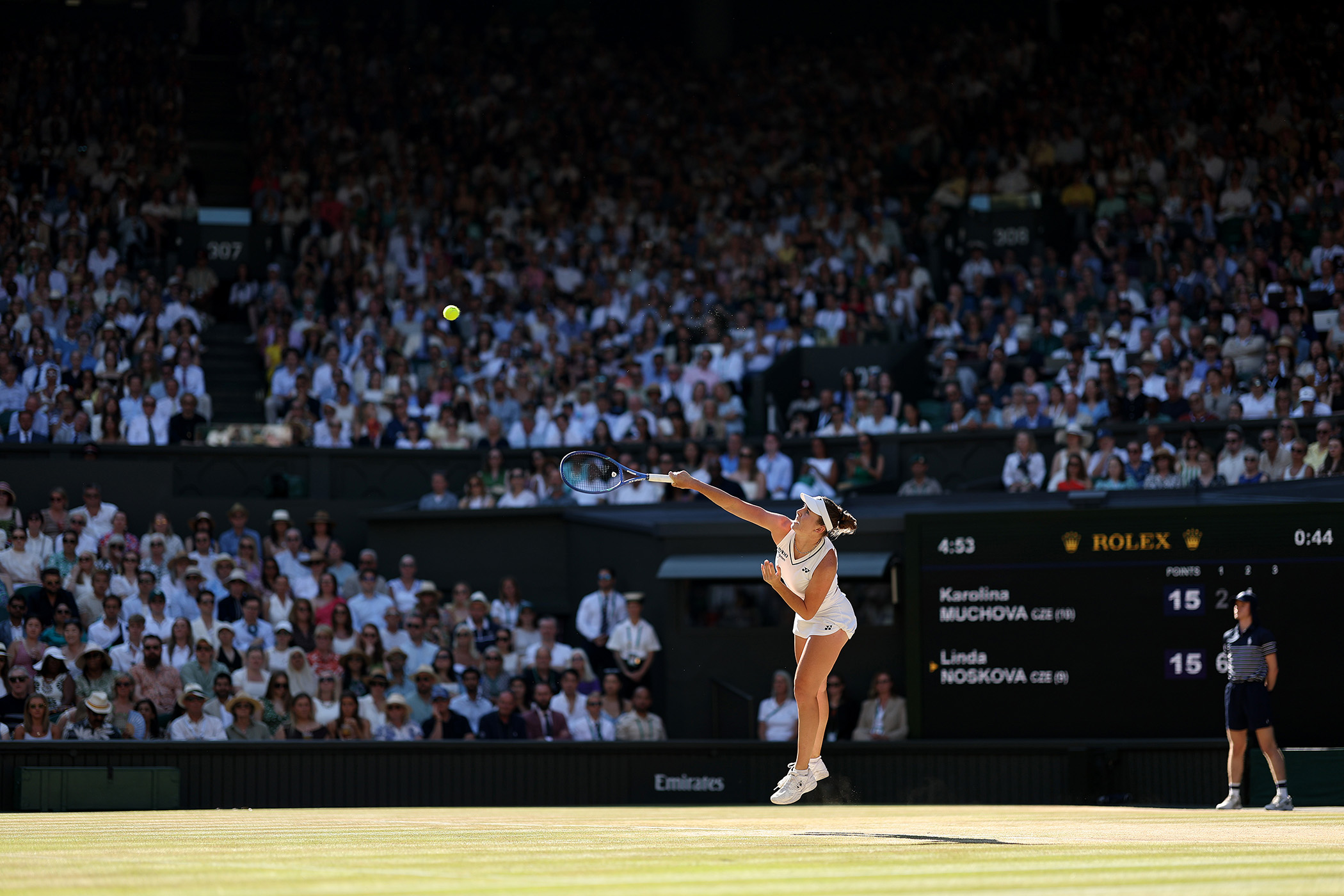
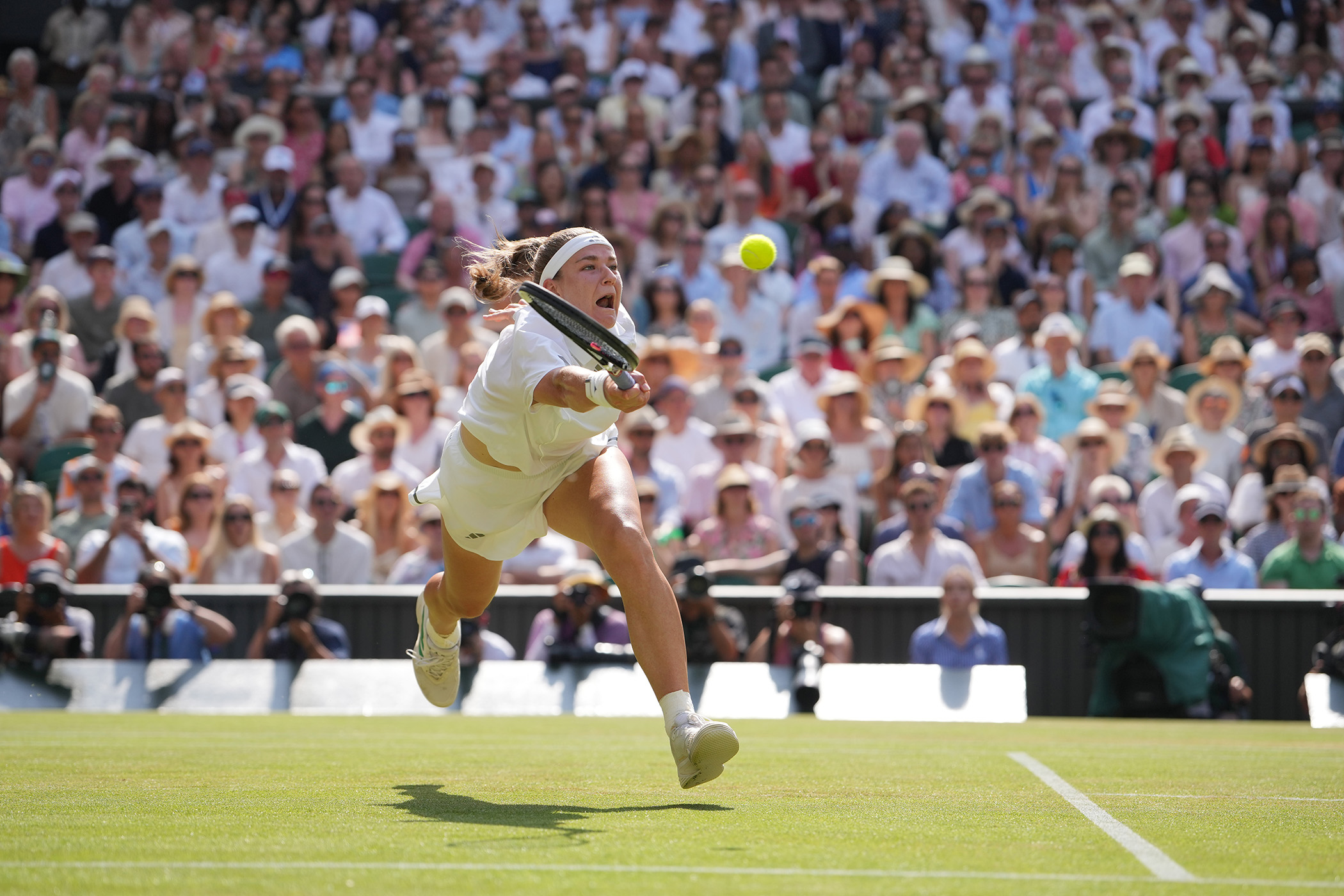
If there’s one thing more stressful for a young player than losing a Grand Slam final it’s being on the cusp of winning one. Nosková went to pieces. Muchová, the beaten 2023 French Open finalist, who had barely shown up until the middle of the second set, put herself back together. She was the oldest first-time finalist for 28 years; Nosková was the youngest to reach the big day since Eugenie Bouchard in 2014.
Experience sensed its chance. Youth tried to re-compose itself. Nosková rushed off court for a ‘comfort break.’ Then she returned to finish what she started, thanking on court her late mother, which brought Navratilova to tears.
Tennis is a simple game. Two women battle it out for an hour or three and then the Czech wins.
It’s doing a disservice to Muchová and Nosková to frame them only as national flag bearers rather than individual elite athletes. This is Wimbledon, not the Davis Cup.
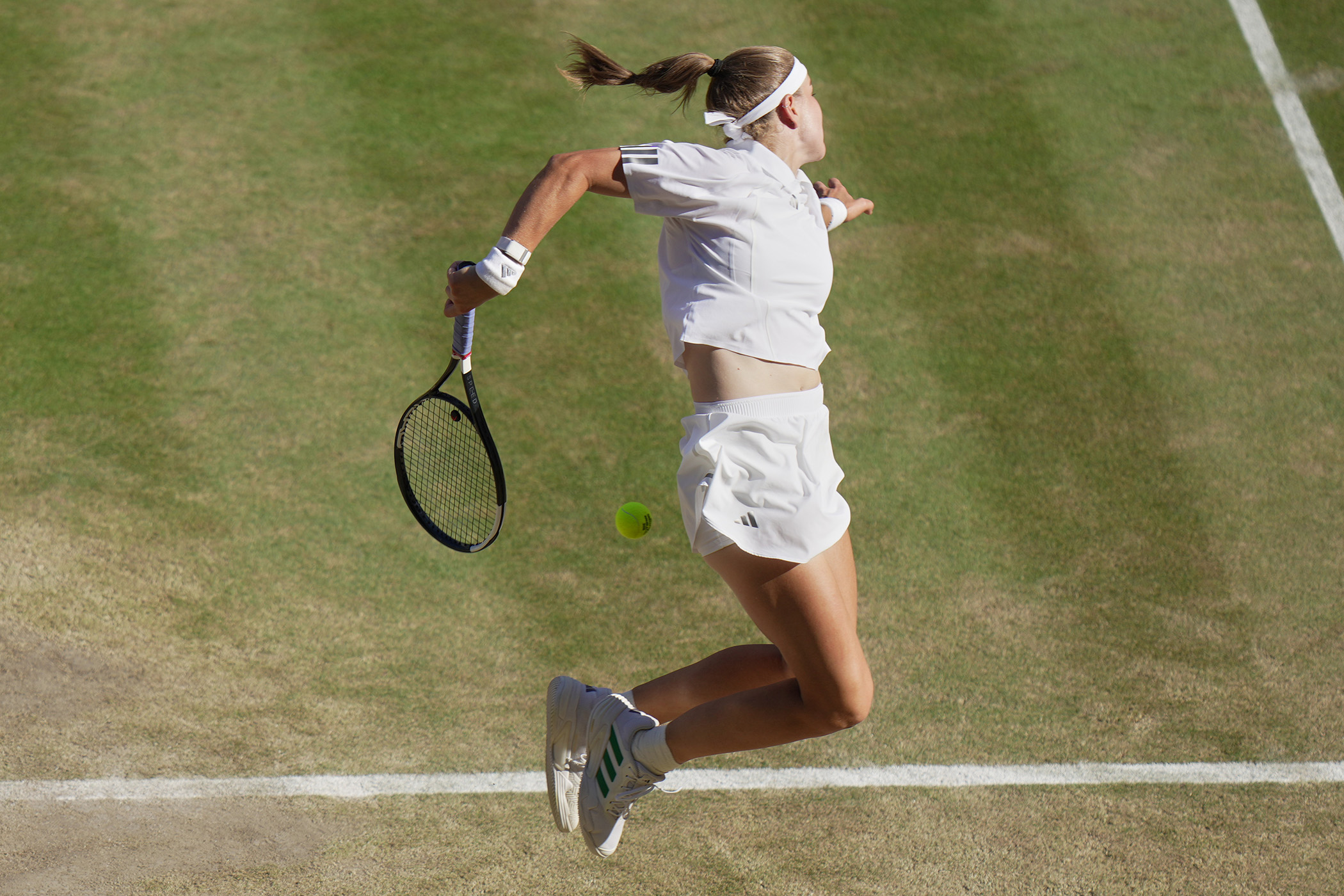
But even the English language Radio Prague International couldn’t resist calling this the “Czech mate” final. Muchová and Nosková were bound by a tradition of over-achievement in Czech tennis to be viewed as ambassadors for an 11-million strong country that is extraordinarily prolific in women’s Grand Slams.
We had been here before – 40 years ago, when Navratilova played Hana Mandlíková on this court. Yet this was the first clash between two players from the same nation since Venus and Serena Williams in 2009.
Navratilova’s regal standing in tennis is approaching a half-century of years. A nine-time Wimbledon champion (1978-90), she was in the audience on commentating duty while Petra Kvitová, the winner in 2011 and 2014, watched from the Royal Box.
Newsletters
Choose the newsletters you want to receive
View more
For information about how The Observer protects your data, read our Privacy Policy
So was another legend, the American Tracy Austin, who watched Nosková squander her second set lead and said: “It’s hard to watch because we’ve all been players and we know what that feels like when you start to get tight but you can’t loosen up, then the lead starts to dissipate and nerves start to unravel.”
No disrespect to either is intended with the observation that Ukraine’s Marta Kostyuk would have been a popular finalist, especially after she castigated the International Olympic Committee (IOC) for readmitting Russia in time for the Los Angeles 2028 Games.
Yet nobody could begrudge either of these finalists adding yet another new champion to the roster.
Since Serena Williams last won it in 2016, nine different players have won the Wimbledon women’s singles title. To recite them isn’t a merely bureaucratic exercise. They are: Garbiñe Muguruza (Spain), Angelique Kerber (Germany), Simona Halep (Romania), Ash Barty (Australia), Elena Rybakina (Kazakhstan), Markéta Vondroušová, Barbora Krejčíková (both Czechia), Iga Świątek (Poland) and now Nosková.
That list illustrates the depth of female players capable of winning big on Centre Court, the absence of a single dominating figure post-Serena Williams, and the migration of power to Eastern Europe – especially Czechia, which has supplied three of the last four champions.
It hasn’t all been wine and roses for Czech tennis. Two years ago a funding misappropriation scandal at the Czech Tennis Federation brought down the organisation’s president Ivo Kaderka after 25 years in charge.
Last month the 2023 Wimbledon champion Vondroušová was banned for four years after the International Tennis Integrity Agency (ITIA) reported that she had refused entry to a doping control officer who had knocked at her home.
Vondroušová accused the testing officer of not following “protocols” and claimed she was “scared.”
Before this final Nosková tried to explain the success of the Czech women’s game. “We are very creative, I would say, so grass allows us to kind of use any side of tennis, whether it’s serve and volley back in the old days, or slices and volleys in this new era,” she said.
It was her creativity and aggression that put Muchova in such a seemingly hopeless position. In her first Grand Slam final though Nosková made a blistering start, with sliced serves and whipped cross-court forehands, sealing the first set (6-2) with a coup de grace – a lob that accentuated Muchová’s lack of dynamism.
Then the prospect of winning invaded Nosková’s thoughts and it all became a struggle not against Muchová but against herself. She won that. She won the Wimbledon title too. The hard way, which is sometimes the more beautiful way.
Photographs by Cameron Spencer/Getty Images; Brian Inganga/AP