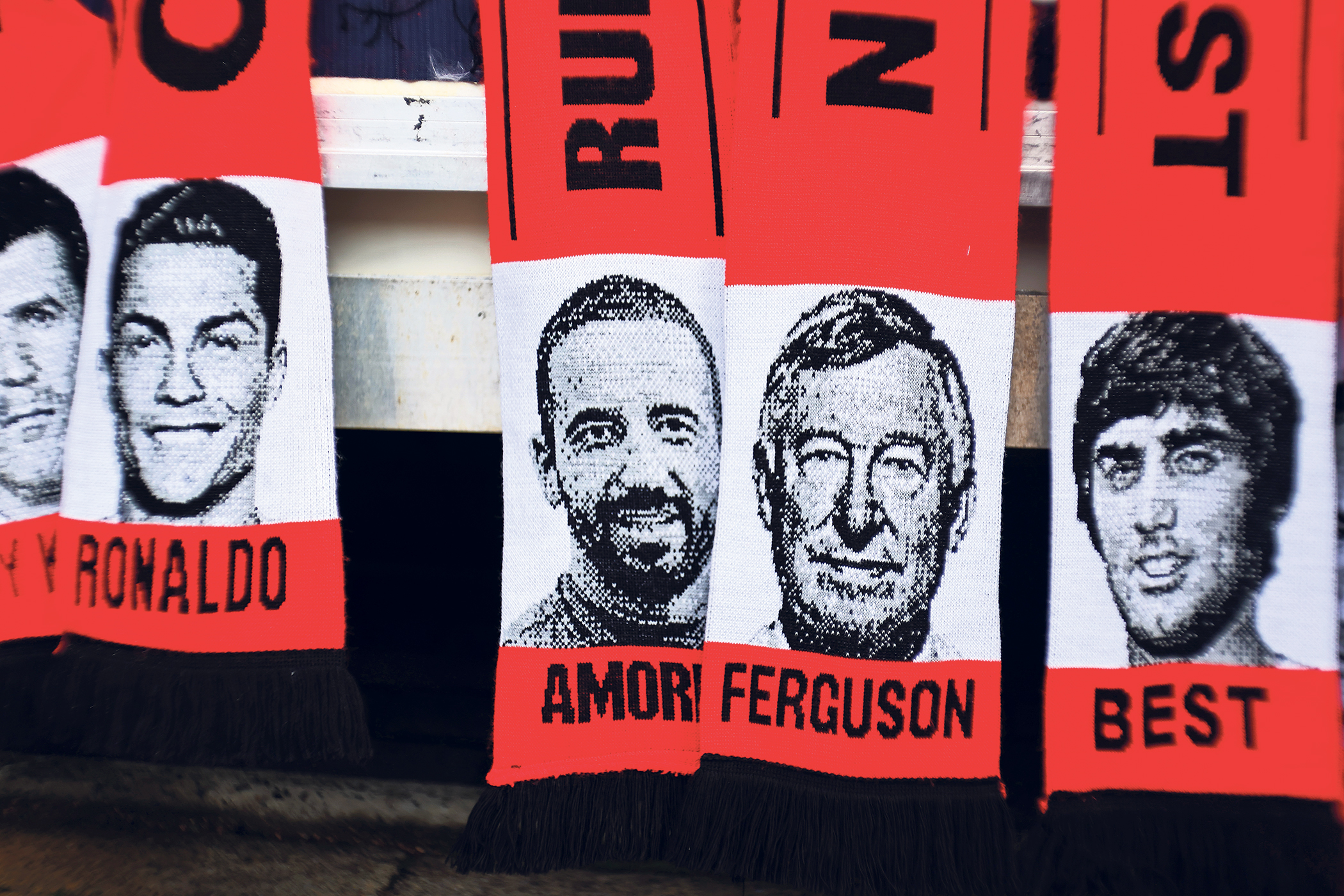
“Your job is to do what’s best for Manchester United,” Sir Alex Ferguson told the club’s new caretaker manager Darren Fletcher this week. The retro feel of that sentiment could have made a hardened United fan cry.
What is best for United? Not what’s best for the brand or the owners or the individual. Not for the first time in his almost 40-year association with the club, Ferguson located the heart of the matter. The idea of United as higher calling, as sacred shared endeavour, is so lost in time that it is painful for their followers to contemplate.
From the day he retired in 2013, an irrational fear gripped United that Ferguson might be a backseat driver to those who followed him. It never happened.
The anxiety could be traced to the Matt Busby era. Busby initially stopped in June 1969, cast a shadow over his successor Wilf McGuinness, then returned for around six months to cast another one over Frank O’Farrell. Moving great managers “upstairs” is fraught, especially for chairmen and chief executives, who don’t like rival power bases.
But it was never going to happen in Ferguson’s case. When we worked together on his autobiography, he said countless times that he had no wish to be any kind of puppet master to future managers. As an old trade unionist and pillar of the League Managers Association, he believed that it would be unprincipled to interfere in the work of his successors.
What he hoped for was to be asked for his opinion on policy every now and then. He thought that he could be useful with his connections and experience of player acquisitions. Occasionally United would use his powers of persuasion to help complete a signing.
For the most part though – and certainly during Ed Woodward’s reign as executive vice-chairman – limits were set. Fletcher’s call to Ferguson to ask for his approval on taking over from Ruben Amorim temporarily was a poignant throwback to more grown-up times. It was also a further sign that United’s past is mobilising again to help rescue the future.
There was that podcast clip of Paul Scholes and Nicky Butt saying “yes” or “no” to candidates for the manager’s job. Yes to Roy Keane, no to Crystal Palace manager Oliver Glasner, were two of their calls. Then there were fan chants in favour of Michael Carrick and Ole Gunnar Solskjaer in the 2-2 draw at Burnley on Wednesday night – and a banner mocking Sir Jim Ratcliffe (“JIM CAN’T FIX THIS”).
There was a reference too in Amorim’s outburst at Leeds (the one that got him sacked) to Gary Neville’s criticisms. Meanwhile, Solskjaer, Carrick, Ruud van Nistelrooy and Fletcher himself were being discussed across the media as possible long-term answers, should United elect not to go for Glasner, Bournemouth’s Andoni Iraola or Thomas Tuchel.
In other words, yet another struggle for the soul of the club is under way, with Ferguson, now 84, restored by Fletcher to the role of oracle, which he would have been all along at a more secure, less political club. As a paid “ambassador”, Ferguson fulfilled his wish to go to Old Trafford as “a fan” and worked around the fringes, when asked. Ratcliffe decided that he could no longer afford his fee and made a cost-cut of the club’s greatest manager.
Newsletters
Choose the newsletters you want to receive
View more
For information about how The Observer protects your data, read our Privacy Policy
“I don’t like to make any major decisions or things without speaking to Sir Alex,” Fletcher said this week. “I wanted to speak to him first. And ultimately to get his blessing, to be perfectly honest with you. I think he deserves that respect. He echoed my thoughts, which I’ve always said: ‘It’s your job to do the best for United.’ It was comforting for me for him to say that.”
Ferguson was able to enunciate in one sentence how to start repairing the damage to a great football club
Ferguson was able to enunciate in one sentence how to start repairing the damage to a great football club
Since April 2014, Ryan Giggs, Solskjaer, Carrick, Van Nistelrooy and now Fletcher have all been given a go on the ride – with Solskjaer the only permanent appointment. None has been able to demonstrate that the Fergusonian age can simply be lifted from the deep freeze and revitalised. There is no natural-born Ferguson heir from the long trophy-winning years. But nor have a succession of big-name hires been able to halt the club’s abject slide.
As manager from December 2018 to November 2021, Solskjaer went to Ferguson for advice but started referencing him less frequently. He will have noticed that in Woodward’s boardroom there was no urge to restore Ferguson’s influence. Any mention of him “coming back” generated circular debates about whether the club should revive the old ways or leave them in the museum.
The Ferguson model of complete control was never coming back. It’s in retreat across football. His retirement, though, removed the biggest obstacle to the mass commercialisation of the club – the mania to build and exploit the brand. Under Ferguson, the playing side had survived as an independent republic within a financial empire.
When Fletcher tapped Ferguson’s number on his phone screen, the call travelled across all the waste of the last 13 years to the genius behind 13 Premier League titles, five FA Cups and two Champions League triumphs. It resurrected the principle that Ferguson might have something useful to say about what should happen next. And he did, by articulating something that the Glazers and parts of the Ineos ownership don’t understand.
The job now is to “do what’s best for Manchester United” – the team, fans and employees of an organism that is still just about a football club, despite its mutation into investment meat. Ferguson was able to enunciate in one sentence how the thinking needed to swing back round to repairing the damage to a great football club. Compared with that, Fletcher restoring a back four at Burnley was mere detail.
Photograph by Robbie Jay Barratt – AMA/Getty Images