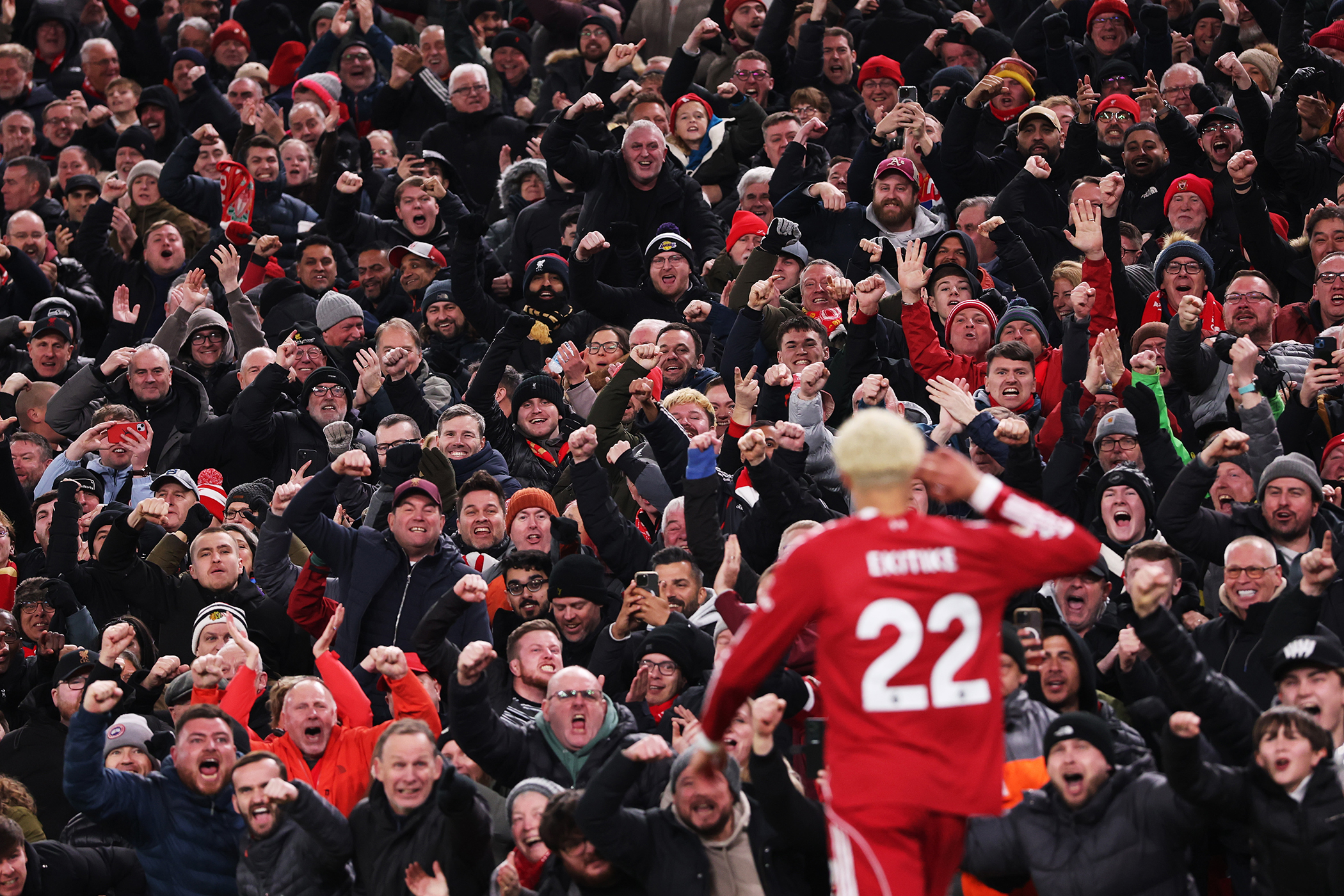
As he lacerated Newcastle the other day Liverpool’s Hugo Ekitiké exuded a quality managers search for high and low. With his two goals, intense countenance and pointed goal celebrations, Ekitiké radiated constructive resentment about where he is in Liverpool’s hierarchy of strikers. Above all he paraded competitive spirit – call it hunger – without which teams hoping to win things might as well stay at home.
While we’re fixating about whether, when and how managers are going to be sacked, there’s a simple human factor that goes under-reported.
The manager’s role as human shield conceals questions of appetite and application out on the pitch. The player-by-player conundrum of why Liverpool aren’t as good as when they won the title last May is reduced to a phone-in/fan-TV binary poll: should Arne Slot stay or should he go?
As Liverpool square up to Manchester City this weekend for a fixture that defined the Premier League’s magnetism when Pep Guardiola and Jürgen Klopp were trading blows, Ekitiké’s zeal against Newcastle opened a portal on something more elemental than the managerial hire-and-fire game show.
Stats obsessions and hot spot graphics can’t replace the most interesting way of understanding footballers, and therefore teams. There’s no X (as in xGoals) for the human component Ekitiké brings to bear. Most players want it. The most valuable ones have to have it: they need, rather than just wish, to excel.
In today’s Premier League the most influential player is Declan Rice. Half No 6, half No 8, Rice plays every game with a boyish relish, as if nothing could be as much fun, or more important, than galvanising Arsenal. Rice’s physical talents are easily measured by data. But there’s no metric for his personality. Managers from every decade recognise it as a must-have in any team with ambition. Rice is a player to hang your hat on.
Who cares what their motivation is. Just don’t get in the way of it. Roy Keane was animated by resentment, indignation, machismo, a persecution complex and lone wolf syndrome (apart from that, he was great fun). His unrelenting standards will be recognisable to students of psychotherapy. His need to make others fear him was another dark trait put to good use.
It all came together that night when Manchester United were 2-0 down in Turin against Juventus in a Champions League semi-final in April 1999 – and fought back to win 3-2, with Keane the inspiration. It worked countless other times, too. There was a French version of him at Arsenal, a counterpoint Keane (though without the free-floating anger), in Patrick Vieira. Blessed were those warrior days.
Ekitiké brings the hellhound energy that turns a player from one just doing a job and getting paid into one on a mission
Ekitiké brings the hellhound energy that turns a player from one just doing a job and getting paid into one on a mission
Ekitiké ripping into Newcastle is a smaller example of game-changing gusto. But these days eagerness stands out more. Players are routinely suspected of hiding behind managers or dodging accountability when things start going wrong. Maybe Ekitiké, 23, was born to fight. Or perhaps he just knew on arrival that Mo Salah and Alexander Isak were ahead of him in Liverpool’s plans for the campaign. Isak cost £125m. Salah’s new two-year deal was confirmed with him perched on a throne. Florian Wirtz set the club back £116m. Ekitiké cost a mere £69m.
It’s not all about the money. Yet anyone in Ekitiké’s boots would have crossed the Anfield threshold feeling the fees paid for Isak and Wirtz – and Salah’s greatness – were going to get in his way. He couldn’t control squad politics but knew his own performances were down to him.
Newsletters
Choose the newsletters you want to receive
View more
For information about how The Observer protects your data, read our Privacy Policy
As the goals went in, the cameras caught a fusion of delight and discomfort on Isak’s face. His team-mate and rival has 10 Premier League goals already. The dividend for Slot is that Ekitiké is conveying a message to the Liverpool side in their stop-start season of sloppiness punctuated by flashes of the sublime.
Cupping his ear and nodding pointedly to the crowd after his second goal last weekend was the gesture of a player trying to seize his own destiny rather than allowing it to be controlled by others. Again this points to the through-line of “character” in teams: the strength none can live without.
Salah isn’t short of character. Nor is Isak. His industrial action to force a move from Newcastle and subsequent serious injury may yet be remembered simply as a tricky start to a gleaming Anfield career.
It’s not that Ekitiké, among Liverpool’s attackers, has a monopoly on talismanic conviction; more, that he has a point to prove, and has the personality required to prove it – right now, when it counts – because “now” is all you have in such a Darwinian business (even if financially you are made for life).
In Guardiola’s 10 years in charge, Manchester City have had numerous players of iron will, for example Vincent Kompany or Rodri. In the age of academy cosseting and conditioning, today’s managers often call “leaders” an endangered species.
Even if it doesn’t last, right now Ekitiké brings the hellhound energy that turns a player from one just doing a job and getting paid into one on a mission. This is when you can throw the data and tactical diagrams across the room and enjoy watching the human, the actual living person, be the story.
Photograph by Stu Forster/Getty Images