
The many and varied individual prizes on offer in English football tend not to cause the clubs of the Premier League to lose a vast amount of sleep. Having the players’ or fans’ or even Football Writers’ player of the year award in the ranks is worth celebrating obviously, but they are generally treated as somewhere between bonus and afterthought. Nice to have, rather than must-win.
On more than one occasion in recent years, though, they have caused genuine irritation inside Manchester City. Plenty inside the club were annoyed when Mohamed Salah swept the board in 2018, the year that City accumulated 100 points. There was indignation the following season, too, when Virgil van Dijk claimed the Premier League award, and in 2022, when Salah picked up a hat-trick of honours. City had won the title in both of those campaigns.
To many of the club’s executives this was concrete proof of the preferential treatment that their opponents – and, at the time, Liverpool in particular – received from football’s commentariat class. A media stuffed full of Anfield alumni fawned over Salah and Van Dijk, elevating them in order to denigrate City’s status as the country’s dominant force.
This line of thinking ignored a couple of crucial facts. The prize for the best team in the country is the Premier League trophy; the various individual awards are designed to recognise and reward something else. And, more significantly, the reason City’s players were (occasionally) overlooked was because the glory was wholly ascribed to their manager.
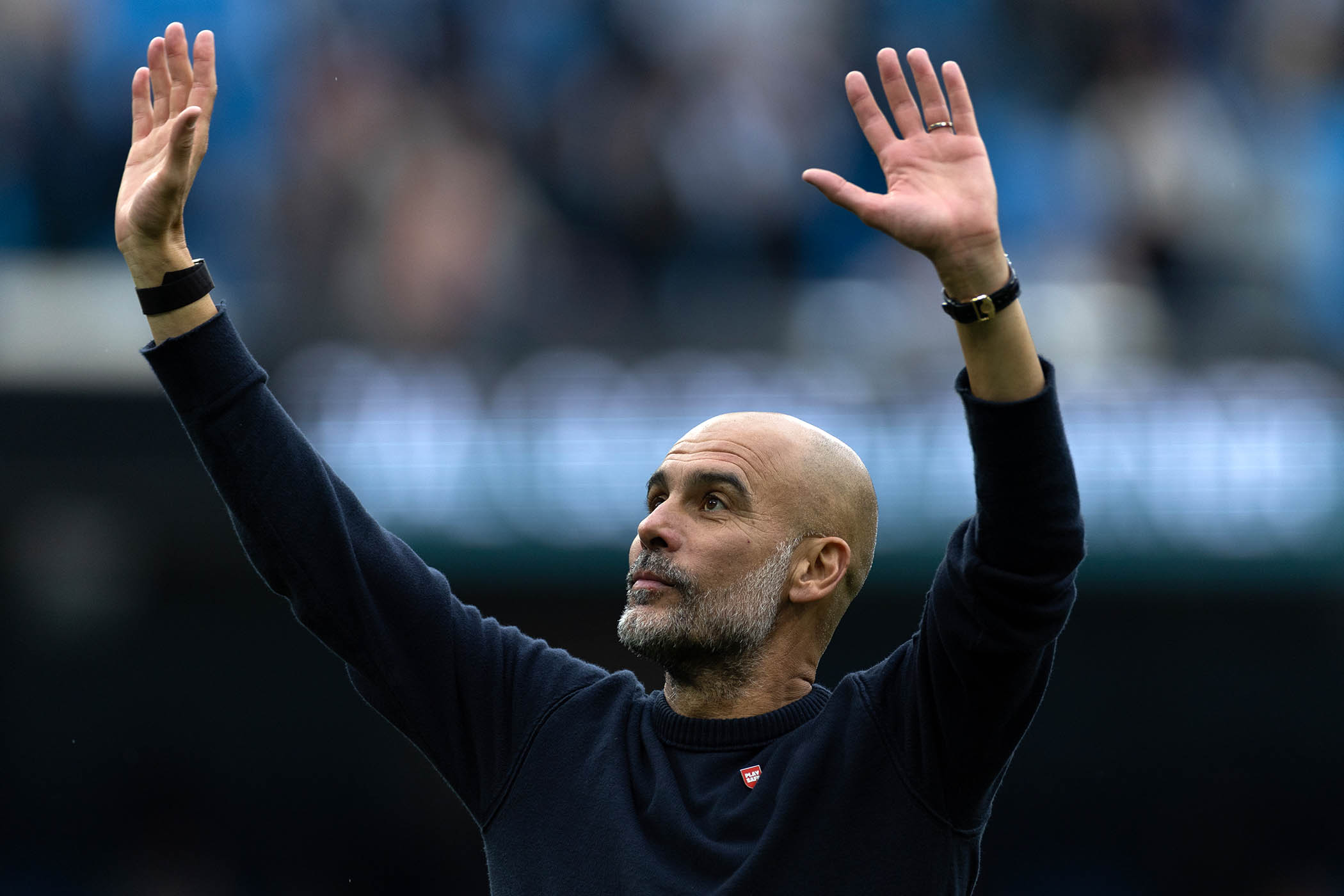
For the last 10 years, it is not just that every goal City have scored, every game they have won, every trophy they have lifted – and there have been 20 of them – has carried the imprimatur of Pep Guardiola. It is that they have all, in some way, been his.
He has been the visionary, the inspiration, the mastermind; the players have just been there to follow his instructions, to bring his ideas to life, not too far off lavishly paid NPCs (Non-Player Characters in a video game). Word order is important. They have been, in a very literal sense, Pep Guardiola’s Manchester City.
We have always thought of coaches, perhaps, as conductors; the reverence for Guardiola, the admiration for his brilliance, took it to another level. If City played what Gary Neville, in a different context, used to call PlayStation football, then Guardiola held the controller, pressed the buttons. Manchester City were a manifestation of intelligent design, and Pep was, well, God.
That held through every iteration of his City, and there have been a few of those, too. Guardiola has inverted basically every position over his decade in England: full-backs, centre-backs, wingers, strikers. He is the manager who dreamed of a team of midfielders, and then played four central defenders for a bit, as if to prove he could paint the Sistine Chapel with a roller. He abolished the centre-forward and made his goalkeeper his playmaker. Then he signed Erling Haaland and Gianluigi Donnarumma.
Every single idea from his ever-fizzing mind has percolated out of east Manchester and into England’s wider football ecosystem. Guardiola’s touch is evident, as Wayne Rooney said this week, at every level of the pyramid. His former assistant, Mikel Arteta, has claimed the Premier League, and will send Arsenal out in the Champions League final next Saturday with a familiar tactical toolkit; there are goalkeepers passing the ball out from the back, with mixed results, in Sunday league football.
All of that is often presented as proof of Guardiola’s legacy in English football – that he has, as Khaldoon al-Mubarak, City’s chairman, put it, “made football better” – but his greatest impact has been more conceptual than strategic.
Newsletters
Choose the newsletters you want to receive
View more
For information about how The Observer protects your data, read our Privacy Policy
It is hard to remember now, but when he first arrived in England, the Premier League was seen as his greatest challenge.
Yes, he had conquered all before him at Barcelona and Bayern Munich, but England had always regarded itself as exceptional, untameable, resistant. Guardiola’s ideas were foreign; so, too, was the idea of having ideas. England did not trust managers with philosophies. He was the final boss for the rainy-night-in-Stoke test.
By passing it so spectacularly, Guardiola has changed the way English football thinks. There is no longer any real doubt that what works in Europe will – or at least can, in the right hands – work here. We are, as a culture, far more likely to be sceptical of a manager who arrives without a distinct vision than one who does. (Within reason, Ruben Amorim.) It has become an essential part of the job description, for both fans and executives.
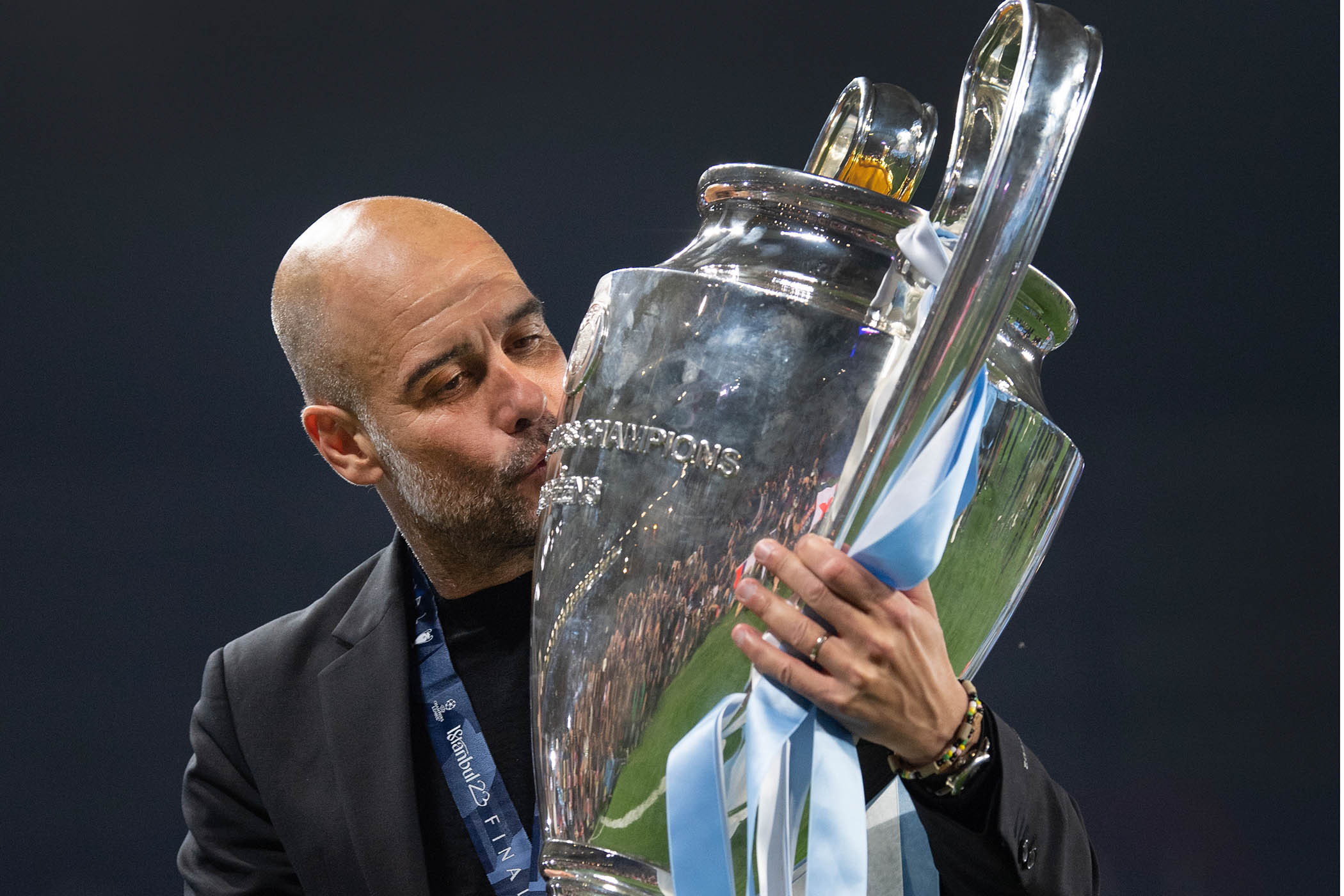
None of them, of course, will ever prove as effective as Guardiola’s, not just because of the depth of his ingenuity and the scope of his imagination but because of the canvas which he was provided.
The club gave him not just the money but the ideal laboratory conditions in which to work. There was no politics, no squabbling, no meaningful limitations. He answered to Ferran Soriano and Txiki Begiristain, both Barcelona alumni, both hired at least in part to smooth the ground for his arrival. Everything was done to his specifications. Until Friday, when City finally confirmed that he has decided it is “his time,” it has for a decade been Pep Guardiola’s Manchester City in a strikingly literal way.
At times – certainly until Haaland’s arrival – that has diminished the role of the players, just a little, as the comparative lack of individual awards suggests. That is the cost. The reward is far greater. Not just in terms of the trophies collected and the honours harvested, but in terms of who takes the credit for them.
Presenting City’s success as a consequence of Guardiola’s undisputed greatness is, after all, a far better story to tell the world than the alternative: that all along this has been a deliberate project bankrolled by and created for the benefit of a nation state or, at least, some people who also happen to run one.
Even leaving aside the 115 charges of breaching financial rules that might one day alter how we regard Guardiola’s legacy – Manchester City, as you will now be well aware, fervently deny all wrongdoing – that aspect of his time in England should not be overlooked.
Guardiola has for a decade produced teams of shimmering beauty. He has used them to deliver an unparalleled haul of silver and gold. He has in the process utterly transformed English football, both on the pitch and to some extent in its soul. He has, in his own words, had “fucking fun” doing it. All of that is true.
But all of it, too, has distracted us from the reality that Pep Guardiola’s Manchester City is a construct of Abu Dhabi’s Manchester City, of Sheikh Mansour’s Manchester City. The fact that he will continue to be connected to the club, acting as a global ambassador to the lesser planets in City’s orbit is a reminder that his glimmer, his shine, has always been a tool – a beautiful tool, a dazzling tool – to obscure what lies beneath.
Photographs by Joe Prior and Visionhaus via Getty Images