
It has been a groundbreaking Women’s Six Nations, no question, in terms of growth off the field. Record crowds in Scotland and Ireland, with another 77,000 turning up for the opening match between England and Ireland at Allianz Stadium.
The great hope was always that the feelgood factor from last year’s Rugby World Cup would attract new supporters. The fact that those numbers have increased outside of England may be the most pleasing development.
Ireland on Sunday will host their first-ever standalone match at the Aviva Stadium in Dublin, with 28,000 tickets sold. Given the dismal state of the relationship between Ireland’s players and the Irish Rugby Football Union at the start of this decade, that is quite the leap forward.
As expected, the title inevitably will come down to the final game in Bordeaux. The script has been followed perfectly in that sense, giving us the two best teams in the competition in France and England facing off with the title on the line in front of a 40,000-plus crowd.
François Ratier’s first tournament leading France has gone well, overcoming slow starts in their first three matches and a run of injuries to their centres, with Gabrielle Vernier and Joanna Grisez missing most of the championship. Build the belief, based on Ratier’s pre-match comments after naming his side to face England, and the performance can follow.
“The goal is to match and dominate them physically in the forwards,” Ratier said about England. No side has done that to England for years, so it is a lofty goal. One that France will have to meet if they want to stop a side who have won their last 37 Tests in a row. France have not defeated England since 2018. Finding that belief when history is against you is not easy.
The returning loosehead prop Ambre Mwayembe certainly gives France added power, one of the most dominant carriers in the competition. In Pauline Barrat, the young fullback, France also potentially have a new superstar, while their young lock Siobhan Soqeta has thrived in her first championship.
England, unsurprisingly given their record, seem fairly serene heading into Sunday’s winner-takes-all affair. They have handled adversity in an admirable way, coping with the absences of many players, especially in the second row, either through pregnancy or injury.
Sometimes, disruption is not always a bad thing. Taking a long-term view, this has been a valuable competition for England in terms of building depth, giving debuts to Haineala Lutui, Demelza Short, Millie David, Christiana Balogun and Haidee Head. England’s system and structures are on a different planet compared to their Women’s Six Nations rivals, but to manage the loss of several key leaders as well as they have done, save for a rusty first half against Ireland in their opener, has been impressive.
“It makes you or breaks you, doesn’t it?” the England captain Meg Jones said this week. “We’ve definitely risen to the challenges. These experiences will put the girls in good stead in years to come. They were big contenders on the world stage anyway. Now they’re fully adaptable.”
Newsletters
Choose the newsletters you want to receive
View more
For information about how The Observer protects your data, read our Privacy Policy
‘Anybody can pick on our weaknesses, but ultimately we’ll look to fix them’
‘Anybody can pick on our weaknesses, but ultimately we’ll look to fix them’
John Mitchell, England coach
Being “the hunted” suits them. Eventually this winning run must come to a close, and maybe Bordeaux is that day. John Mitchell, England’s head coach, discussed managing the pressure that comes from such a long unbeaten run this week.
“We love being the standard bearers of consistency. Somebody’s going to get us. We understand that reality,” he said. “We shouldn’t be disgraced if somebody does get us. That bit of edge drives us. Anyone can pick on our weaknesses, but ultimately we’ll look to fix them. That doesn’t mean we’re in decline – we’re developing and evolving. Maybe we’re evolving a lot quicker than people realise.”
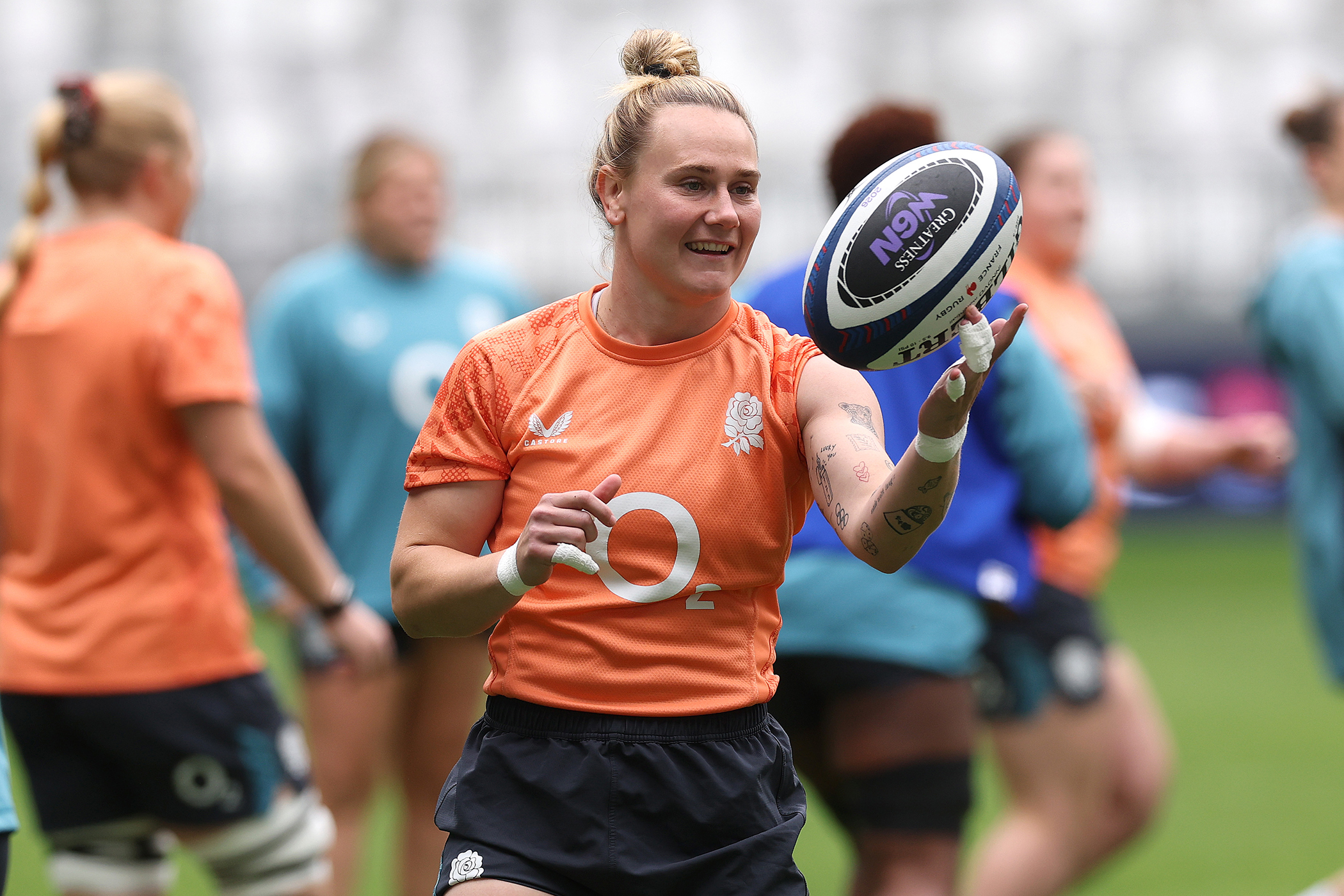
The captaincy transition from Zoe Stratford, expecting her first baby in September, to Jones could not have gone smoother. Jones has been England’s best player and feels like a shoe-in for player of the tournament if England finish the job against France, remaining lethal in attack. No other player in the competition has beaten more defenders, while her passing range has been excellent. “A proper war zone” was how Jones described the physical battle that awaits in Bordeaux, a part of the game she relishes.
Take a step back. What this Women’s Six Nations has lacked, if we’re honest, is a shock. Maybe it comes on Sunday, with France breaking England’s long winning run. Wales flirted with an upset in the opening round. And Ireland forced France into an extraordinary defensive effort when the two sides met in Clermont-Ferrand, with France completing an impressive 231 tackles.
The great hope is that the higher attendance figures in Scotland and Ireland can translate into further investment, and then better resources for players followed by more competitive match-ups.
There have been elements to like about each side. Sean Lynn has given Wales’s pack an edge, threatening sides with their power carries and showing that their maul can become a valuable weapon to fall back on. Few players have hit harder in attack than France’s captain, Feleu, or in defence than Madoussou Fall.
Moments of joy for Scotland may have been rare in this Six Nations, but the roar from a record crowd at Murrayfield when Rhona Lloyd went over against England was pretty special. Can they go to Dublin and cause Ireland problems on their big day? Or can Wales end a tough campaign with a win over Italy, who have gone through this championship with a clear tactical plan, with more box kicks and successful jackals than any other side. Fabio Rosselli’s side would love to add to their big win over Scotland with another win on the road.
And then the finale in Bordeaux. After a Women’s Six Nations where so much ground has been broken off the field, the on-field product can now end on a high.
Photograph by David Rogers/Getty Images