

You could best sum up rugby union in 2025 as lively, a year dominated by two juggernauts on the field, while a threat to the established club game was the talk of the town in the spring before finishing the year as a bit of an afterthought.
The mental anguish England’s women would have faced had they fallen short of winning the Rugby World Cup on home soil is almost unthinkable, having swept all before them in the three years since their agonising defeat in the previous World Cup final in Auckland. Zoe Stratford’s side cleared all hurdles placed in their way. Trailing early in the World Cup final to Canada after Asia Hogan-Rochester’s try, they never wavered. Ellie Kildunne, of course, came up with England’s response to that early setback, the high point in a year in which Kildunne went from talented player to household name.
England with their depth, talent, coaching, home advantage and unbeaten run were always expected to triumph on the field and duly delivered. Yet the real victory however, not only for England but women’s rugby as a whole, is the impact that the 2025 tournament can have off the field. The swathes of young supporters gaining new heroes. More than 80,000 in attendance for a women’s rugby match at Twickenham. Record sales for cowboy hats in London’s south-west. The significant new brand partnerships and sponsorship deals coming into the game.
For Kildunne to finish second in the vote for Sports Personality of the Year, between Rory McIlroy and Lando Norris, felt enormously significant in a year in which the British and Irish Lions won a series for the first time since 2013 and did not even feature in the team-of-the-year nominations. The women’s game in England now not only has Kildunne but a group of superstars – Meg Jones, Jess Breach, Zoe Harrison, Sadia Kabeya, Hannah Botterman and Sarah Bern – all part of a side who have won 33 matches in a row and do not appear to be slowing down. Their return to Allianz Stadium for the Women’s Six Nations in April will be some event.
As for the other juggernaut, that is of course the Springboks, rapidly running out of worlds to conquer after a year in which they secured a record win over New Zealand (43–10 in Wellington) and defeated Ireland in Dublin for the first time since 2012.
Wait, there’s more; winning back-to-back Rugby Championships for the first time, comfortably defeating Italy and Wales with heavily rotated sides while bringing through the next wave of key players in Ethan Hooker and Ruan Nortjé, snuffing out a spirited French side in Paris with Les Bleus hell–bent on revenge for their Rugby World Cup exit in 2023. Oh, and the emergence of Sacha Feinberg-Mngomezulu, potentially the most exciting fly-half that the sport has seen since Dan Carter broke through with the Crusaders and All Blacks to become Test rugby’s all-time leading points scorer. Feinberg-Mngomezulu has some way to go to match Carter’s output, but is the potential there, with Feinberg-Mngomezulu’s combination of running threat and tactical kicking? Absolutely.
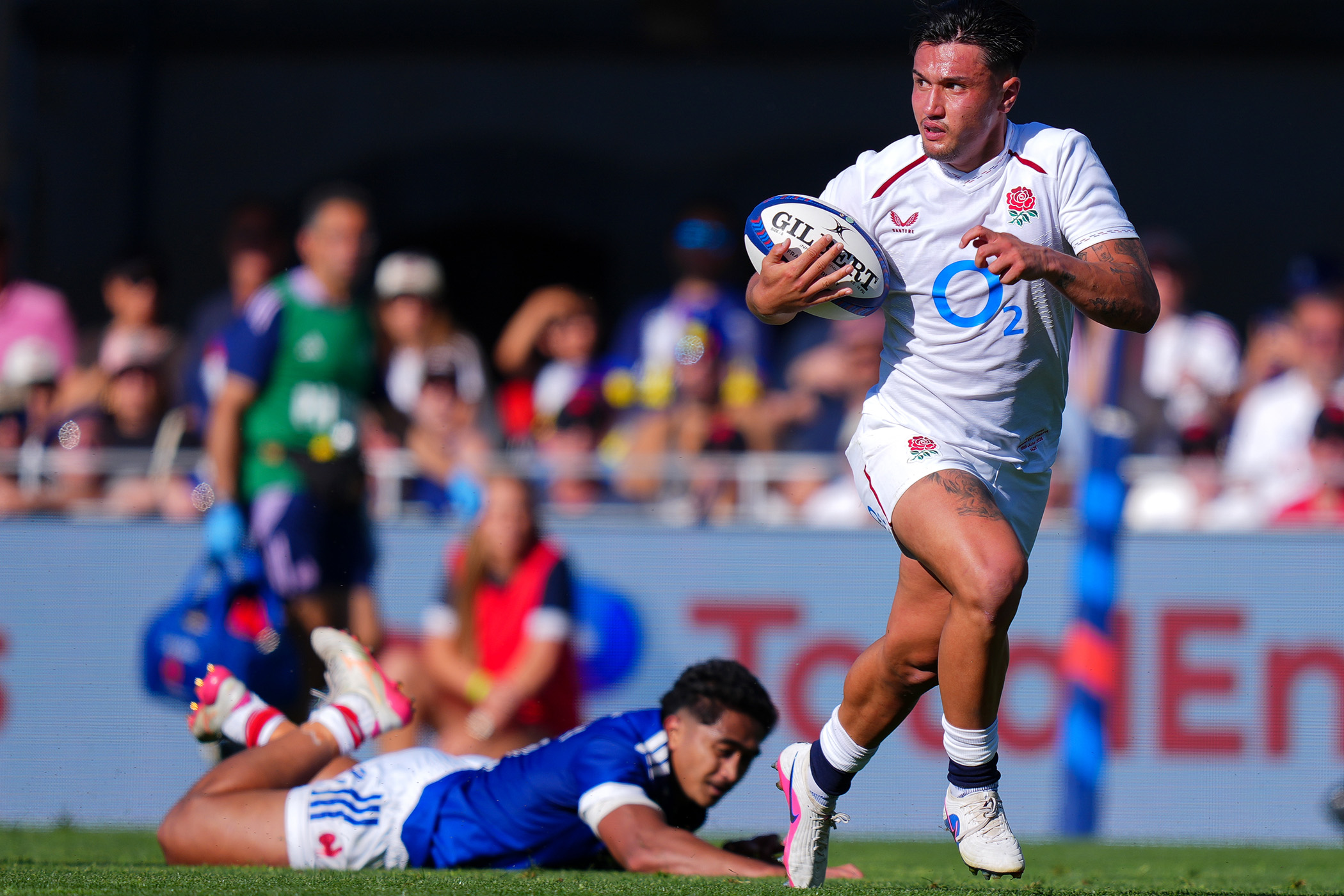
Their closest rival for the 2027 Rugby World Cup may end up being England – winners of 11 straight Tests and coming off a first home over New Zealand at home since 2012. Borrowing a leaf out of South Africa’s book by replicating the Bomb Squad with the “Pom Squad’” – better names must be out there and introduced quickly – has been almost as effective as Henry Pollock’s ability to get in the heads of anyone not on his side. Much like Kildunne, Pollock seems likely to be the face of English rugby for years to come.
England’s attack is coming along, but their strength in depth, improved set-piece and now their composure late in games to finish off matches when they are there for the taking suggests that they can now be taken seriously. Winning a first Six Nations title since 2020 in the coming months would underline that. How Scotland and Wales would love to be in a similar position, with Scotland reeling from a frustrating autumn in which they blew games against New Zealand and Argentina after such a successful summer for many of their players with the Lions. The scale of the Welsh rebuild on and off the field is too vast to summarise here, but Steve Tandy’s squad have taken their first steps up the mountain. A first home win in 833 days, over Japan thanks to Jarrod Evans’ late penalty, was a start.
The Lions’ success in Australia feels like a lifetime ago, a series sealed by Hugo Keenan’s dramatic late try in front of 90,000 at the MCG. Andy Farrell’s Irish core delivered, with Ireland supplying nine starters in that decisive second Test. Dan Sheehan, Tadhg Beirne and Maro Itoje all had outstanding tours, while the warm–up fixtures lacked enough bite other than when the Lions faced the First Nations & Pasifika XV.
Domestically, Bath ended a near three-decade wait to become champions of England again, led brilliantly by Ben Spencer and Finn Russell. Gloucester-Hartpury might be the best value for money watch in the country, with “The Circus’” securing a third straight Premiership Women’s Rugby crown in Sean Lynn’s final season.
Newsletters
Choose the newsletters you want to receive
View more
For information about how The Observer protects your data, read our Privacy Policy
Leinster’s perplexing four–year wait for major silverware came to an end by winning the URC title, while Toulouse without the injured Antoine Dupont won a thriller of a Top 14 final in extra time against Bordeaux Bègles, denying UBB a famous double after they had defeated Northampton Saints in the Champions Cup final.
The wave of transfer activity in recent weeks – George Martin, Joe Marchant, Jac Morgan and Dewi Lake are among the big names on the move next season – follows news that R360, the breakaway competition hoping to revolutionise the club game by recruiting top players to play for new franchises, has been delayed until 2028, after players were informed by their unions that they would be barred from playing Test rugby if they jumped ship. R360 is certainly not dead, and the rumblings and negotiations will continue. But for now the game’s existing structures remain intact, with the next men’s Rugby World Cup in Australia creeping onto the horizon.
Photography by Gareth Fuller/PA Wire