The one thing sport does better than entertaining is spending other people’s money. Oligarchs and private equity queue to buy into sport’s guaranteed revenues and inflate them even more. There is no epiphany greater than a whole nation state worth $1.3tn (£1tn) asking: “How much would you like?”
Saudi Arabia’s surge into elite sport, wrongly characterised as “sportswashing”, has generated huge pay days for boxing, football, motorsport, tennis and esports. But that was then, this is now. Even snooker said this week it feared a retrenchment, with Barry Hearn, its top impresario, muttering: “Saudi is a problem.”
The House of Saud’s vast Public Investment Fund (PIF) wasn’t the first luxury state conveyance. British Flat racing was pretty much saved by Gulf money, especially from the ruling Maktoum clan of Dubai. Manchester City’s eight Premier League titles since 2008? Without Abu Dhabi’s wealth, it doesn’t happen. The same for Chelsea’s five English titles and two Champions League trophies under the now sanctioned Russian oligarch, Roman Abramovich.
Relegated to League One, where they will play Bromley next term, Leicester City were booed both on to the pitch and off it on Tuesday night, 10 years after winning the Premier League, courtesy of a Thai tycoon’s wealth.
Saudi Arabia apparently backing away from its $5bn investment in LIV Golf, though, is a different order of magnitude. It underscores that throwing wealth at sport isn’t philanthropic. It comes with strategic aims that can be upended overnight. And it can be a waste of money, as the Saudis discovered with their alternative golf circus, which isn’t expected to survive beyond this year. In its 2026-2030 spending cycle, Saudi Arabia says it is prioritising investments that can make a return, which doesn’t sound good for Bryson DeChambeau’s reported hopes of securing a new $500m LIV deal.
The ground is shifting. PIF offloading 70% of the Saudi Pro League club Al-Hilal was hardly a fire sale. The buyer is a firm owned by another Saudi royal. But PIF’s majority stakes in three other domestic clubs will also be offloaded. Naturally Newcastle fans who watched Alexander Isak leave for Liverpool are now awaiting what might be called the Anthony Gordon test.
Newcastle were never Saudi Arabia’s Geordie dreamboat: more a power flag stuck in the world’s most-watched league. Fifa has been an easier route to domination. LIV was an attempt not to join the party but to own it. Now the Saudi zeal for annexation is cooling.
‘Sportwashing’ is a term the west uses without realising most gulf states don’t care what we think
‘Sportwashing’ is a term the west uses without realising most gulf states don’t care what we think
The Middle East war is cited as a reason for the recalibration. We would have reached this point irrespective of rockets and bombs. Military conflict merely provides extra cover for decisions that may reflect Saudi Arabia’s belief that the soft power work is already done. Understandable – when Fifa hands it the 2034 men’s World Cup without a bidding fight.
PIF was never intended to be a charity to make Tyson Fury’s life more opulent or expand the luxury car collections of Florida-based golfers. The purpose was to buy into safe, revenue-rich businesses with a strong profile that would withstand long-term economic turbulence. “Sportswashing” is a term the west throws around without recognising that Gulf states mostly don’t care what we think about their human rights records.
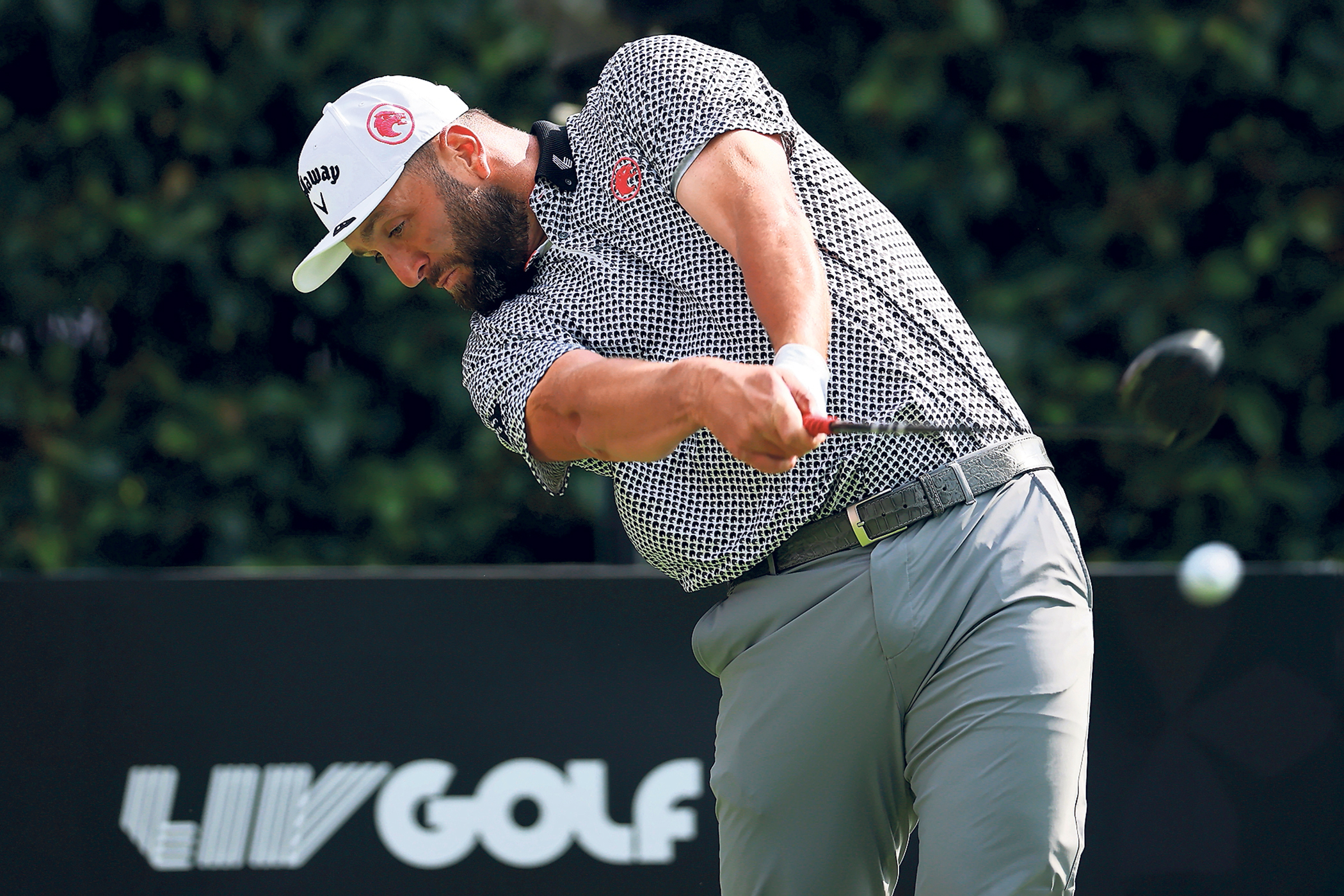
Jon Rahm, who signed a $300m deal with LIV, is a handy golfer, but owning him is not going to change the world. The blue sky thinkers behind LIV may have had a point when they said golf was a staid sport in need of modernisation. But when it runs up against The Open, or Rory McIlroy winning two Masters titles in a row, LIV just feels like a stunt dreamed up for the attention-deficit generation.
Newsletters
Choose the newsletters you want to receive
View more
For information about how The Observer protects your data, read our Privacy Policy
It all began in June 2022 with a £25m contest at the Centurion Club in London, with 26 of the world’s top 150 players – five months after Phil Mickelson had described LIV’s backers as “scary motherfuckers to get involved with”. Four days later Mickelson apologised and said he was taking “time away to prioritise the ones I love most and work on being the man I want to be”.
Another lively precursor was Greg Norman being asked about the murder and dismemberment of the journalist Jamal Khashoggi, and replying: “We all make mistakes.”
But from there LIV seemed to be on the road first to a takeover of the PGA and world tour bodies, then to a merger, which stalled without explanation. Then things changed in Riyadh. What passes for austerity in Saudi sovereign wealth thinking decreed that shelling out billions for no significant return isn’t a smart bet.
It was never going to last for ever because the benefits were too heavily weighted on sport’s side. So now the PGA in America has the hilariously named “Returning Members’ Programme”, a re-education service for humiliated defectors, set up when Brooks Koepka asked if the old circuit would take him back.
The cry of “all aboard the gravy train” is no longer ringing out across the sports business industry and through locker rooms. History suggests there will be another one along soon. It’s worth remembering, though, that it’s never a free ride.
Photograph by Héctor Vivas/Getty