
Put it this way; when Wales and Scotland run out at the Principality Stadium on Saturday, any issues they may have faced in the buildup will have felt paltry compared to the off-field fires both teams have had to fight in recent years. Not with external parties, either. With their own unions.
Let’s start with Wales who, as you may recall, were threatened in 2024 with being withdrawn from the WXV Global Series matches the following summer - therefore making them ineligible to participate in last year’s groundbreaking Women’s Rugby World Cup - unless they agreed to sign new contracts within a three-hour deadline. The ominous sign-off from Nigel Walker, then executive director of rugby of the Welsh Rugby Union (WRU), was direct: “We are not bluffing.”
An investigation by The Telegraph paved the way for a full WRU review and grovelling apology. "There are some sweeping criticisms in the report as well as some strong recommendations of what we need to do differently. It is absolutely clear that we do need to apologise and engage with the national players over the recommendations,” said the WRU chair Richard Collier-Keywood.
The players’ requests for a bespoke, performance-based maternity policy, upgraded salaries, a guaranteed rugby boot allowance and nutrition supplements, had all been turned down, while the chief executive, Abi Tierney, also did not want to pay for travelling reserves on match days. Those disagreements combined with a failure to communicate effectively with the Women’s Rugby Association, negotiating on the players’ behalf, left players “becoming unwell physically and mentally,” according to the then Wales captain Hannah Dallavalle (née Jones).
The appointment of Sean Lynn, architect of Gloucester-Hartpury’s three-peat in Premiership Women’s Rugby (PWR) and familiar with several of the Wales players, was a positive step. Except 2025 effectively became a write-off with Lynn trying to get Wales up to the required fitness levels. Even if a win in Australia last summer suggested an upward curve, the subsequent World Cup was then a total disaster, losing to Scotland 38-8 before defeat to Fiji in their final pool match dropped Wales to their lowest-ever ranking of 12th in the world. “You definitely can't say they've failed,” said Belinda Moore, then the head of women's and girls' rugby at the Welsh Rugby Union. Few agreed.
Going from being “bullied off the park” by Scotland in the pool stages, as Lynn put it, to being now somewhat competitive would mark significant progress in Lynn’s second year in charge. Wales still face some teething issues. Having a number of players in the PWR is great but getting them on the field has been problematic, particularly if you are Sisilia Tuipulotu, stuck behind England’s Maud Muir. Lleucu George, set to start at fly-half, is an exception, getting regular minutes for high-flying Gloucester-Hartpury. And the return of Alisha Butchers-Joyce, after giving birth in November, is a welcome boost too.
Given Wales failed to win a game in last year’s Six Nations, a historically bad campaign, the bar for progress is pretty low. Lynn has rebuilt his squad - nine uncapped players, new assistant coaches. A similar path to the men’s side in their Six Nations, showing steady progress while picking up a win along the way, would be most welcome. "We too are building, we just want to make the nation proud of the women's game,” as he put it.
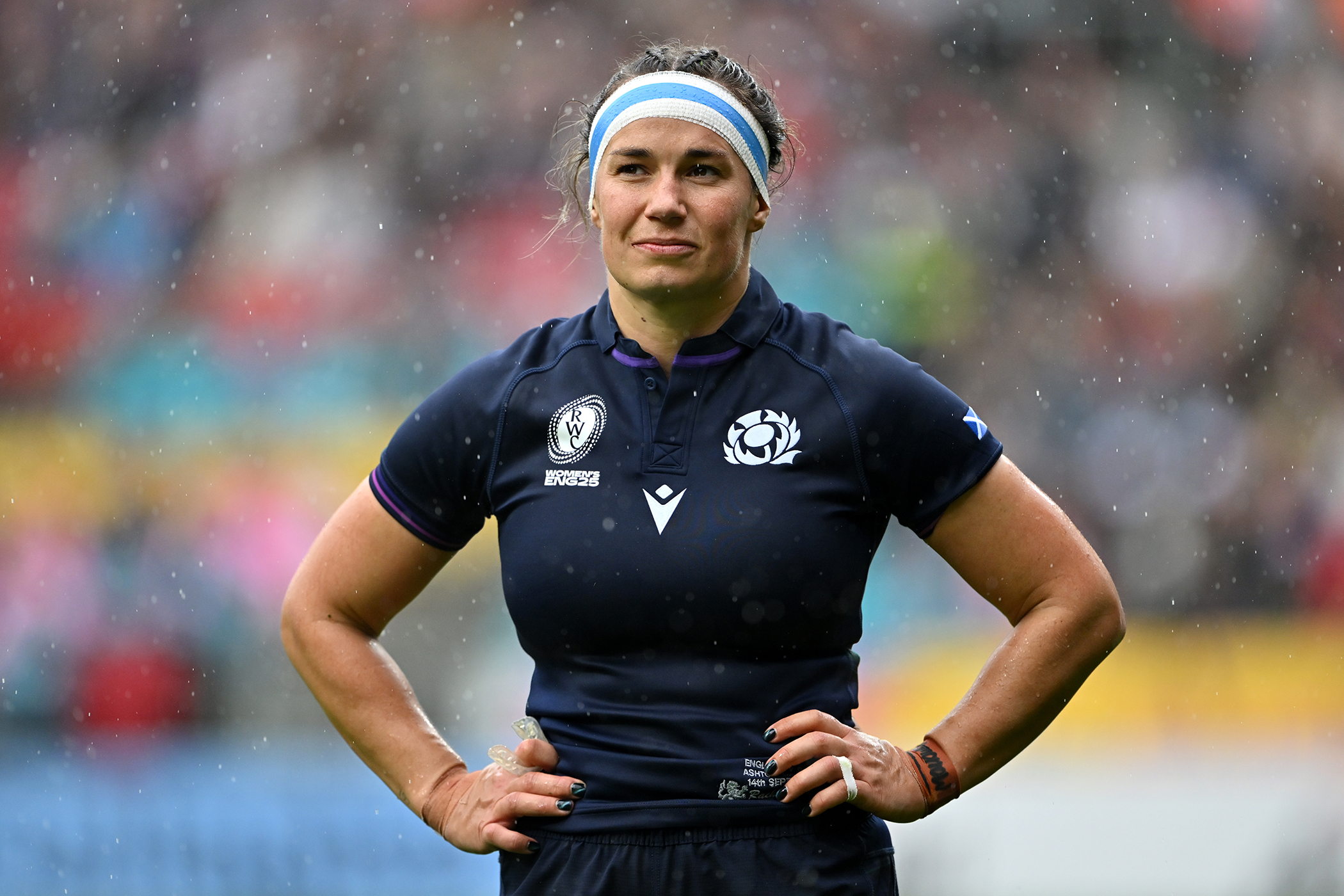
As for Scotland, the sense of frustration after their own Rugby World Cup exit was palpable, with outgoing players like the retiring Jade Konkel heavily critical of the way the Scottish Rugby Union handled their own contract situation going into the tournament.
The players and their coach, Bryan Easson, reached Scotland’s first World Cup quarter-final for 23 years, despite going into the tournament knowing that Easson would not be retained and that only 15 players out of the squad of 32 picked for the World Cup had been offered new contracts lasting beyond the tournament. “The fact that we made it to a quarter-final is – I'm not going to lie – through no help of the SRU,” Konkel said on her way out.
The SRU’s ambition is to entice Scottish players based outside the country back home from the PWR or France to play for one of Glasgow or Edinburgh in the Celtic Challenge – the cross-border competition dominated by Ireland - with the lure of a new high performance programme for Scotland’s Women at Oriam, Scotland's national performance centre for sport. Which all sounds great. The execution, however, left plenty to be desired.
Newsletters
Choose the newsletters you want to receive
View more
For information about how The Observer protects your data, read our Privacy Policy
“They've made our build-up to this really challenging, mentally and emotionally," Konkel continued. "We appreciate the long-term plan, but the timing of it was less than ideal. People were doing job interviews and worrying about what they'd be doing post-tournament. Respect us. Know that this is a programme that we pour our life into.”
The foundations put in look impressive. The first managing director of women's rugby and head of women's performance and pathways have been hired. A total of 35 contracts were (eventually) handed out, with 17 going to players based in the PWR and France. And ticket sales for the date with England at Murrayfield on 18 April, set to break the record for a standalone women’s sporting event in Scotland, have now surpassed 25,000.
Rachel Malcolm, Scotland’s captain now for over 50 Tests, said this week: “We’ve always been about growing the game and we’ve been so passionate about how great it [women’s rugby] is, but for a while it was just us shouting about it and nobody was listening. Now it feels like people are listening and people have got eyes on it.”
The start of a new cycle, as Malcolm hinted recently, means that not everything will run smoothly, as Scotland embark on a new era under head coach Sione Fukofuka. But when you consider the effort that Wales and Scotland have had to put in off the field in recent years, the lengths they have had to go to with their own unions to fight for what they deserved, then how can you not feel positive about their respective futures.
Photograph by Dan Mullan/Getty Images