
Serhii Palkin can just about remember being the chief executive of something approaching an ordinary football club. Shakhtar Donetsk might always have been more ambitious and more successful than most, but the issues that crossed Palkin’s desk were, at heart, football problems: players to sign, contracts to negotiate, managers to hire, managers to fire.
He did not, for example, have to contend with games being interrupted – sometimes on multiple occasions – by the threat of Russian drone strikes. He did not have to think about how to keep his players happy because they are sequestered in a hotel which, often, they are allowed to leave only for training. He, and they, did not have to take a bus to the Polish border in order to get to a European home game. They did not dread the sirens wailing, the “nightmare” that endlessly disturbs their sleep.
Nor did Palkin find his club cast as an emissary for the Ukrainian cause, a symbol of resistance, a chastening reminder to the rest of Europe, in particular, of the bloodshed unfolding in the continent’s eastern reaches. He did not have to think about staging benefit matches to raise money for families displaced by war, or to build air raid shelters.
Palkin and Shakhtar have accepted the role, of course. What else would they do? They have played exhibition games across the continent, raising money not only for those displaced by the war but to raise funds to protect those left behind. “Social projects,” Palkin said, are now at the heart of much of what Shakhtar does. The club has championed the story of Roman Oleksiv, pictured on The Observer’s sport cover this week (below), who was eight when a Russian cruise missile struck the building in Vinnytsia, in central Ukraine, where he and his mother were waiting for a doctor’s appointment. His mother was killed. Roman survived, but suffered shrapnel wounds, a broken arm, and burns to 45% of his body.
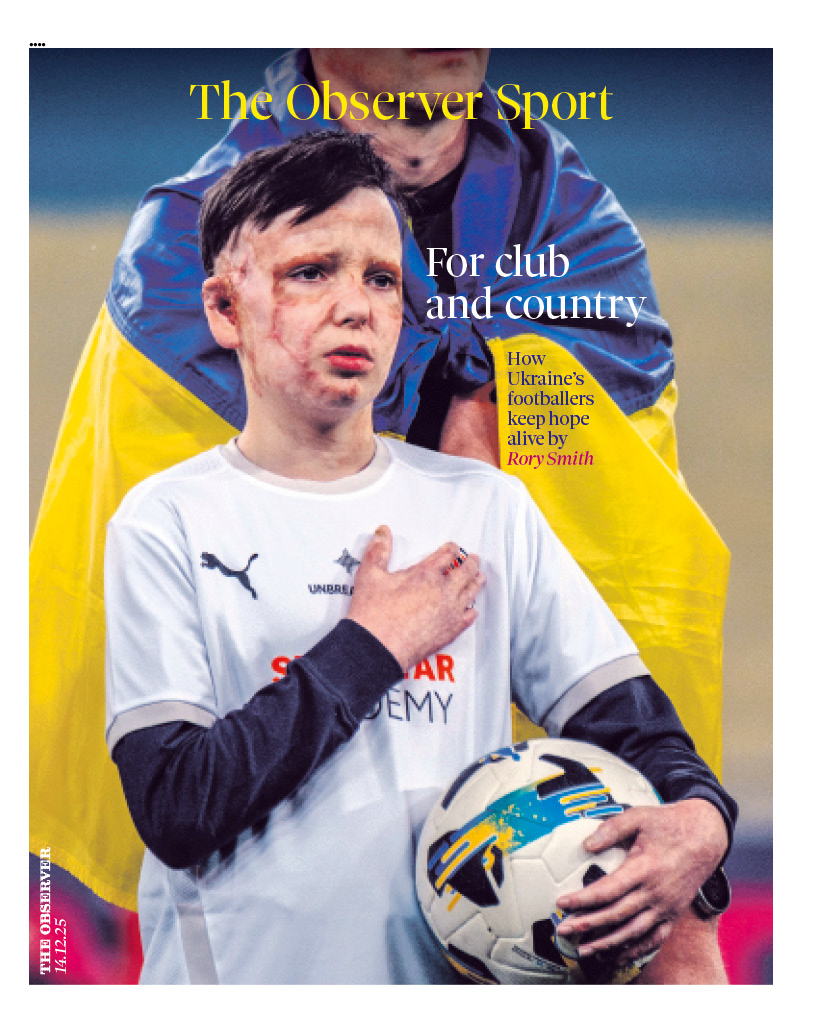
He is, as Shakhtar’s longstanding sporting director Darijo Srna has put it, a “true Shakhtar fan”. Now 11, he has been invited to several of the club’s games, and spent time with the players. Last month, he was a mascot for Shakhtar’s meeting with Dynamo Kyiv. Shakhtar have not made any attempt to shy away from what the club sees as its duty.
“We are more than a football club,” Palkin said last month. “We do a lot of social activity for our country. Sport is how people know Ukraine: not just through football, through Shakhtar, through Dynamo Kyiv, [Andriy] Shevchenko and [Serhiy] Rebrov, but the Klitschko brothers and [Oleksandr] Usyk, too. Just football is not possible for us.”
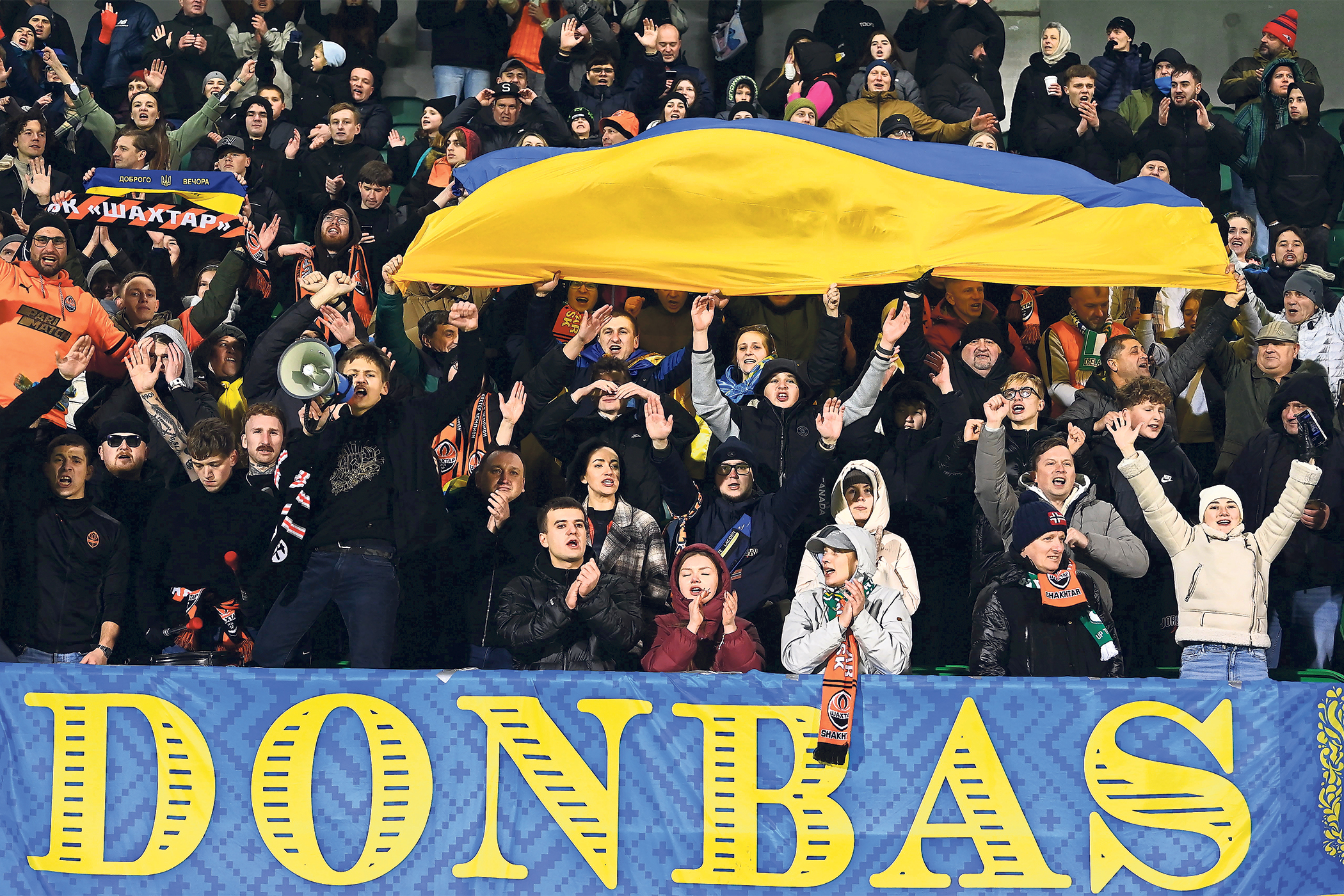
That has been his reality – and that of his club – for some time. Shakhtar’s plight extends further back than Russia’s open invasion of Ukraine in February 2022. The club was forced out of Donetsk in 2014, when squadrons of “little green men”, Russian soldiers stripped of their insignia, moved into the Donbas. Shakhtar have been a refugee team ever since, playing domestic games in Lviv, European fixtures in Germany or Poland, and keeping an office in Kyiv.
Russia’s full-scale assault turned Shakhtar’s crisis into Ukrainian football’s. The risk of drone attacks means there are strict limits on the number of fans allowed to attend domestic matches in the Ukrainian Premier League. Television revenues, as Palkin put it, have been “non-existent”. Games are, even now, delayed or postponed when the air raid sirens wail.
Most damaging of all, to many, was Fifa’s decree after the invasion that all foreign players contracted to either Russian or Ukrainian clubs were free to break their contracts if they so chose.
‘We built a team from scratch, just Ukrainian academy players. Still we won the championship’
‘We built a team from scratch, just Ukrainian academy players. Still we won the championship’
Serhii Palkin, Shakhtar Donetsk
Three years on, Palkin is still clearly furious about it. Shakhtar’s primacy in Ukraine had long been built on the club’s ability to pluck emerging talent from Brazil and sell it on, for a considerable profit, to the major leagues of western Europe. Fernandinho, Elano, Willian and many more all found their way to the Premier League, or elsewhere, through Donetsk.
Newsletters
Choose the newsletters you want to receive
View more
For information about how The Observer protects your data, read our Privacy Policy
“We still had outstanding transfer fees that we owed to other teams,” Palkin said. “Suddenly we had €40m debts to pay, clubs asking where the money was, but the players had just been allowed to go.” Shakhtar appealed the decree, and then took the case to the Court of Arbitration for Sport, seeking £43 million in damages. The country’s major clubs were affected more than most but Fifa’s ruling, as Shakhtar said in their appeal, ran the risk of “destroying Ukrainian football”.
Since the full-scale war began, it is in that role – as what Palkin calls one of the “public faces” of the country – that Shakhtar have most frequently been cast, particularly in the rest of Europe.
The club was the subject of an Emmy-winning documentary, Football Must Go On, which aired on Paramount+, as well as a six-part podcast series from The Athletic, Away From Home. Palkin is currently in discussions to turn the story of the first few months after the invasion into a feature film.
“We had to build a team from scratch, just from the Ukrainian players in our academy,” he said. “We had lost all of our players, and with these kids we still won the championship and played in the Champions League. It will end with the game when we beat RB Leipzig 4-1 [in September 2022]. The scriptwriters say that they have never seen a story like it.”
The war, of course, remains front and centre in Palkin’s mind. The first few weeks of winter, he said, have been especially cold in Ukraine; his fear is that Vladimir Putin’s forces will deliberately target the country’s power infrastructure, hoping to break the people’s resolve by freezing them in their own homes.
In that context, the chance to think about work, about football, about the challenges that Shakhtar face, comes almost as something of a relief. Palkin, you sense, relishes the opportunity to think about something else, to discuss something that – after more than two decades running Shakhtar, and half of that time displaced – must feel reassuringly normal.
To characterise it as a distraction, though, would not be fair. There is, in many ways, no more eloquent expression of Ukrainian defiance than the fact that after all they have been through, after all they have suffered, the league plays on. Ukrainian football has been reduced, but it has survived. Shakhtar Donetsk still wants to win football matches.
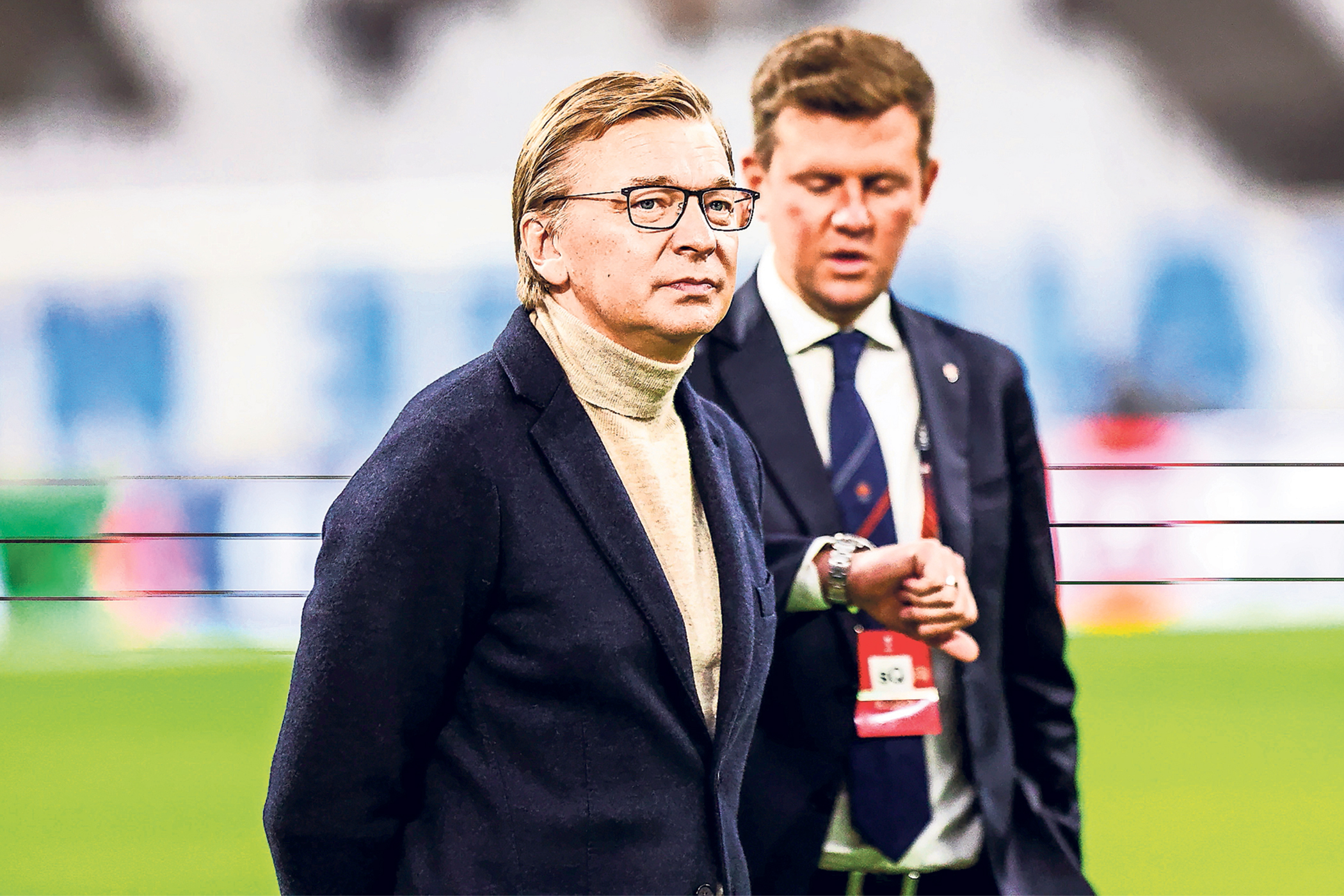
The team, now managed by the former Barcelona midfielder Arda Turan, is level on points at the top of the Ukrainian Premier League and well placed to reach the knockout stages of the Uefa Conference League. Most importantly, given their financial constraints, they have been able to restore their connection to Brazil.
Turan’s squad contains 12 players brought in from Brazilian clubs; the balance, “half Brazilian, half Ukrainian”, as Palkin put it, is an echo of what was their hallmark.
Repeating the trick has brought fresh challenges, of course. Though the club’s track record can be persuasive, Palkin now does not just have to answer “financial, economic and sporting” questions from prospective recruits, but ones concerning their safety, too.
“I was talking to a player, a 17-year-old, a few months ago,” said Palkin. “Everything was in place. But the parents said no.” He shrugged as he recounted the story, more in resignation than acceptance.
That is not the only complication. “Before, our competition in that market were teams like Benfica and Porto,” he said. They, like Shakhtar, were Europe’s springboard clubs: the places where talent from South America cut their teeth and honed their skills before moving on to broader horizons.
Now, though, the landscape has shifted, squeezing Shakhtar and those other teams that might be regarded as Europe’s middle class on both fronts.
On the demand side, those clubs who traditionally sit above them in the transfer market’s food chain have grown sufficiently expert to cut out the middleman: Real Madrid signed Vinícius Jr, Rodrygo and most recently Endrick from Brazil; Chelsea have done the same with the likes of Estêvão Willian and Andrey Santos.
There has been a change in terms of supply, too. Since the introduction of a law encouraging private investment into Brazilian football, that country’s clubs are increasingly flush with cash, not only allowing them to retain players for a little longer, but to pluck them from the smaller sides that might once have sold to Shakhtar.
“Now, prices are much higher,” said Palkin. “Real Madrid and teams in the Premier League are taking the top talents directly. Players that used to cost €15m are now €40m. And the Brazilian clubs are very rich, too. Flamengo have a budget of €200m. They can pay big salaries.”
Shakhtar have, gradually, started to acclimatise to this new reality. The sale of the midfielder Kevin to Fulham for £34.6m last summer felt like a watershed. Palkin is confident they have two or three more who will command similarly premium fees: the forward Kauã Elias, for one, and the attacking midfielder Isaque. “They can make the jump,” he said. “Some of them. Maybe all of them.”
They will, admittedly, have to go a little sooner than their predecessors might have done. Transfer revenue is one of only two ways that Shakhtar can generate the income required to keep the club afloat; along with the prize money they earn from competing in Europe, it is what allows Shakhtar to act as one of the “public faces” of Ukraine.
That means, Palkin said, that the club’s investments in players have to pay off “much quicker”.
“Because of the war, we do not have time,” said Palkin. Kevin stayed 18 months. Willian, almost two decades prior, was there six years.
It is not, perhaps, how things would work in an ideal world. But Palkin and Shakhtar, and the rest of Ukraine, have long known that they do not live in an ideal world.
For now, all they can do is what they have always done: against all odds, they can continue to be a football team.
Photograph by Stephen McCarthy/Sportsfile and Johnny Fidelin/Icon Sport via Getty Images