
The Weekend Stat: England have bowled a total of 377.1 overs in the first three Tests. They have never bowled fewer deliveries in the first three Tests of any Ashes series in Australia.
There is a chance that by the time you read this, unless the lower order have concocted an other-worldly cricketing miracle, or Australia have refused to emerge from the pavilion in a protest at the marginalisation of spin bowling in county cricket, or an asteroid strike has ended all life on earth and caused the match to end as a draw, England’s combined record in the first three Tests of their last 10 trips to Australia will read: Played 30, won 1, drawn 4, lost 25.
It will be the sixth time out of seven that England have been 3-0 behind after three Tests in Australia, the ninth out of 10 that the Ashes have been lost with two matches to play. They will have recorded the worst ever 18-Test sequence by a team in Australia – New Zealand are the only other team with an 18-Test winless run in Baggy Greenland (in between a superb series victory in 1985-86 and a dramatic seven-run win in Hobart in December 2011), but the Kiwis drew eight of those matches, whereas England have avoided defeat only twice, one of them narrowly.
The batting – statistically, and according to the world rankings, a mixture of the great, the good and the decent – has, strikingly, failed. England have had plenty of starts – 18 innings of 30-plus (two more than Australia, with power to add, albeit probably pointlessly). Unless one of England’s lower order reaches three figures, Joe Root’s 138 not out in Brisbane will have been England’s only century in the first three Tests. Harry Brook has now played eight Ashes Tests. He has scored at least 45 runs in each game, but never had a match aggregate of 100. He has reached 30 in 10 of his 15 innings against Australia, but has only two scores over 65 (both of which did make significant contributions to England victories in 2023), and no hundreds. Against all other opposition, Brook has converted 10 out of 23 scores of 30-plus into centuries.
Between them, Crawley, Duckett, Pope and Brook have reached 30 on 30 occasions – Crawley’s 189 at Old Trafford in 2023 is their only Ashes century. Against all other teams, they have a combined total of 29 centuries from 107 innings of 30-plus. Root has five Ashes hundreds, having reached 30 on 28 occasions; against non-Aussie opposition, he has converted 35 of 94 innings in the 30s into centuries. In all Tests this millennium, England’s 30-to-100 conversion rate is 11% against Australia, and 19% against other teams combined. Such is the challenge of Australia.
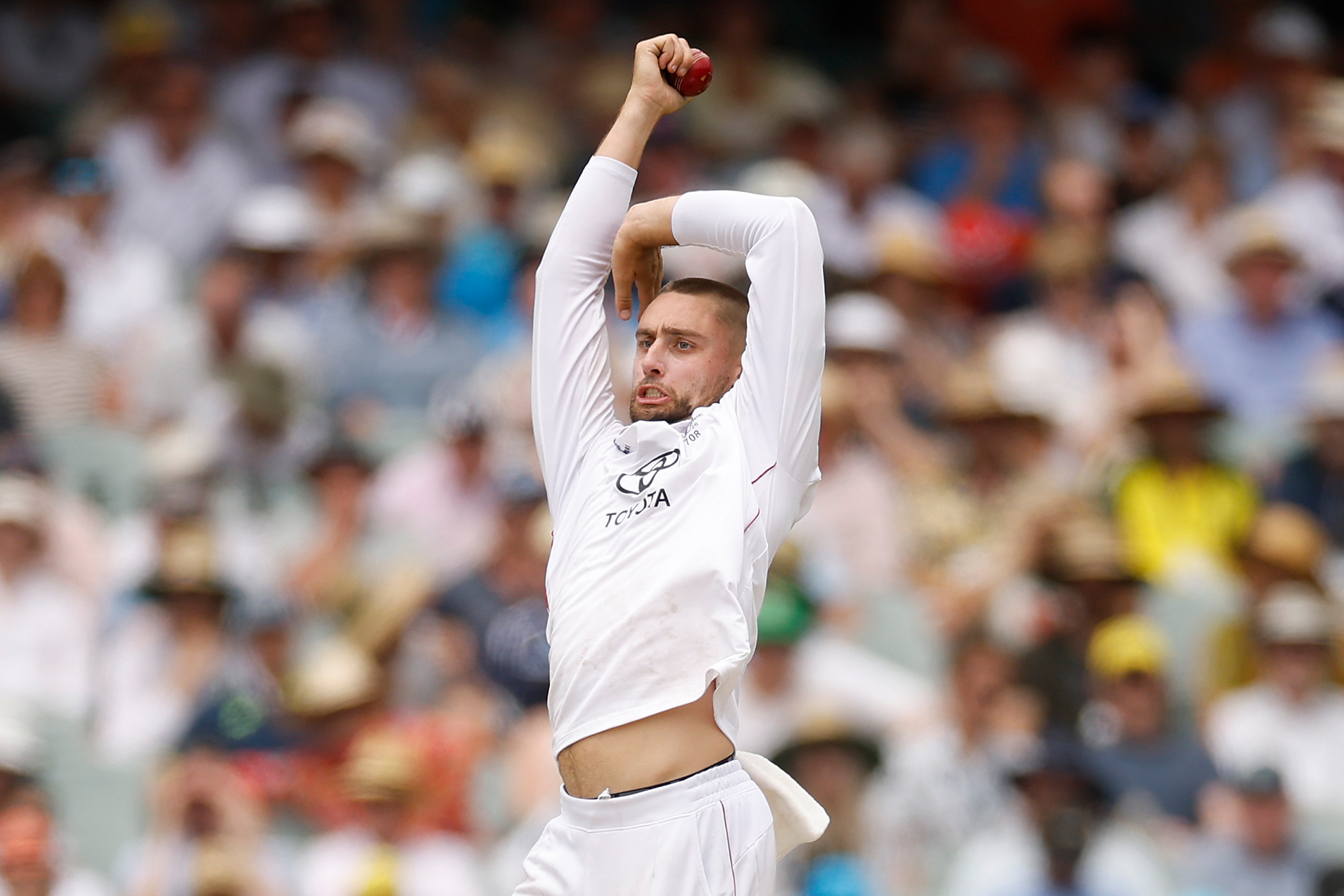
A good start to an English innings is, by a vast margin, far less likely to lead to a significant score. England, by contrast, have allowed any pressure on Australia’s batting line-up to evaporate. Will Jacks, a fine cricketer instructed to do someone else’s job, conceded more than five runs per over in both innings. He had 49 first-class wickets before this series, by far the fewest of anyone ever tasked with being England’s frontline spinner in a Test in Australia. He at least had the consolation of joining Shane Warne and Ian Botham in a stat. The last bowler to concede 100 in both innings of an Ashes Test was Warne in 2005, and the last to do so for England was Botham in 1981. Warne took 12 wickets, Botham 10, in those games. But a stat is a stat, and Jacks is in it with two cricketing legends.
England bowled 27 consecutive overs of spin from the River End on Friday, delivered by Jacks and Root, who between them now have 152 wickets in 294 first-class matches. Nathan Lyon has 860 in 238, including 567 in 141 Tests.
It is something of a mystery why England persisted with part-time spin on the third day when they took Australian wickets. When Marnus Labuschagne was out, Australia, with an 85-run first-innings lead, were effectively 138 for 2. When Cameron Green was out, they were 234 ahead and four wickets down. Another wicket or two would have put England in a decent position.
By historical standards, England’s seamers have not had a heavy bowling workload. Before this series, the next-fewest overs an England bowling attack had delivered in Australia at the same stage of a series was 409.1 overs, on their last tour here in 2021-22. In the previous five Ashes tours, the average amount of bowling for England in the first three Tests of series in Australia is 540 overs – in effect, two more full days of bowling than they have had to do on this trip. In the 20th century, the average was the equivalent of 611 six-ball overs. England’s most-used bowlers – Brydon Carse and Jofra Archer – have each bowled 80 overs. Darren Gough, in 1994-95, bowled 153 overs in the first three Tests, taking 20 wickets, average 21. Jimmy Anderson had bowled more than 120 overs by this stage in 2010-11, 2013-14 and 2017-18. In a different cricketing epoch, Sussex’s medium-pace maestro Maurice Tate bowled the equivalent of 223 six-ball overs in the first two Tests in 1924-25.
Legitimate questions can be asked about why a team who had consistently played high-risk, moment-seizing, proactive cricket for three and a half years, did not attack with their most potent weapons at their last genuine shafts of opportunity. They had won matches from worse positions when bowling in the third innings (including one last summer, at Headingley against India, when they were 339 behind with six wickets still to take). But Stokes and England did not unleash pace from both ends. There was no discernible attempted surge through the openings created, part-time spin continued and the moments passed.
Newsletters
Choose the newsletters you want to receive
View more
For information about how The Observer protects your data, read our Privacy Policy
Photograph by Darrian Traynor/Getty Images