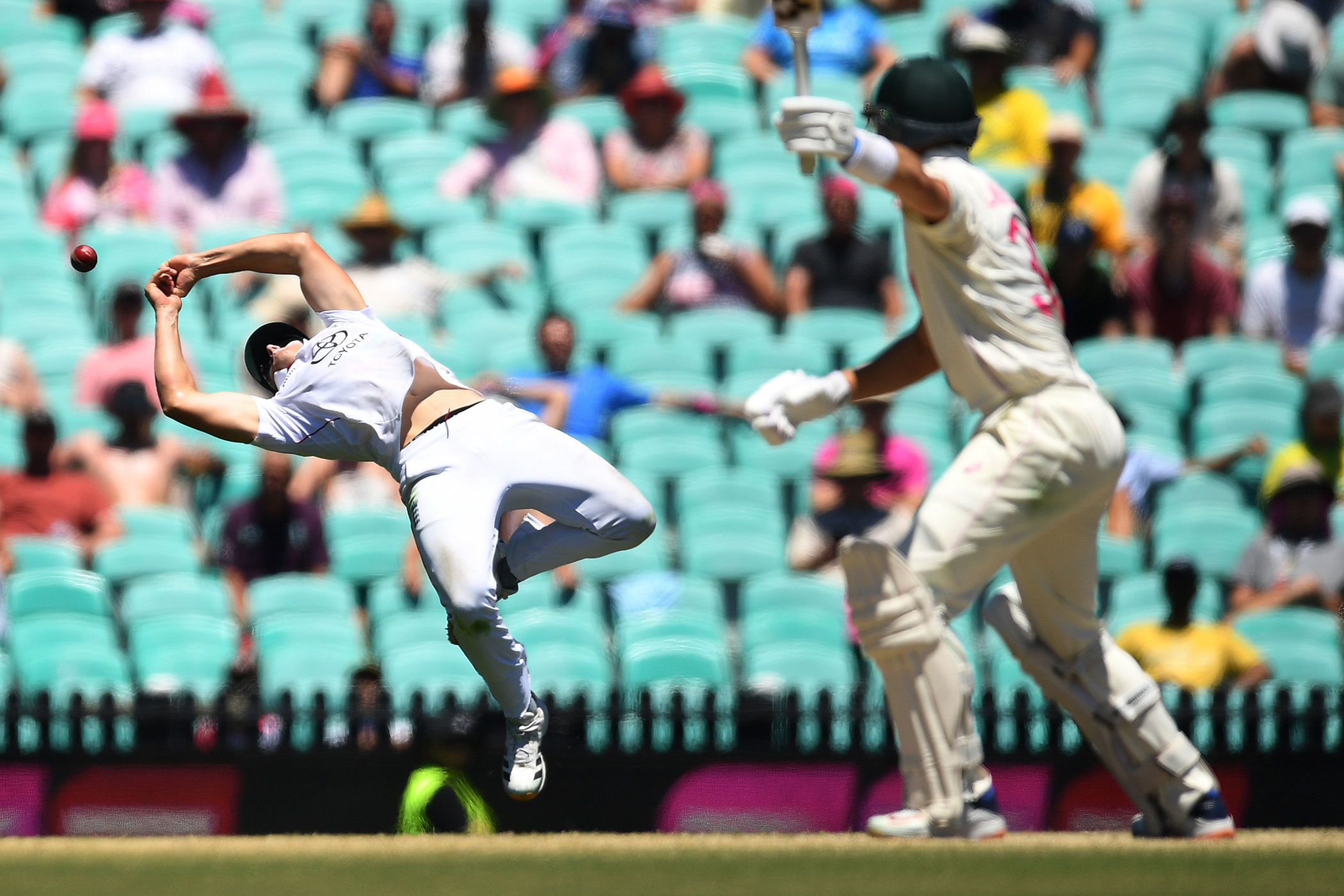


It was an innings that begged a hundred questions – 154 of them, to be precise. What if England had backed the preternatural talent of Jacob Bethell from the start of the series? What if Ollie Pope had nicked off first ball against Zimbabwe last summer, rather than scoring the century that kept him his place? What if they had found the courage to leave Pope out against India regardless? What if, what if, what if?
Bethell was an inspired selection when England threw him in at No3 against New Zealand in late 2024, putting more weight on their eye for talent than his thin first-class record for Warwickshire. He instantly looked the part: he scored three half-centuries in as many Tests, and batted with the poise and control of a player far beyond his years. Bethell had the superstar gene, and England’s management left the tour purring about his ability.
But at some point in the five-month break before they played India, they bottled it. Bethell was unavailable for the one-off Test against Zimbabwe while running the drinks for Royal Challengers Bengaluru – to suggest he should have returned early in exchange for a two-year IPL ban ignores cricketing realpolitik – and Pope made 171 in his absence.
It should not have mattered: these were easy runs, scored against a poor attack in a match that sat outside the World Test Championship and was effectively a friendly. But England blinked, blinded by loyalty. Pope did as Pope does, starting the series with a hundred and ending it with an average in the low 30s, as Bethell’s summer was wasted.
Australia were there for the taking if England performed to their potential. Instead, their fundamental lack of rigour cost them.
Australia were there for the taking if England performed to their potential. Instead, their fundamental lack of rigour cost them.
They missed another chance to make the switch before the first Ashes Test, but again put too much stock in meaningless runs when Pope’s scores of 100 and 90 in their three-day warm-up against Andrew Flintoff’s Lions secured his spot. It highlighted an odd inconsistency in England’s logic. They had long stopped worrying about county form as a predictor for success at Test level: why was a practice game at a club ground any different?
The result was that Pope extended one of the worst Ashes records in recent history, which now reads: eight Tests, eight defeats, no fifties, average 17. By the time Bethell was picked, the series had gone. “You start looking at some of the decisions that we've made and think, 'Should we have made a change there much sooner?'” Rob Key, England’s managing director, said before Bethell’s call-up for the Boxing Day Test at the MCG.
Bethell’s breathtaking maiden century in Sydney encapsulated England’s Ashes tour: a missed opportunity that was the result of a series of unforced errors. They were up against a good Australia team, but not a great one. Their batting line-up rarely fired collectively, Pat Cummins and Josh Hazlewood played a single Test between them, and Nathan Lyon pinged a hamstring after five wickets in the series. Stuart Broad was right all along: Australia were there for the taking if England performed to their potential.
Instead, their fundamental lack of rigour cost them. Insiders blamed the high turnover in the director of cricket operations position – Stuart Hooper became the third man in as many years to leave the role last June when he joined to help launch the R360 rugby union breakaway – for England’s failure to secure more substantial preparation, but they were complacent after starting five previous overseas tours with a win.
Their failure to hire a fielding coach after Paul Collingwood left the set-up in May was an obvious mistake, as Ben Stokes conceded in the days before the fifth Test; so too was the absence of specialist wicketkeeping support for Jamie Smith, who endured a horror tour. David Saker became England’s third fast-bowling coach in a year when he was brought back on a short-term role, with Tim Southee and Dale Steyn both unavailable. Steyn was sounded out only six weeks before the tour; Brendon McCullum had booked the squad’s infamous mid-series holiday to Noosa a year out.
It highlighted the wider brain drain at the England and Wales Cricket Board since Mo Bobat left his role as performance director in late 2023. Key said he “would have drowned” without Bobat’s “support and expertise” during his first 18 months as managing director, and he has been scrambling to stay afloat ever since. He and McCullum will be given a stay of execution for next month’s T20 World Cup and perhaps beyond, pending an ECB review, but England’s shortcomings are on them.
Newsletters
Choose the newsletters you want to receive
View more
For information about how The Observer protects your data, read our Privacy Policy
Photograph by Philip Brown/Getty Images