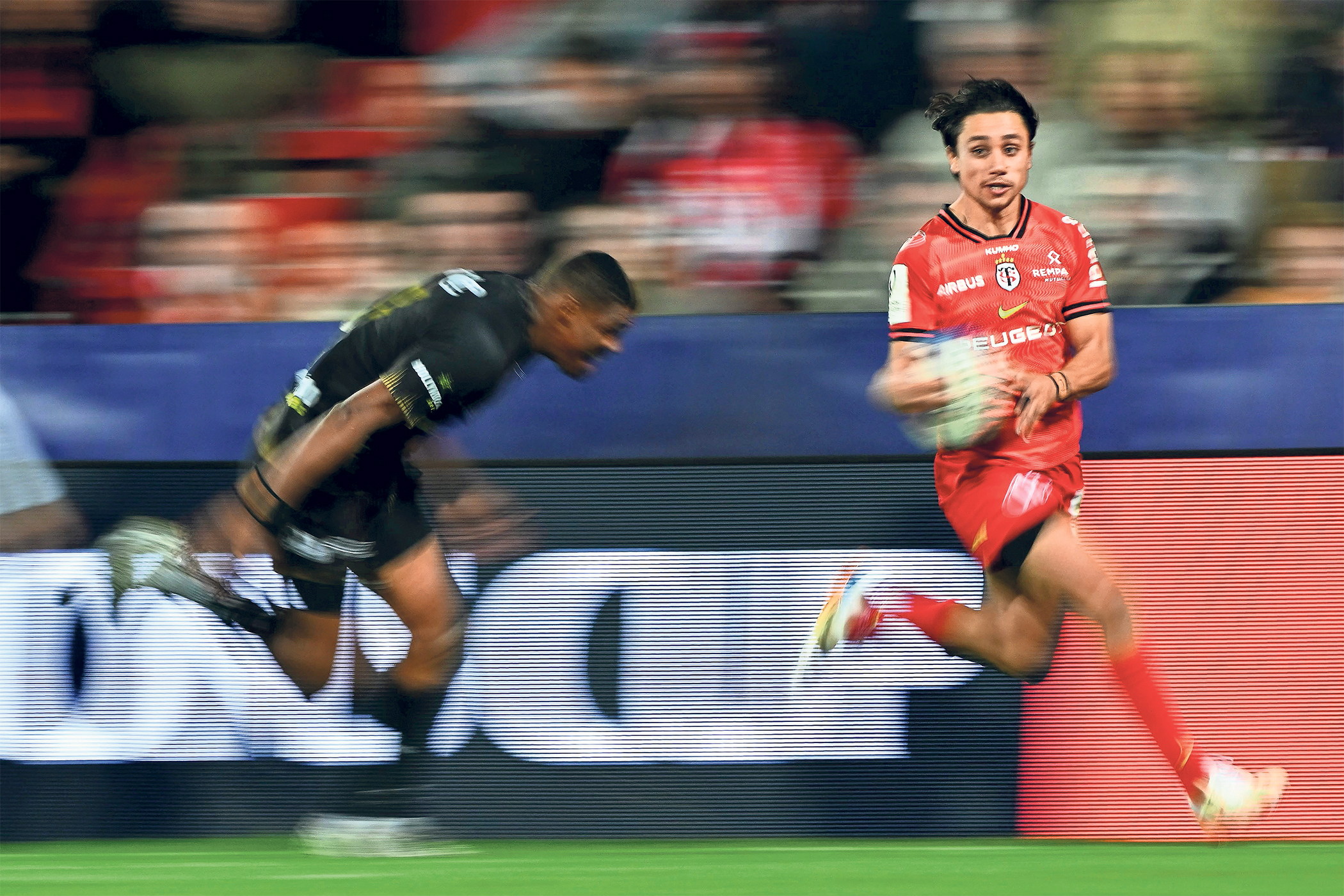

Thankfully there are still players like Thomas Ramos who are not afraid to call a spade a spade. Or une bêche une bêche, in his case.
Asked ahead of Toulouse’s opening fixture in the Investec Champions Cup against the Sharks how he felt about the competition, Ramos’s response will probably resonate with many watching the current version of Europe’s premier competition who feel as though it has lost some of its spark.
“The ‘real Heineken Cup’, the kind I knew as a kid, was more of a dream come true,” said Ramos. “To say that this Champions Cup doesn’t excite me would be a lie because, of course, we also play to win this kind of competition. But we see that year after year, some teams play it, others don’t, others rotate their squad, others don’t, some give players vacations, others don’t. In the end, you end up with I don’t even know how many teams, 24, right? If you really want to count how many clubs actually play in this competition, you could easily count them on your two hands! I think that’s a problem.”
The Sharks did not raise the white flag after naming their team to head to the south of France, but they may as well have. “The Sharks are not serious” and “this is disrespectful” were some of the comments from their own supporters reacting to the team announcement. Being down 28–0 after 24 minutes came as no surprise. Limiting the damage to 56–19? A bit of a miracle.
Bear in mind that Ramos made those comments before Toulouse faced the Sharks, yet he was still right on the money. For all of the highlights during the Champions Cup’s opening weekend – the defending champions Bordeaux–Bègles winning in South Africa, Bath’s rampage of a first half at home to Munster, for example – there were hollow thrashings.
The 24–team Champions Cup is a pretty unsatisfactory tournament, coasting along until crunch time hits in the semi-finals, potentially with the odd high-stakes quarter-final thrown in as well if you are lucky.
Given that out of the 24 teams, 16 progress to the knockout stages, with the four next best sides dropping into the second-tier Challenge Cup, you truly have to go through an abysmal pool stage campaign not to be involved in Europe at all when it comes to the knockout stages.
Ulster, with one win in the pool stages, made it into the round of 16 last season. It is hard to take that seriously.
Back to the Sharks, with their Springboks on an end-of-autumn break and a more winnable fixture at home to Saracens to come yesterday, if you know that you can essentially sacrifice an away trip to Toulouse and keep your best players fresh, then why wouldn’t you do it? There are no league points for abiding by the spirit of the competition. If all you need to do to make the round of 16 is sneak in two wins – or one, if you are Ulster from last season – then why bother competing in the harder fixtures?
There is a sad lethargy about it, the format has sucked the air out of the tournament
There is a sad lethargy about it, the format has sucked the air out of the tournament
This downturn isn’t necessarily due to the number of teams, because the competition has thrived in the past with 24 involved. The issues are the qualification criteria and the pool system.
Newsletters
Choose the newsletters you want to receive
View more
For information about how The Observer protects your data, read our Privacy Policy
Currently the top eight Prem sides – out of 10 – qualify for Europe’s top competition, meaning you genuinely have to have a disaster the previous season not to make it in. France has the same number of entrants, except the best eight sides out of a league of 14 qualifying for the competition is more palatable. But the bottom line is that qualifying to be part of the premier competition in Europe should not be so easy.
Allocating more than eight places to the United Rugby Championship, made up of five countries – Ireland, Italy, Scotland, South Africa and Wales – would be better, given in recent years there have been no sides from Italy and Wales respectively involved in the competition, while limiting the Prem and Top 14 to six sides each would give their teams a bigger carrot to chase domestically.
As for the format, the Heineken Cup glory days featured every pool side playing each other home and away, sometimes on back-to-back weekends, with the six pool winners joined by the top two runners-up. The intensity of those fixtures, the tactical reshuffling from the first game to the second, the away trips for supporters before returning that hospitality: it all clicked.
Now in the Champions Cup you have only four rounds of pool matches – playing only the teams from other leagues, which is unsatisfactory – and a round of 16 stage that has produced plenty of thrashings and few upsets, unless you count Munster’s one-point win at La Rochelle last season.
Add in a broadcaster, Premier Sports, which appears to be struggling to reel in new viewers in England, plus the lack of free-to-air matches aside from Welsh-language broadcasts on S4C, and the current version feels exasperating.
You can still rely on the Champions Cup to serve up maybe one, possibly two classics per season: Northampton’s semi-final win in Dublin, the extra-time final at Tottenham between Toulouse and Leinster, Harlequins’ shock victory in an 80-point thriller in Bordeaux, La Rochelle breaking Leinster hearts in the 2023 final. Whereas in the old Heineken Cup – which was scrapped and rebranded in 2014, originally featuring 20 sides before returning to 24 in 2020 – you could bank on seeing five to six outstanding matches with each campaign.
Today there is a sad lethargy about the whole thing. The rugby is still very good, sometimes great, but the format and qualification criteria have sucked the air out of the tournament. Playing in the Champions Cup used to be the dream, the pinnacle. When you now watch a full round of matches and think “How can we fix this?”, you know something is off.
Photograph by Lionel Bonaventure/AFP via Getty Images