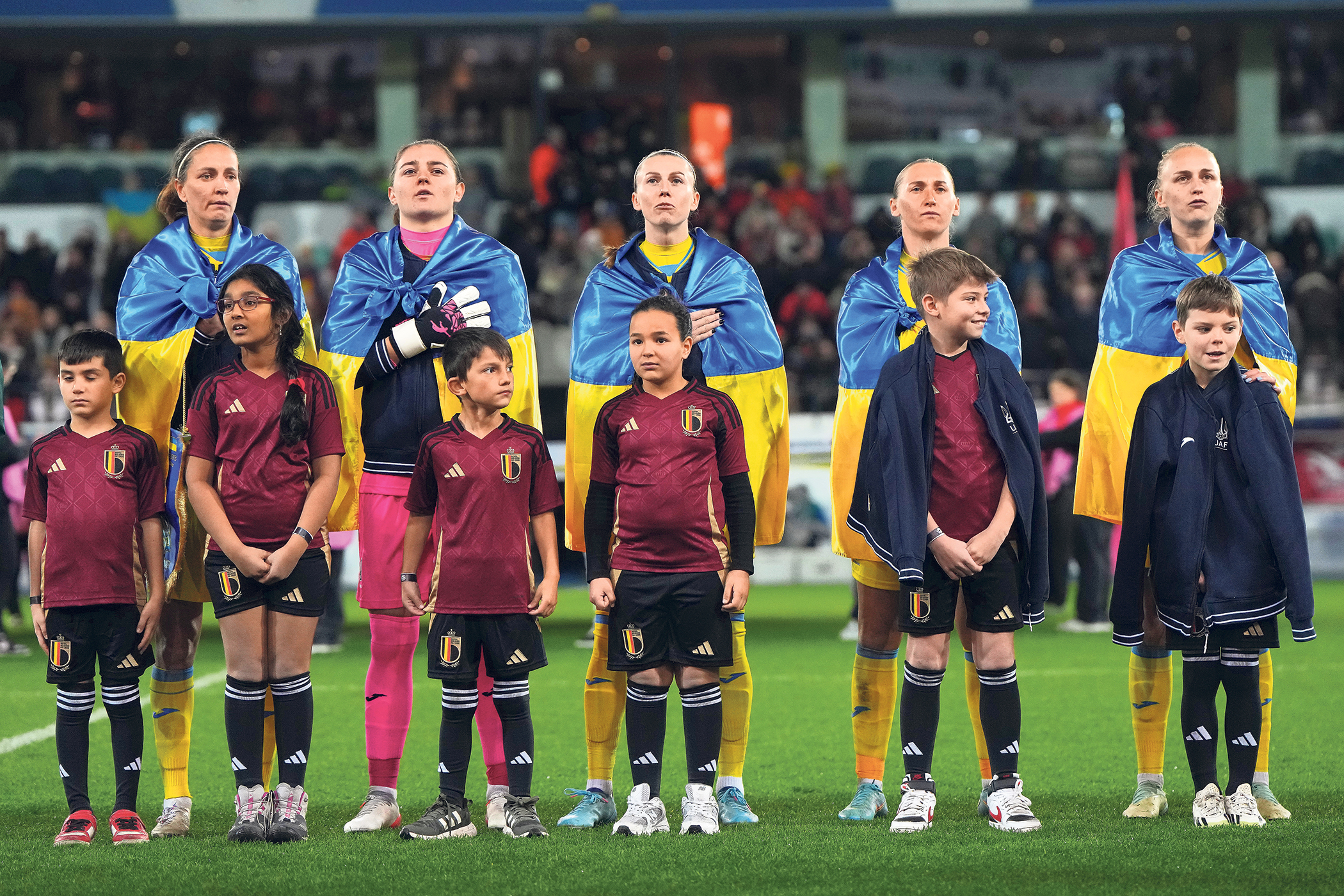

England women’s footballers flew by special chartered plane to Turkey next week to begin their journey to the 2027 Women’s World Cup in Brazil with a match on Tuesday at the Mardan Sports Complex in Antalya. It is not Turkey that they will be facing, however, but Ukraine.
While England’s players were travelling in style, the Ukrainian women’s team were on a 15-hour bus ride to Moldova. From there, they boarded a flight in the middle of the night to Antalya. This is because Ukrainian airspace remains closed, as it has since Russia invaded.
“We’ve just hit four years and it becomes boring to talk about the same thing again and again,” says Nicole Kozlova, a forward for Ukraine. “It’s just become so normal. There is a war in Ukraine.”
Kozlova was born in Canada but always wanted to represent Ukraine, the country that her parents are from. She made her debut in 2019 and has 46 caps. She has also seen how the war has deeply affected women’s football in the country.
“Before the war, you were seeing positive changes,” she says. “You were seeing more and more little girls playing the game. More teams were getting going. Lluís Cortés became our head coach. It was a big move to bring in a foreigner, and with a very good résumé, to show the investment in the women’s national team. The war started right after his first camp.”
Cortés, who led Barcelona to their first Champions League win in 2021, spent 55 hours escaping Ukraine after the war broke out. He was in charge for 11 matches before becoming head coach of Saudi Arabia.
The departure of Cortés was maybe the smallest way in which Ukrainian women’s football was changed by the war. Money immediately began to be funnelled to other sources.
“Before the full-scale invasion, Ukrainian women’s football was really developing,” says Iya Andrushchak, unveiled as the new national team manager last month. “The league was becoming more competitive, clubs were playing in the Champions League and the national team had clear ambitions to qualify for major tournaments. There was stability and long-term planning.”
But remarkably, in the face of all the challenges, the women’s league has continued, and the national team are continuing to play at the highest level.
Kozlova joined Vorskla Poltava ahead of the 2023-24 season, after a spell in Denmark with HB Køge.
Newsletters
Choose the newsletters you want to receive
View more
For information about how The Observer protects your data, read our Privacy Policy
“I went there for personal reasons, but also football reasons,” she says. “I went to the team that was going to be competing in the Champions League. It was a professional environment, good pitches, competitive games in the league. But there’s an added layer of uncertainty.
“We were in the Champions League and did well, but people don’t understand what things were like. Our first trip was to Bosnia. We took a 36-hour bus ride without overnight stops. It’s hard to understand, until I actually did it.”
Kozlova is with Glasgow City, but the vast majority of the Ukraine team are still playing in their home country. One of the most disruptive elements of playing there are the air raids.
“Despite the war, the league still goes on for both the men’s and women’s sides,” says Kozlova. “You are prepping for a 90-minute game but with all the air-raid sirens, it can end up being a four- to five-hour game. It’s a completely different kind of football. You can be 30 minutes into the game and then there’s a siren and you have to go inside for an hour, and then re-warm up.
“Games are played at 11am or 12pm because it gives you time to finish the game and then there are supposedly less air sirens. The girls are saying how loud some of the nights are. Instead of a good night’s sleep for a serious game, you might be spending hours in a bomb shelter.”
Andrushchak agrees. “People outside Ukraine may not fully understand that the impact goes far beyond postponed matches or logistical issues,” she says. “For many players, football now exists alongside displacement and concern for family members. Long-term planning became survival planning. What may look like ‘normal competition’ is in reality daily adaptation to extraordinary circumstances — and continuing to live and play despite them.”
Given the realities of the war, it is unsurprising that both Kozlova and Andrushchak are firmly against Fifa’s suggestions of admitting Russia back into international competition.
“They can’t be,” Kozlova says. “It keeps being shown that Russian athletes support Putin and his regime. It is not something that we stand for. None of us believe that they should.”
“As long as the war continues, I believe Russia should not be readmitted,” says Andrushchak. “Fifa represents values – fair play, respect, solidarity. It would be impossible to speak about those principles while a full-scale war is still ongoing. Readmittance now would send the wrong message, not only to Ukraine, but to the entire football community.”
While the Lionesses have been spending their summers inspiring a whole new generation of girls to play football, it is far harder for the Ukrainian team to do the same.
“Obviously right now you can’t have fans watch us as a national team,” says Kozlova. “Nobody can watch our games really. We want to make it more popular. We want little girls to want to play for our national team. But if they can’t see it, they can’t be it. That’s a big issue.
“Internally, they’re really trying to push our national team and I’ve seen the most change in these years of the war. But it’s hard to make it more popular for the next generation.”
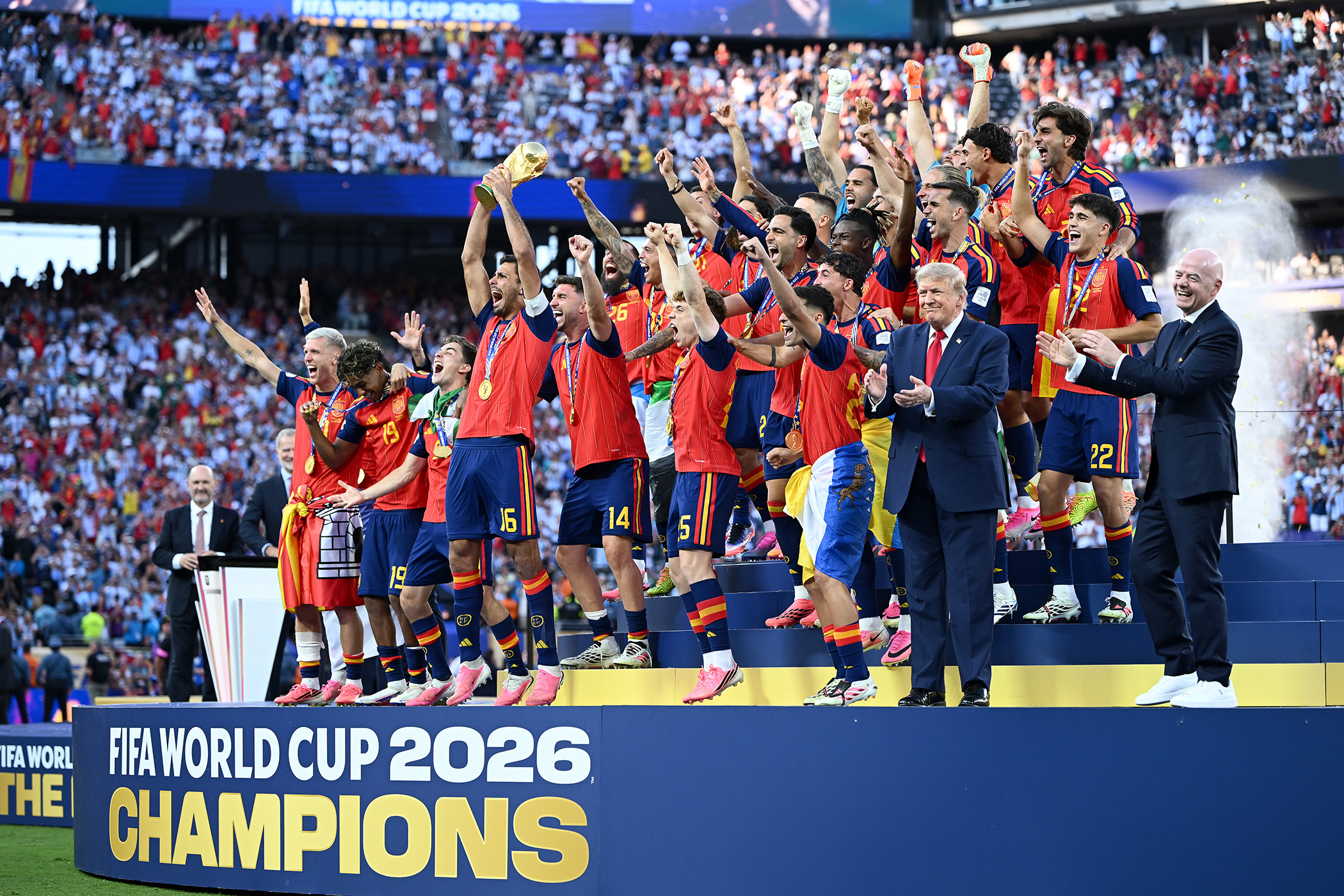
Kozlova is aware that the World Cup is out of reach, but they will get the opportunity in this qualifying cycle to play not only England but also world champions Spain and Iceland. This is a result of gaining promotion last year from League B of the Nations League to League A – no mean feat given that all their matches were played on foreign soil.
“Hopefully we can continue to compete with top nations,” says Kozlova. “With the resources we have had, it is quite spectacular what we have been able to achieve as a national team. That just shows what can be done.”
“The national team now carries a deeper meaning,” says Andrushchak. “It represents resilience and the voice of Ukraine on the international stage. Competing internationally keeps Ukraine visible, united and connected to the global football community.
“My hope is that women’s football in Ukraine will not only recover, but grow stronger than before, with stable clubs, strong youth development and full stadiums again.”
Photograph by Alex Bierens de Haan/Getty Images