
There are two addictions in the Tiger Woods tale. One is his own, to painkilling medication after endless surgeries. The second is golf’s dependence on his fame and the fawning that ensues each time he crashes a car.
Almost nobody in American golf acknowledges that each Tiger Woods car-roll or wreck endangers the lives of other drivers and bystanders. The industry is too busy framing him as the victim – which he is, in the sense that a brutal injury record has left him in constant pain – and too tied up with counting the cost of losing the income-generating might of its only globally recognised figure.
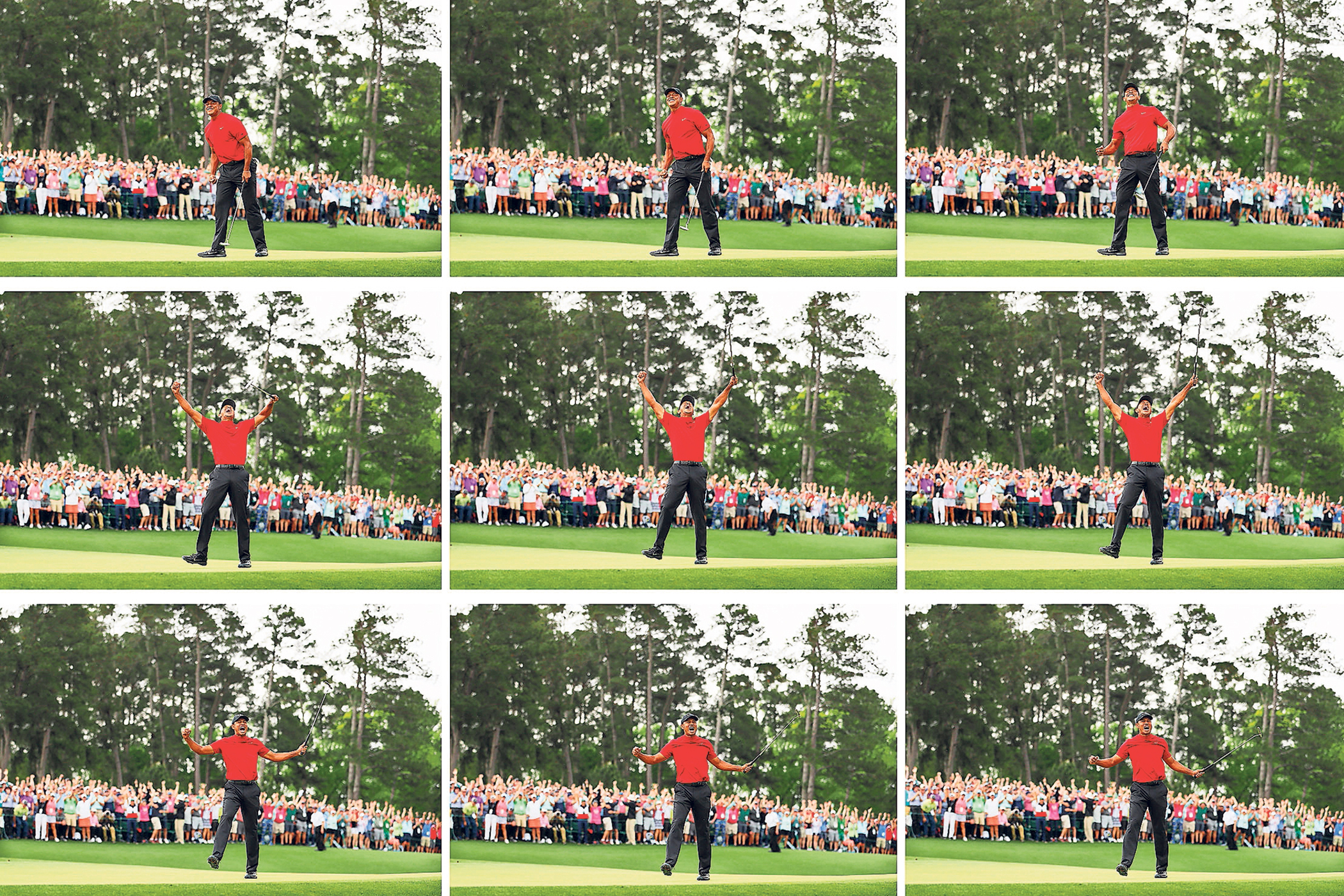
This week’s Masters will proceed without the opera it likes to construct around Woods’ struggle against time and agony. Woods was the Masters champion in 1997, 2001, 2002, 2005 and then in 2019, a win the American commentary called “one of the great comebacks in any sport – all-time”.
It was his 15th major win, 22 years after his first, record-shredding Masters victory, at 21 years old. The Augusta National Club, more than any American arcadia or great Scottish links course, defines his life and career.
Next year’s Ryder Cup in Ireland has kissed goodbye as well to the idea of Woods as US captain, which would have been discordant anyway, given his inability, as a player, to yield to a team dynamic.
“I know and understand the seriousness of the situation I find myself in today,” Woods said in a statement. “I am stepping away for a period of time to seek treatment and focus on my health. This is necessary in order for me to prioritise my wellbeing and work toward lasting recovery.”
‘The industry is too tied up with counting cost of losing his income-generating might’
‘The industry is too tied up with counting cost of losing his income-generating might’
A lone wolf on the course, Woods has never looked more isolated than when he clipped the back of a truck and rolled his Range Rover on its side near his home in Jupiter, Florida, on 27 March. He told police that he had been looking at his phone and changing the radio station when he failed to notice the truck in front had slowed.
In their report, officers said that Woods’ eyes were bloodshot and glassy, that he was “sweating profusely” and “lethargic and slow”. A deputy found two hydrocodone (an opioid) pills in his pocket. A breathalyser test showed no alcohol but Woods refused urine and blood tests. Police footage shows him claiming to have been talking to Donald Trump when officers arrived. “Yeah, I was talking to the president,” he tells them. He pleaded not guilty to Driving Under the Influence (DUI) with help from the criminal defence attorney that he used when charged with the same offence in 2017.
This was his fourth car-related incident. In 2009, he sparked a global sensation when fleeing the family home after his then-wife Elin Nordegren found texts on his phone suggesting infidelity (Woods later checked in for sex addiction). With the sedative Ambien blurring his senses, he crashed his SUV into a fire hydrant and tree outside the house.
In May 2017, after a spinal-fusion operation, Woods was found asleep in his Mercedes at 3am, with the engine still running. He blamed an “unexpected reaction” to a combination of drugs: Vicodin, Dilaudid, Xanax, Ambien and THC.
Newsletters
Choose the newsletters you want to receive
View more
For information about how The Observer protects your data, read our Privacy Policy
Four years later in Los Angeles, he crossed a road divider, hit a tree, and sent his car flying on to rough ground. The theory was that he had pressed the accelerator when he meant to hit the brake. His right leg and ankle were so badly broken that doctors considered him lucky to avoid amputation. Multiple surgeries to repair the damage only elongated elite sport’s longest and most grisly list of repairs.
In the two decades of Woods’ rise to dominance, which placed him in the same fame league as basketball’s Michael Jordan, PGA Tour prize-money rose from $67m in 1996 to $363m in 2017. As his biographers, Jeff Benedict and Armen Keteyian, wrote: “In the process he helped make multimillionaires of more than 400 Tour pros. Pure and simple, Woods changed the face of golf – athletically, socially, culturally, and financially.”
In mythology, it started when Woods’ father, Earl, rang a Los Angeles TV station one evening in 1978 and told the sports anchor Jim Hill: “My son is two years old, and I’m telling you right now that he’s going to be the next big thing in golf. He’s gonna revolutionise everything, including race relations.”
And so began the manufacture of a sporting genius and corporate phenomenon, with physical breakdown and opioid use as the dark coda to a story that golf has converted into a redemption epic. In the midst of an American opioid-use epidemic, Woods has been reduced from uber-hero to everyman.
The reconfiguring of his latest crash into a giant get-well-soon card is not devoid of compassion. Underpinning it, though, is golf’s incurable anxiety about what life without Tiger Woods would look like and how it would sell.
Hence the co-opting of him into a blazered elder-statesman role. Last August, Woods was appointed chair of the new Future Competitions Committee to reshape the professional calendar. After last week’s crash, the PGA Tour’s chief executive officer, Brian Rolapp, wrote: “Over the last year, I have come to deeply appreciate Tiger not only for his impact on the game, but for his friendship and the perspective he has shared with me as I joined the golf industry.”
The PGA of America chimed in: “During this time, we are keeping Tiger in our thoughts and prayers, with sincere hope for his strength, comfort and recovery. Tiger has meant so much to our Association and to the game of golf. Since his Ryder Cup debut in 1997, he has been an enduring part of the PGA family of America.” It “commended” him for stepping back from the game and hailed his “courage” for making “such a personal decision”.
At the Masters, the chairman Fred Ridley announced less decorously: “Although Tiger will not be joining us in person next week, his presence will be felt here in Augusta.”
Only 12 months ago, Rory McIlroy posted a Masters story that gave Woods’ five wins a run for their money. Fourteen years after he had blown a four-shot lead on the back nine, McIlroy again wilted on the Sunday round. This time though he recomposed himself to beat Justin Rose in a play-off. He joined Woods, Jack Nicklaus, Gary Player, Ben Hogan and Gene Sarazen as the only winners of all four major titles.
“Never give up on your dreams,” he told his daughter, Poppy, in his acceptance speech. With his triumph and those words, McIlroy demonstrated that the Masters without Woods isn’t a mere vigil for his return.
This week’s five most-fancied contenders are Scottie Scheffler, Bryson DeChambeau, Jon Rahm, McIlroy and Xander Schauffele.
Scheffler, 29, has won two Masters and an Open Championship. He has been world No 1 for 175 weeks. A fabulous player, he said last year: “This is not a fulfilling life. It’s fulfilling from the sense of accomplishment, but it’s not fulfilling from a sense of the deepest places of your heart.”
That candid and endearing admission won him a perspective prize but did little to ease golf’s neurosis about life post-Tiger Woods. His 2019 Masters win only deepened the dependency. The fawning statements rolling out of America suggest that golf is still determined to enable him and will never let him go.
Photograph by Kevin C. Cox/Getty Images