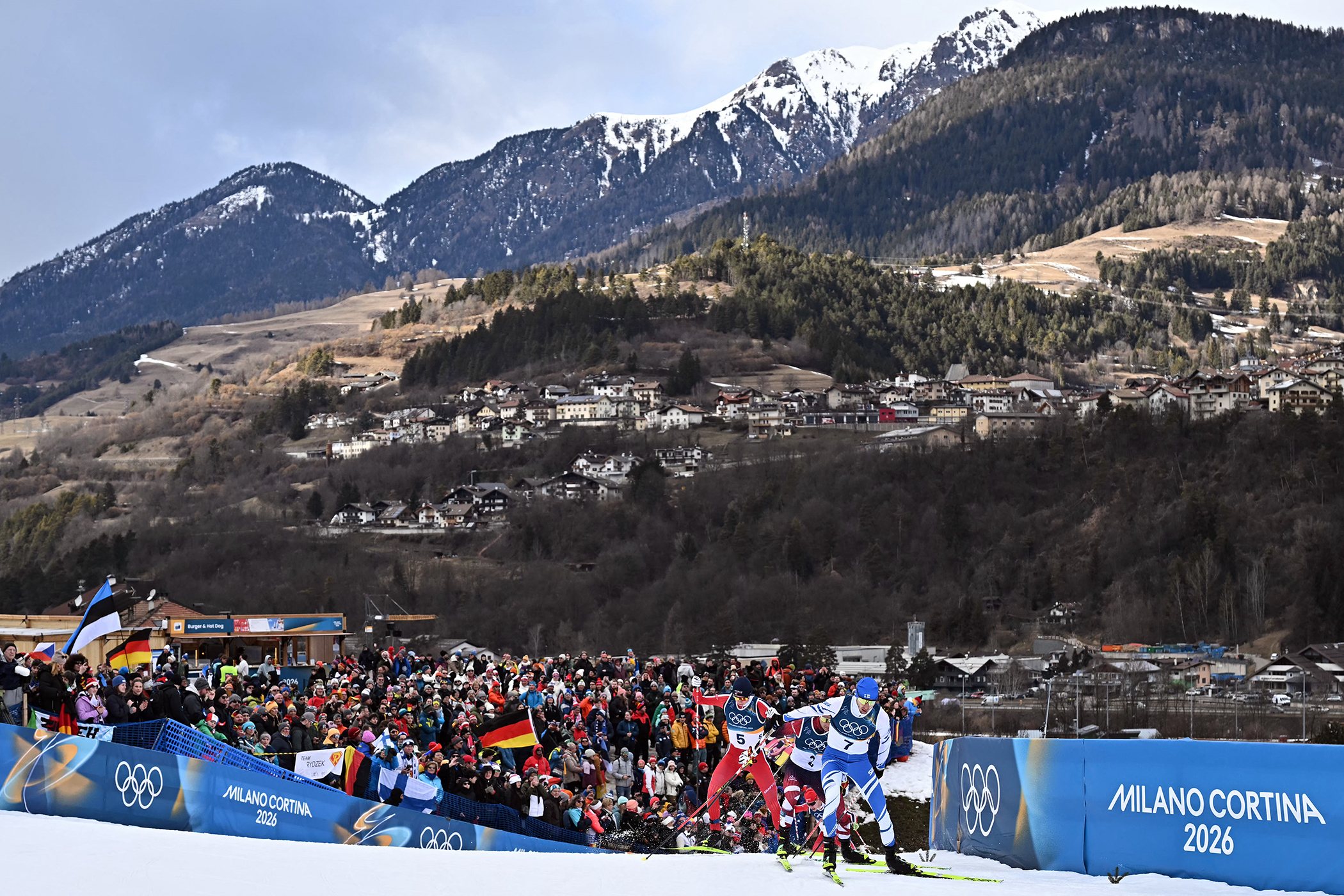



As volunteers prepare the mountains of Cortina for the Paralympics, they may also be preparing the town for its last bow at a Winter Olympics. With rising global temperatures, the possibility of holding another Games in the Dolomites is unlikely owing to their relatively low altitude and consequent lack of snow.
That might seem strange given the delays experienced at the Olympics due to snowstorms. However, those can be directly linked to climate change as warmer temperatures allow for more moisture to be held within the air. While temperatures stay below freezing, that moisture will be dumped as snow, but as they move above zero, the snow will become sleet or rain.
The impact of climate change on winter sports is a well-known phenomenon. A 2024 study funded by the International Olympic Committee found that there had already been a significant decline in places which were climate-reliable enough to host a Winter Games. By the 2080s, it suggested, there would be only 16 places globally that could host a Games in March.
For February’s Olympics in Milano Cortina, the organisers built artificial reservoirs, drawing water – allegedly beyond legal limits – from local rivers in order to make the 1.3 million cubic metres of artificial snow required for the various skiing and snowboarding events.
Yet even these clear warning signs about the continued viability of the Winter Games have not stopped the IOC from continuing to take fossil-fuel sponsorship.
Eni, one of the world’s biggest oil companies, was a premium partner for Milano Cortina. A 2025 study from Reclaim Finance, a non-governmental research and campaigning organisation, found that the Italian company’s investment strategy showed a clear prioritisation of oil and gas as opposed to renewable energy. It is currently aiming to increase oil and gas production by 2030.
When presented with a petition to stop taking sponsorship from fossil-fuel companies, IOC president Kirsty Coventry said that it “takes time”. “We are having conversations in order to be better,” she added.
Her comments come at a time when its top sponsorship revenues are at their lowest for several years, despite a recognition that this is always a hard time in the four-year cycle.
Events having fossil-fuel sponsorship places increasing pressure on athletes not to speak out against them.
“Winter sports have been important to the fossil-fuel industry as an influencing platform,” says Calum MacIntyre, from Folk Mot Fossilmakta (People Against Fossil Power), a climate campaign group in Norway. “It is a way to basically buy themselves a really positive social licence within society. It silences athletes. They will say: ‘I really want to sign this thing and speak out about the climate but I can’t because I’m sponsored by an oil company.’”
Newsletters
Choose the newsletters you want to receive
View more
For information about how The Observer protects your data, read our Privacy Policy
“Warmer winters bring softer, less predictable snow and more variable ice quality,” says Ross McGraw, chief commercial officer at Core, which makes a body-temperature sensor that is increasingly being used by athletes to prepare for unpredictable weather conditions.
“Subtle environmental changes have real performance consequences, affecting speed, stability, fatigue and injury risk.”
McGraw points to cross-country skiers as one of the main groups of winter athletes that they have noticed using heat training as part of their preparation. “Managing environmental strain is becoming part of the competitive equation,” he says. “Winter sports have not traditionally been associated with heat, but rising temperatures are changing the physiological demands on athletes.”
There has been a willingness from the IOC to substitute real snowfall with artificial snow, such as at Sochi in 2014 and Beijing in 2022. From a performance perspective, artificial snow has proved popular due to its uniform surface. But this will not be a solution in warmer temperatures.
“I try to use every opportunity I have to speak about the climate,” says Ukaleq Slettemark, a Greenlander who competed in the biathlon for Denmark in Milan, speaking at a Ski Fossil Free meeting. “There is no winter sport without stable winters. Many people, including many athletes, see that winters are changing but they don’t make the connection. Or they see the connection but they don’t want to get involved in the issue.”
Slettemark was frustrated that much of her time at the Olympics was taken up by questions about Donald Trump’s claims on her home country, which shows one of the key challenges faced by those fighting to raise awareness of climate change: when the issue will continuously be overtaken by events that are deemed more newsworthy, how can attention be kept on it?
Eni has been approached for comment.
Photograph by Javier Soriano/AFP via Getty Images